Introduction: The Intersection of Linguistic Diversity and Neurodivergence
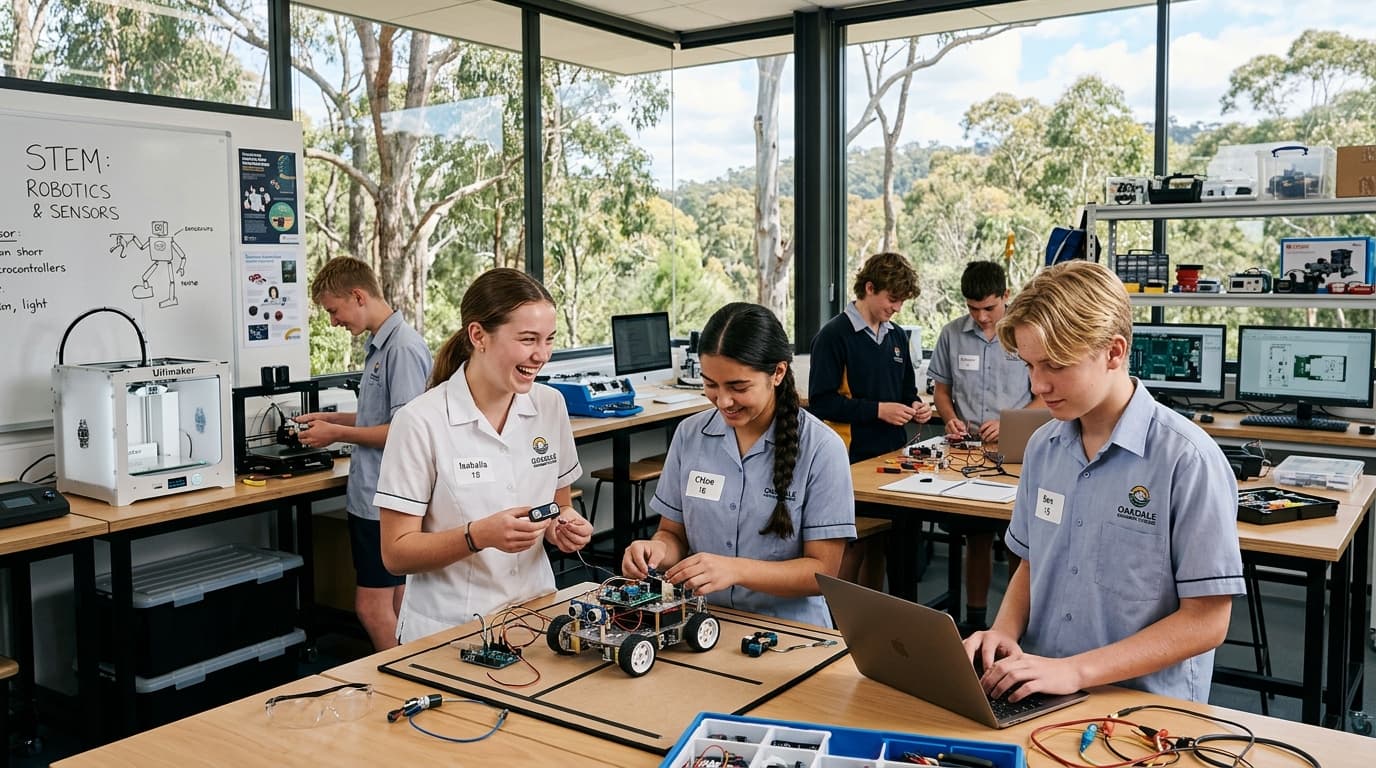
International school classrooms are among the most cognitively and linguistically complex learning environments in modern education. In a single secondary science or primary humanities class, an educator routinely teaches students representing five or six native languages, widely disparate levels of English Academic Language Proficiency (ALPs), and a diverse spectrum of neurodivergent profiles—including ADHD, dyslexia, dyscalculia, autism spectrum conditions, and executive functioning challenges.
Historically, schools attempted to support these diverse learning needs through reactive, fragmented accommodations. A multilingual learner (MLL) was pulled out of class for isolated English as an Additional Language (EAL) drills, while a neurodivergent learner received an individualized learning plan (ILP) with retroactive modifications—such as 25% extra time on an exam or a condensed worksheet.
This retrofit approach is fundamentally flawed. Retroactive modifications stigmatize students, overburden classroom teachers with endless bespoke variations, and view student differences as academic deficits rather than predictable aspects of human neurological and cultural variation.
Universal Design for Learning (UDL), developed by CAST (the Center for Applied Special Technology), offers a powerful paradigm shift. Rather than attempting to "fix" the learner to fit a rigid curriculum, UDL proactively designs the curriculum to be inherently flexible, accessible, and cognitively supportive from the very beginning. When UDL principles intersect with the linguistic realities of international schools, teachers create learning environments where barriers to entry are dismantled, cognitive loads are strategically managed, and high academic expectations remain accessible to every scholar.
This master guide provides international school educators, pedagogical coordinators, and learning support specialists with an end-to-end blueprint for embedding UDL across multilingual, neurodiverse classrooms. From deconstructing the three foundational UDL brain networks to engineering multi-modal instructional units, this guide provides concrete lesson plans, assessment matrices, and assistive tech workflows designed to elevate all learners.
The Neuroscientific Foundation: The Three UDL Brain Networks
The UDL framework is grounded in cognitive neuroscience, organizing effective learning design around three distinct neurological networks that govern how human beings process information, express understanding, and maintain emotional engagement:
1. The Affective Network in Cross-Cultural Environments
In multilingual international classrooms, the affective network is vulnerable to the Affective Filter (Stephen Krashen). When an emerging bilingual student or a student with ADHD feels heightened anxiety, fear of public linguistic humiliation, or alienation from the classroom culture, the amygdala triggers stress responses that impair working memory and executive functioning. Providing multiple means of engagement—such as culturally affirming topics, autonomous choices in working formats, and low-stakes formative routines—lowers the affective filter and primes the brain for deep conceptual learning.
2. The Recognition Network: Unbundling Medium from Content
Traditional classrooms heavily favor a single mode of representation: dense, printed English text accompanied by teacher lecture. For a student with dyslexia or an English language learner at WIDA Level 2, decoding these symbols requires immense cognitive effort. This leaves little cognitive bandwidth for processing the underlying scientific or historical concepts. UDL decouples the medium from the message, presenting concepts through dual-coded visual diagrams, audio narration, interactive tactile manipulatives, and multilingual glossaries.
3. The Strategic Network: Flexible Output Pathways
Expecting all students to demonstrate their mastery of an identical standard exclusively through a timed, five-paragraph written essay creates an unfair barrier. A student may possess deep conceptual understanding of democratic governance or ecosystem dynamics, but struggle with dysgraphia, slow processing speed, or emerging English syntax. Providing multiple means of action and expression allows students to demonstrate rigorous mastery through varied pathways—such as structured oral podcasts, visual graphic novels, recorded screencasts, interactive digital simulations, or annotated physical portfolios.
The UDL Multilingual Matrix: Strategies for the Three Principles
Applying UDL in an international school requires adapting CAST guidelines to address both cognitive diversity and multilingual language acquisition. Below is an actionable matrix tailored for global classrooms:
| UDL Principle | Core Instructional Goal | Multilingual Scaffolding Strategy | Neurodiversity Scaffolding Strategy |
|---|---|---|---|
|
Principle 1: Multiple Means of Engagement (The Why)
|
Foster autonomous, motivated, and emotionally secure learners.
|
Allow translanguaging in small group brainstorming; incorporate global case studies reflecting students' home cultures.
|
Provide predictable visual agendas; offer choices between solo, partner, or small-group work stations; establish low-distraction quiet zones.
|
|
Principle 2: Multiple Means of Representation (The What)
|
Present information through varied sensory and linguistic channels.
|
Dual-code all vocabulary (term + visual icon + home-language definition); provide text-to-speech and bilingual subtitle options.
|
Structure texts with high visual hierarchy; chunk reading into numbered micro-steps; use clean sans-serif typography with generous line spacing.
|
|
Principle 3: Multiple Means of Action & Expression (The How)
|
Provide flexible pathways for demonstrating mastery of standards.
|
Permit multilingual drafting before translating into English; provide sentence frames and syntax banks.
|
Offer options between written essays, digital slide presentations, recorded video defenses, or visual mind maps; provide speech-to-text tools.
|
Step-by-Step Unit Architecture: Designing an Inclusive UDL Lesson
To move UDL from an abstract philosophy into daily classroom practice, teachers can implement a structured, four-phase instructional sequence. Below is a complete 60-minute secondary Humanities lesson plan illustrating UDL in action.
Exemplar Unit: Investigating Global Climate Migration and Resource Conflicts
Deconstructing the UDL Accommodations in This Lesson:
- Clear Goal, Flexible Means: The learning target is focused on analysis of environmental displacement, not on English reading speed or handwriting stamina. By keeping the standard precise while opening the pathways, the cognitive demand remains high without creating artificial barriers.
- Cognitive Load Optimization: Students who process visual information faster can choose the interactive infographic; students who struggle with reading fatigue can listen to audio narration while tracking highlighted text.
- Translanguaging as an Asset: Rather than treating non-English languages as a distraction, multilingual discussions are actively encouraged during Phase 3. This enables students to process complex conceptual relationships in their strongest linguistic repertoire before translating their insights into English academic discourse.
Designing Clear, Flexible Rubrics: Separating Construct from Modality
A major barrier to inclusive assessment is the "construct-contaminated rubric." In traditional assessments, rubrics frequently penalize students for skills that are irrelevant to the actual learning target.
Lesson Planner
Generate comprehensive, CAPS-aligned lesson plans in seconds.
For example, when assessing historical causality in an 8th-grade social studies rubric, criteria often dock marks for spelling errors, syntax slips, or neatness of handwriting. In doing so, the teacher measures English grammar mechanics and fine motor control rather than the student's historical reasoning.
The UDL Rubric Architecture: Pure Construct Evaluation
To design inclusive rubrics, educators must isolate the core construct being evaluated and evaluate it independently of the expressive medium:
By separating the Causal Reasoning score from the Communication Mechanics score, the educator ensures an emerging multilingual writer or a dyslexic student can earn top marks for their intellectual analysis while receiving targeted, supportive feedback on their language mechanics.
Leveraging Assistive EdTech: The Inclusive Digital Toolkit
Technology is the operational backbone of Universal Design for Learning. When chosen thoughtfully, digital tools eliminate accessibility barriers, democratize classroom participation, and empower students to customize their own learning environments.
Essential Assistive Tech Routines to Normalize:
- Universalize Text-to-Speech (TTS): Never make assistive software an exceptional accommodation reserved solely for students with formal diagnoses. Introduce screen-reading tools (such as Microsoft Immersive Reader) to the entire class as a universal editing and proofreading strategy. When every student regularly listens to their drafts to catch rhythm and syntax errors, students with learning differences feel zero stigma using the software.
- Normalize Closed Captions on All Video Content: Always enable English subtitles whenever showing video content in class. Research demonstrates that closed captions dramatically boost vocabulary acquisition for language learners while improving comprehension and retention for neurodivergent students with auditory processing challenges.
- Provide Multilingual Digital Glossaries: Embed hyperlinked, interactive glossaries within digital assignment briefs. Clicking an unfamiliar academic term (e.g., stratification, equilibrium, authoritarian) instantly displays a plain-English definition, an illustrative icon, and a pronunciation guide.
Executive Function Scaffolding: Calming Cognitive Overload
Neurodivergent students and language learners both experience heightened vulnerability to executive function fatigue. When an assignment brief contains long blocks of text with vague expectations, students struggle to prioritize tasks, track time, and begin working.
The "Annotated Anchor Model" Protocol:
Before assigning an independent project (such as a laboratory report or research paper), display two contrasting samples of past student work:
- Sample A: A flawed draft featuring common misconceptions (e.g., vague thesis, missing citations, disjointed structure). Use highlighters and collaborative sticky notes to have the class identify why the work misses the standard.
- Sample B: A high-quality exemplar that meets the standard. Annotate key structural features in the margins: "Notice how the author introduces evidence before analyzing its significance" or "Notice the use of bold subheadings to organize distinct arguments."
When students can clearly visualize the final destination, anxiety decreases and self-directed task initiation increases.
School-Wide UDL Implementation Checklist for Leadership
Embedding UDL across an entire school requires systematic professional development, collaborative planning time, and supportive leadership observations. School leaders can use this checklist to track their institution's inclusive design journey:
| Institutional Dimension | Actionable Milestone & Verification | Status |
|---|---|---|
|
Professional Learning
|
Whole-faculty workshops on the three UDL brain networks completed; staff can deconstruct construct-pure standards.
|
Verified [ ]
|
|
Lesson Plan Audits
|
Departmental unit templates require explicit documentation of multiple means of representation and expression.
|
Verified [ ]
|
|
Assistive EdTech Access
|
Universal accessibility software (TTS, STT, screen readers) installed across all school-managed student devices.
|
Verified [ ]
|
|
Collaborative Planning
|
EAL and Learning Support specialists co-plan weekly with mainstream classroom teachers rather than working in silos.
|
Verified [ ]
|
|
Assessment Architecture
|
End-of-unit summative assessments offer students at least two valid modalities to demonstrate mastery of the standard.
|
Verified [ ]
|
|
Student Agency Surveys
|
Regular student surveys track learner autonomy, self-reported cognitive load, and feeling of belonging in class.
|
Verified [ ]
|
Conclusion: Designing Classrooms Where Every Learner Flourishes
Universal Design for Learning is not an additional initiative to be added to an already overflowing educational plate; it is the table upon which all meaningful, equitable learning is served. In the vibrant, diverse tapestry of international schools, designing for the margins ultimately enriches the experience of every single student.
When an educator dual-codes key terminology with imagery, captioning videos, and structuring tasks into manageable milestones, they do not merely support the dyslexic student or the emerging bilingual learner. They simultaneously support the fatigued athlete, the student navigating emotional stress, and the quiet learner seeking clearer guidance.
By moving away from rigid, one-size-fits-all instruction and embracing the flexible, asset-based principles of UDL, international schools fulfill their highest educational promise: creating genuinely inclusive learning environments where every student, regardless of mother tongue or neurological profile, is empowered to discover their scholarly voice and achieve their highest academic potential.