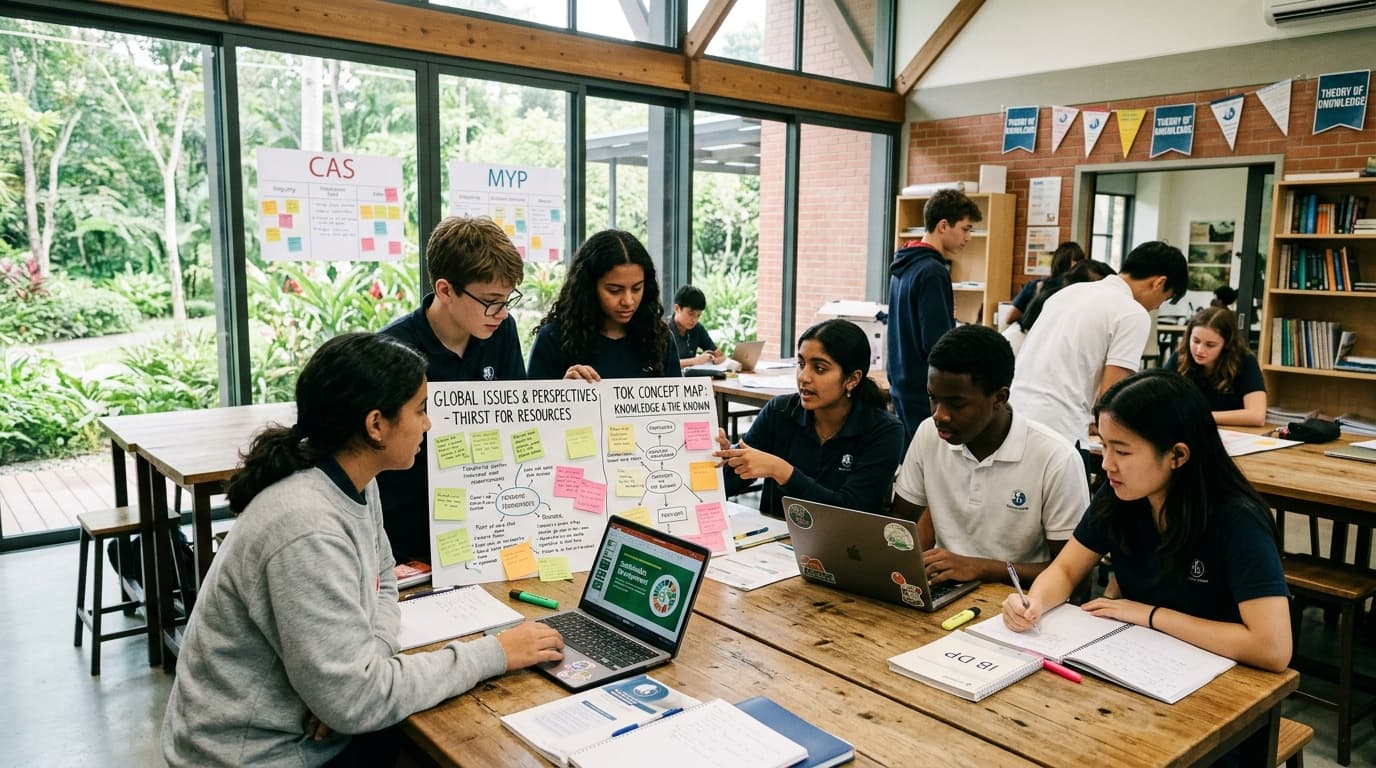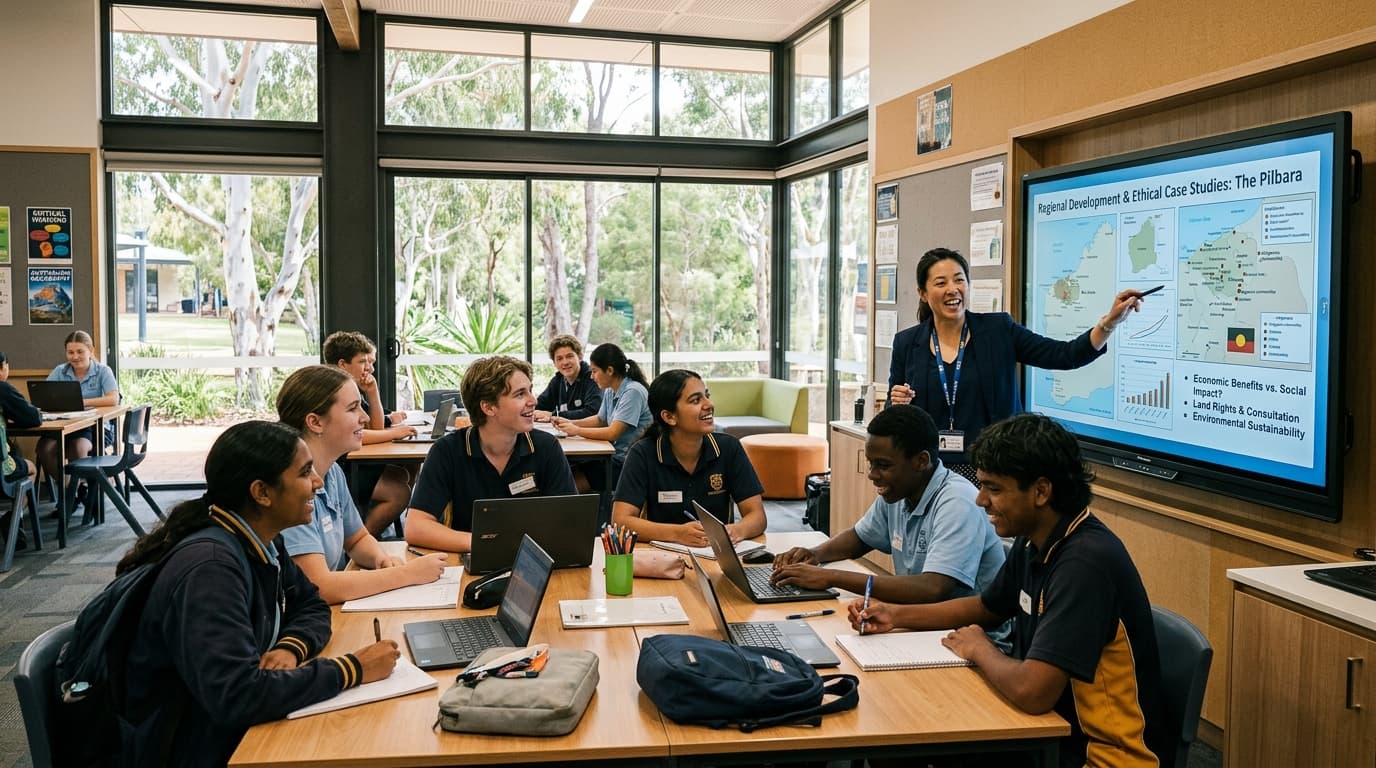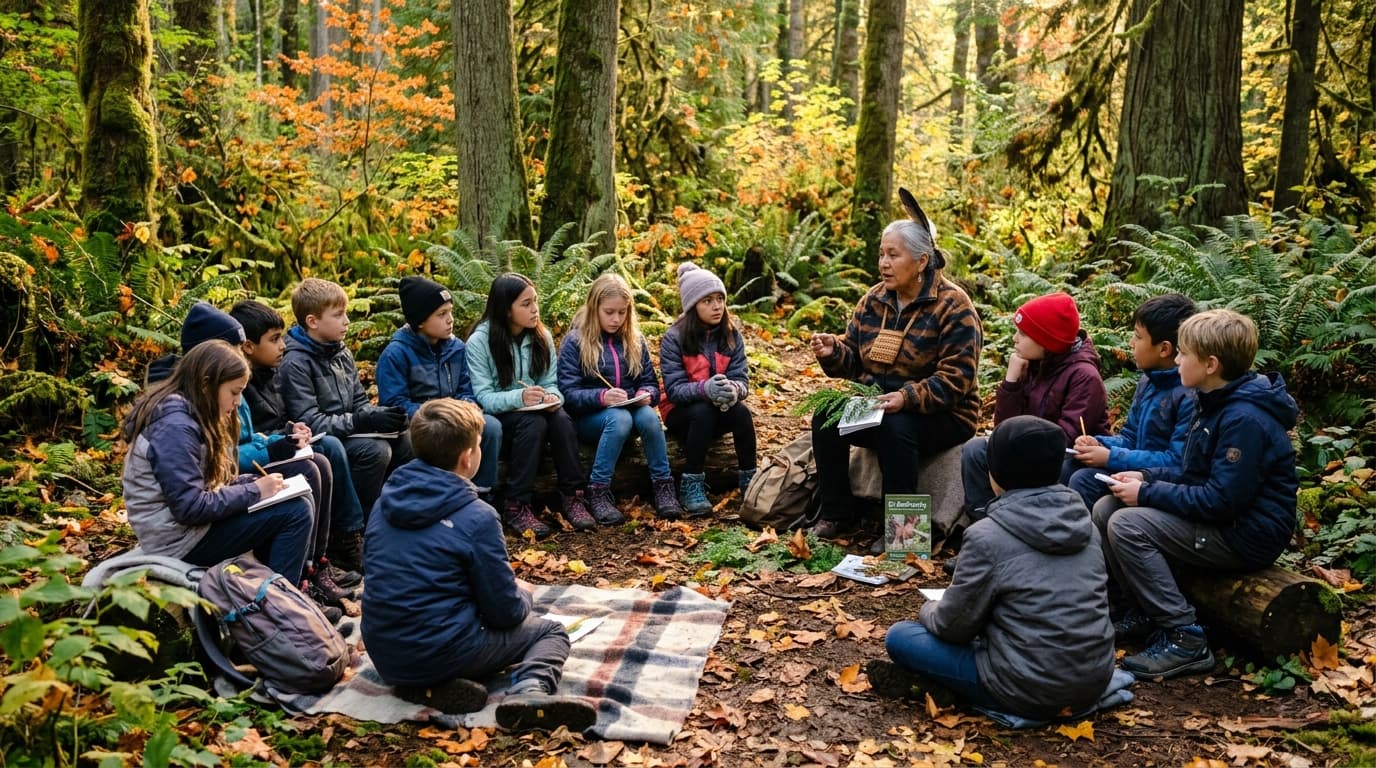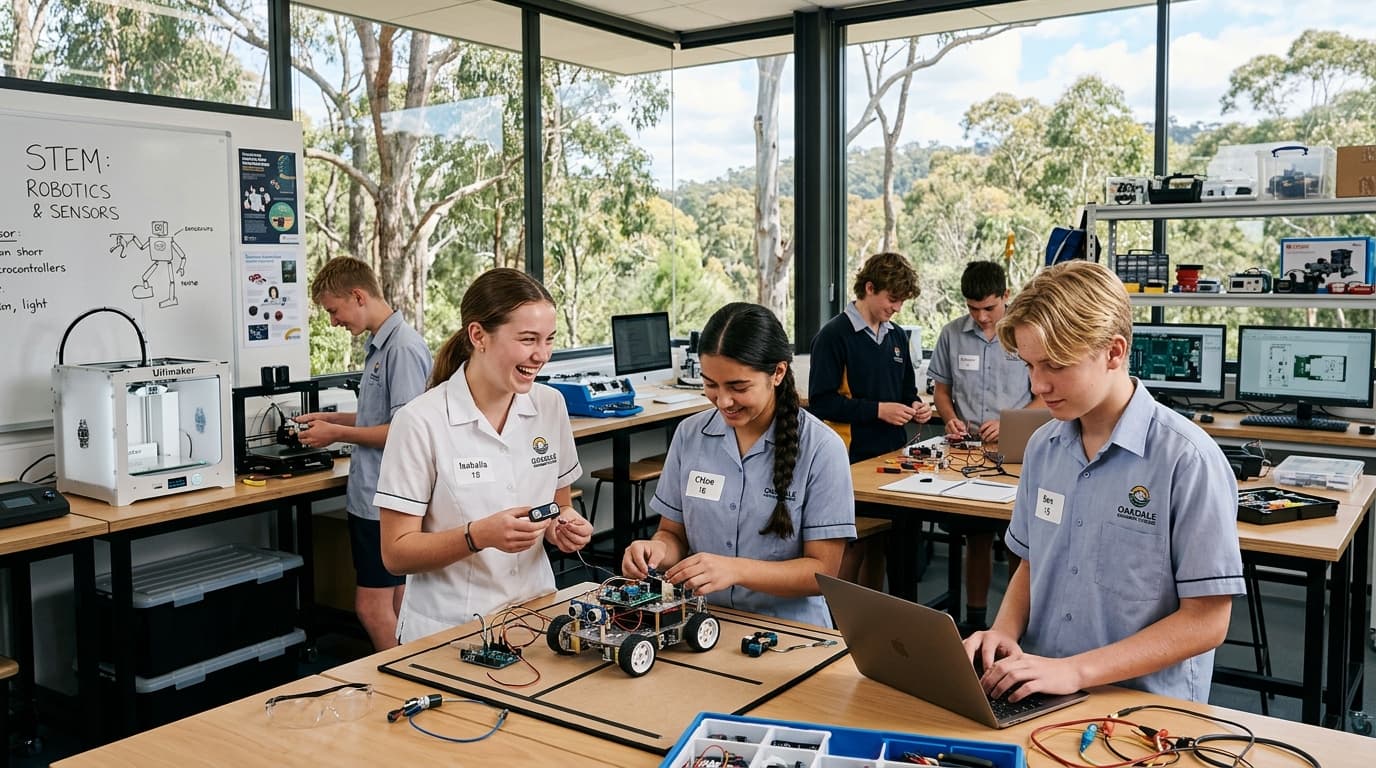
Executive Summary: The Transdisciplinary Promise of the IB Primary Years Programme
In international schools across Europe, Asia, the Middle East, Africa, and the Americas, the International Baccalaureate Primary Years Programme (IB PYP) represents the benchmark for concept-driven, student-centred primary education. Designed for learners aged 3 to 12, the PYP rejects the compartmentalisation of knowledge into isolated academic silos. Traditional primary curricula often teach 45 minutes of isolated spelling, followed by 45 minutes of disconnected arithmetic, followed by a brief history worksheet.
In contrast, the PYP recognizes that the modern world does not present problems categorized neatly by subject boundaries. Environmental degradation, migration, public health crises, and technological disruption require young learners to synthesize science, humanities, mathematics, language, and the arts simultaneously.
| Dimension / Category | Key Details & Guidance |
|---|---|
|
PLINARY │ │ CONCEP
|
-DRIVEN │ │ STUDENT
|
|
ES │ │ INQ
|
IRY │ │ (VOICE/CH
|
|
e │ │ • 7 Key Co are in time│ │ (Form, F press │ │ Causati orld works │ │ Connect ganise │ │ • Kath Mur he planet │ │ • Central
|
cepts │ │ • Student nction, │ │ • Co-desig n, Change, │ │ • Action c on, etc.) │ (Advocacy, och Cycle │ Participat deas │ • PYP Exhibi
|
However, executing authentic PYP inquiry requires primary educators to navigate significant instructional complexities: moving from teacher-directed transmission to guided inquiry without descending into unstructured chaos, articulating globally transferable Central Ideas, embedding the 10 Learner Profile attributes, and guiding the culminating PYP Exhibition (PYPX).
This comprehensive guide delivers international primary educators, PYP coordinators, and school leaders an operational, classroom-tested manual for planning, scaffolding, assessing, and evaluating transdisciplinary inquiry.
1. The Transdisciplinary Architecture: The 6 Global Themes
At the foundation of the PYP curriculum framework are the Six Transdisciplinary Themes. These themes provide the overarching human contexts through which students explore local and global issues. Every year, students from Foundation to Grade 5 engage with all six themes (with early years learners aged 3–5 exploring four):
| Dimension / Category | Key Details & Guidance |
|---|---|
|
1. Who We Are
|
Inquiry into the nature of the self; beliefs and values; personal, physical, mental, and social health; human relationships, rights, responsibil.
|
|
2. Where We Are in Place and Time
|
Inquiry into orientation in place and time; personal histories; homes and journeys; human migrations; civilizations from global viewpoints.
|
|
3. How We Express Ourselves
|
Inquiry into the ways in which we discover and express ideas, feelings, beliefs, and values; reflection on our creativity; appreciation of art
|
|
4. How the World Works
|
Inquiry into the natural world and its laws; the interaction between the natural world and human societies; scientific principles; impact of tech.
|
|
5. How We Organise Ourselves
|
Inquiry into the interconnectedness of human systems and communities; the structure of organisations; societal decision-making; economic
|
|
6. Sharing the Planet
|
Inquiry into rights and responsibilities in the struggle to share finite resources; communities and relationships between living things; peace.
|
Developing the Programme of Inquiry (POI)
A school’s Programme of Inquiry (POI) is its master curricular map. It articulates 30 units of inquiry (six per grade level across Grades 1–5) that ensure balanced coverage of sciences, social studies, arts, and personal development without curriculum duplication.
2. Concept-Driven Inquiry: The 7 Key Concepts and Central Ideas
A major hazard in international schools is allowing a Unit of Inquiry (UOI) to collapse into a mere collection of facts (e.g., "We are learning about volcanoes"). Facts are locked in time, place, and topic. In the PYP, learning is Concept-Driven: facts serve as case studies to unlock universal, transferable conceptual understandings.
| Dimension / Category | Key Details & Guidance |
|---|---|
|
│ │ FUNC t like?" │ │ "How doe properties│ │ (Mechanism teristics) │ │ and opera
|
ION │ │ CAUS it work?" │ │ "Why is i , systems, │ │ is?" (Co ions) │ │ underlyi
|
|
GE │ │ CONNE transforming││ "How is it cycles, │ │ (Ecosystem , growth) │ │ dependenc
|
TION │ │ PERSP linked?" │ │ "What are , inter- │ │ of view?" , networks)│ │ cultural
|
|
│ RESPON │ "What is o │ (Ethical act
|
IBILITY r obligation? on, ecology)
|
Crafting a Rigorous "Central Idea"
The Central Idea is the intellectual anchor of a unit. A high-quality Central Idea must satisfy four non-negotiable criteria:
- Transferable: Applies across cultures, geographic eras, and contexts.
- Universal: Contains no topic-specific nouns (e.g., avoid mentioning "the Amazon Rainforest" or "ancient Egypt" in the Central Idea itself).
- Conceptual: Links at least two key concepts using active present-tense verbs.
- Debatable: Invites inquiry rather than stating an obvious platitude (avoid: "Animals need food to survive").
| Transdisciplinary Theme | Flawed / Topic-Locked Central Idea | Masterclass PYP Central Idea | Supporting Key Concepts |
|---|---|---|---|
|
Sharing the Planet
|
"Rainforests are important and animals are dying because of logging."
|
"Human resource consumption disrupts ecosystem equilibrium and necessitates sustainable stewardship."
|
Connection, Causation, Responsibility
|
|
How We Organise Ourselves
|
"Supermarkets sell food to families in our local neighbourhood."
|
"Economic networks rely on supply chains and exchange systems to distribute goods across communities."
|
Function, Connection
|
|
Where We Are in Place & Time
|
"Vikings travelled in longships to conquer new lands."
|
"Exploration and migration alter cultural identities and transform societal borders over time."
|
Change, Perspective
|
3. The Inquiry Cycle in Action: Kath Murdoch’s Model
To prevent inquiry from becoming aimless discovery, master PYP teachers structure their classroom journeys using Kath Murdoch’s Inquiry Cycle.
┌────────────────────────────────────────────────────────────────────────┐
│                   KATH MURDOCH’S INQUIRY CYCLE                         │
└────────────────────────────────────────────────────────────────────────┘
                                   │
    ┌──────────────────────────────┼──────────────────────────────┐
    ▼                              ▼                              ▼
[ 1. TUNING IN ]         ➔ [ 2. FINDING OUT ]       ➔ [ 3. SORTING OUT ]
  • Provocations               • Field excursions           • Graphic organisers
  • Surface prior knowledge    • Primary expert interviews  • Pattern recognition
  • Spark curious questions    • Multimodal research        • Cross-referencing
                                                                  │
                                                                  ▼
[ 6. TAKING ACTION ]     ◀── [ 5. MAKING CONCLUSIONS ] ◀── [ 4. GOING FURTHER ]
  • Student-led initiative     • Conceptual synthesis       • Personalised inquiry
  • Community advocacy         • "So what? Now what?"       • Divergent questions
  • Measurable change          • Demonstrating mastery      • Independent research
Step 1: Tuning In (The Provocation)
Inquiry never begins with a teacher lecture. It begins with an emotionally engaging Provocation:
- Classroom Action: A Grade 4 class exploring Sharing the Planet enters their classroom on Monday morning to find their desks taped off with caution tape, all classroom stationery removed, and a sign declaring: "Due to resource depletion, pencils are now restricted to 1 per table."
- Thinking Routine: Students complete a See-Think-Wonder routine: What do you observe? What do you think is occurring? What questions do you have?
Step 2: Finding Out (Empirical Data Gathering)
Students gather diverse data to challenge their initial assumptions:
- Interviewing local conservationists via Zoom, examining satellite deforestation maps on Google Earth, and dissecting scientific journals.
Step 3: Sorting Out (Sense-Making and Organization)
Students unpack their findings through concept mapping, Venn diagrams, cause-and-effect flowcharts, and collaborative affinity diagrams.
Step 4: Going Further (Divergent Independent Inquiry)
Students follow personalized lines of inquiry sparked by the unit: one student investigates biodegradable packaging alternatives, while another explores traditional Indigenous agroforestry.
Lesson Planner
Generate comprehensive, CAPS-aligned lesson plans in seconds.
Step 5: Making Conclusions (Synthesizing Conceptual Understanding)
Students articulate their new conceptual generalizations: "Now I understand that when supply decreases while demand increases, economic and environmental pressures compound."
Step 6: Taking Action (Authentic Student Agency)
The ultimate measure of a PYP unit is whether it inspires autonomous, real-world action.
4. Student Agency: Voice, Choice, and Ownership
In 2018, the IB’s Enhancing the PYP review placed Student Agency at the core of the programme. Agency is the recognition that students have the capacity, will, and right to direct their own learning.
| E │ │ CHO | CE │ │ OWNE |
|---|---|
|
ucting │ │ • Selectin agreements│ methodolog ines of │ │ • Deciding │ demonstrat thical │ │ • Negotiat in seminars│ timelines
|
inquiry │ │ • Self-ass es │ against co medium of │ rubrics on │ • Setting pe ng learning│ • Directing │ Conference
|
The 5 Modalities of Authentic Action
In the PYP, action is not restricted to baking cupcakes for charity. Action is categorised into five distinct expressions:
- Participation: Actively joining community efforts (e.g., joining the school green team, tending the campus compost).
- Advocacy: Speaking out to influence others (e.g., petitioning the school catering director to eliminate single-use plastics).
- Social Justice: Challenging unfair systems (e.g., creating bilingual welcome guides for newly arrived refugee students).
- Lifestyle Choices: Making personal ethical adjustments (e.g., choosing to ride a bicycle to school; reducing home food waste).
- Social Entrepreneurship: Designing innovative enterprises (e.g., building a vertical herb garden to supply the school cafeteria).
5. The PYP Exhibition (PYPX): The Culminating Grade 5 Capstone
The PYP Exhibition (PYPX) is the synthesis of a student’s entire primary journey. Under the mentorship of teachers and community experts, Grade 5/6 students conduct an intensive, collaborative, multi-week inquiry into a real-world issue of global significance.
┌────────────────────────────────────────────────────────────────────────┐
│                   THE 8-WEEK PYPX MILESTONE ROADMAP                    │
└────────────────────────────────────────────────────────────────────────┘
                                   │
    ┌──────────────────────────────┼──────────────────────────────┐
    ▼                              ▼                              ▼
[ WEEKS 1–2: ISSUE IDENT ]     ➔ [ WEEKS 3–4: INVESTIGATION ] ➔ [ WEEKS 5–6: ACTION & CREATION ]
  • UN Sustainable Dev Goals     • Field trips & interviews     • Implementing real action
  • Form collaborative teams     • Mentor meetings weekly       • Multimodal curation
  • Draft Central Idea & Lines   • Maintaining Process Journal  • Synthesising evidence
                                                                  │
                                                                  ▼
                             [ WEEKS 7–8: THE CELEBRATION OF LEARNING ]
                             • Public community exhibition
                             • Student-led presentations
                             • Authentic peer and mentor feedback
Key Elements of an Exemplary PYPX
- Collaborative Grouping: Students form groups based on shared passions aligned with the United Nations Sustainable Development Goals (SDGs) (e.g., Clean Water, Quality Education, Climate Action).
- The Process Journal: Every student documents their evolving thoughts, setbacks, interview transcripts, and reflections in a dedicated physical or digital journal.
- The Role of the Mentor: Every group is paired with an adult mentor (a secondary teacher, parent, or community leader) who meets with them weekly. Crucially, the mentor does not do the work; they act as a critical friend, asking guiding questions and monitoring timelines.
6. Assessment Philosophy: Documenting Learning and Student-Led Conferences
Assessment in the PYP is formative, continuous, and transparent. The primary goal of assessment is to inform teaching and empower student self-regulation.
| Dimension / Category | Key Details & Guidance |
|---|---|
|
1. Documentation Panels
|
Visual classroom boards capturing quotes, draft iterations, photos, and evolving schematics
|
|
2. Digital Portfolio (Toddle/Seesaw)
|
│ Seesaw / Toddle platforms capturing audio reflections, video pitches, and self-evaluations
|
|
3. Single-Point Rubrics
|
Rubrics detailing the target standard in the centre, leaving margins for bespoke feedback
|
|
4. Student-Led Conferences (SLC)
|
Students lead a 30-minute conference with their parents, explaining their portfolio evidence
|
The Student-Led Conference (SLC) Protocol
Traditional parent-teacher interviews—where parents sit while the teacher talks about the child—are replaced in the PYP by Student-Led Conferences:
- The student welcomes their parents into the classroom.
- The teacher sits discreetly at the perimeter of the room.
- The student opens their portfolio, guides their parents through their learning artifacts, explains which Learner Profile attributes they have developed, demonstrates their math thinking using concrete manipulatives, and articulates their learning goals for the following semester.
7. Embedding the 10 IB Learner Profile Attributes
The Learner Profile represents the mission statement of the International Baccalaureate translated into actionable human values:
| Dimension / Category | Key Details & Guidance |
|---|---|
|
RERS │ │ KNOWLE nthusiastic│ │ (Explore c t research)│ │ global si
|
GEABLE │ │ THIN ncepts, │ │ (Critical, nificance) │ │ reasoned
|
|
CATORS │ │ PRINC multilingual│ (Integrity al/digital)│ │ equity, r
|
PLED │ │ OPEN-M justice, │ │ (Appreciat spect) │ │ cultures
|
|
NG │ │ RISK- ompassion, │ │ (Courage, community)│ │ trying ne
|
AKERS │ │ BALA esilience, │ │ (Intellect solutions)│ │ and emoti
|
|
│ REFLE │ (Metacogniti │ strengths &
|
TIVE n, auditing limitations)
|
Daily Pedagogical Integration
The Learner Profile must not exist as static decorative posters on a wall. It must be woven into daily language:
- "I noticed how Principled our group was today when you shared the art supplies fairly without teacher intervention."
- "When our robotic prototype broke, you demonstrated exceptional resilience as a Risk-Taker by analyzing what failed rather than giving up."
8. Whole-School PYP Unit of Inquiry Implementation Audit
Use this operational checklist to evaluate the fidelity, conceptuality, and inquiry depth of your PYP units:
════════════════════════════════════════════════════════════════════════════════
By grounding primary education in transdisciplinary themes, concept-driven inquiry cycles, and authentic student agency, the IB PYP equips international learners with the curiosity, critical intellect, and compassion needed to build a more peaceful and sustainable world.