Introduction: The Transformative Value of AP Capstone in Global Settings
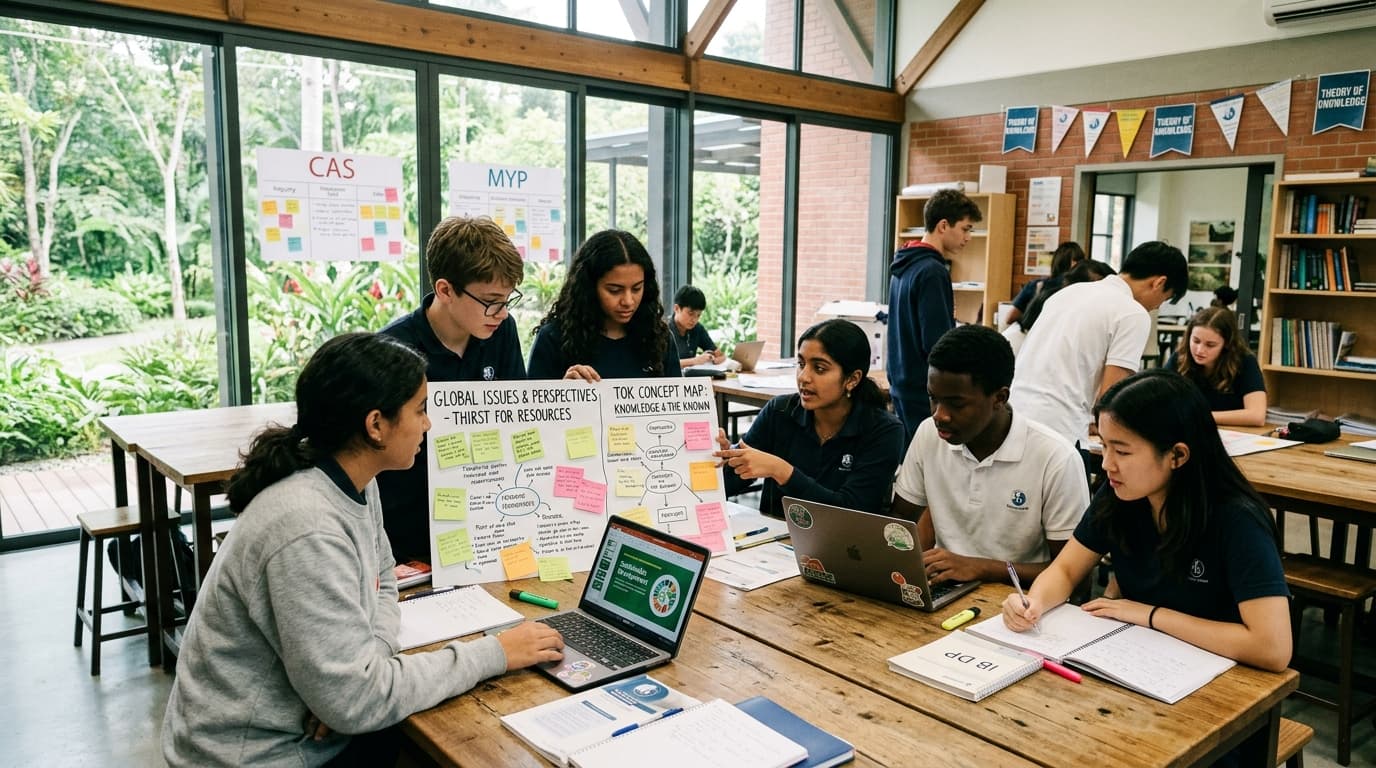
Across the rapidly expanding landscape of international schooling, the College Board's Advanced Placement (AP) program has historically faced criticism for fostering passive content memorization and high-stakes, multiple-choice standardized testing. In environments dominated by the holistic, inquiry-driven ethos of the International Baccalaureate (IB) Diploma Programme—with its mandatory Theory of Knowledge (TOK) and Extended Essay (EE) requirements—AP schools frequently found themselves at a perceived pedagogical disadvantage.
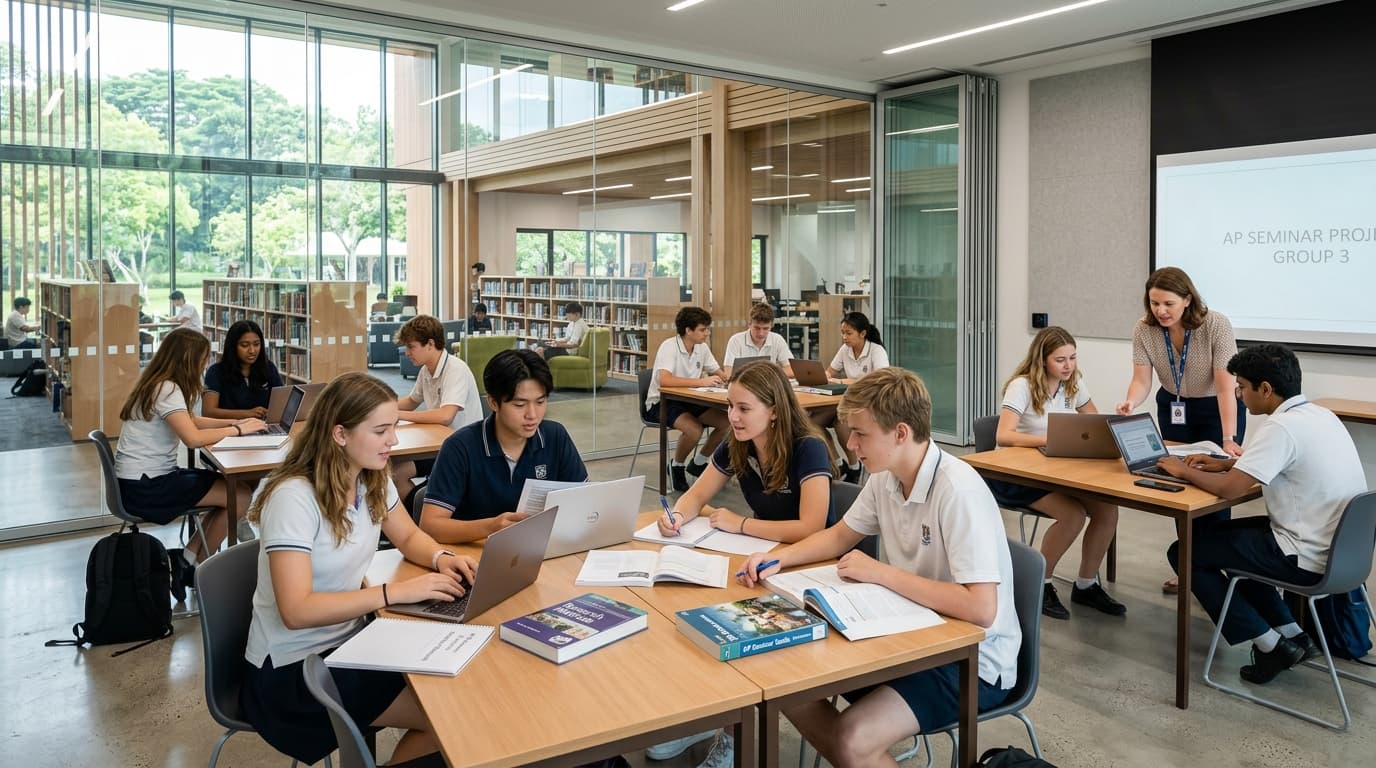
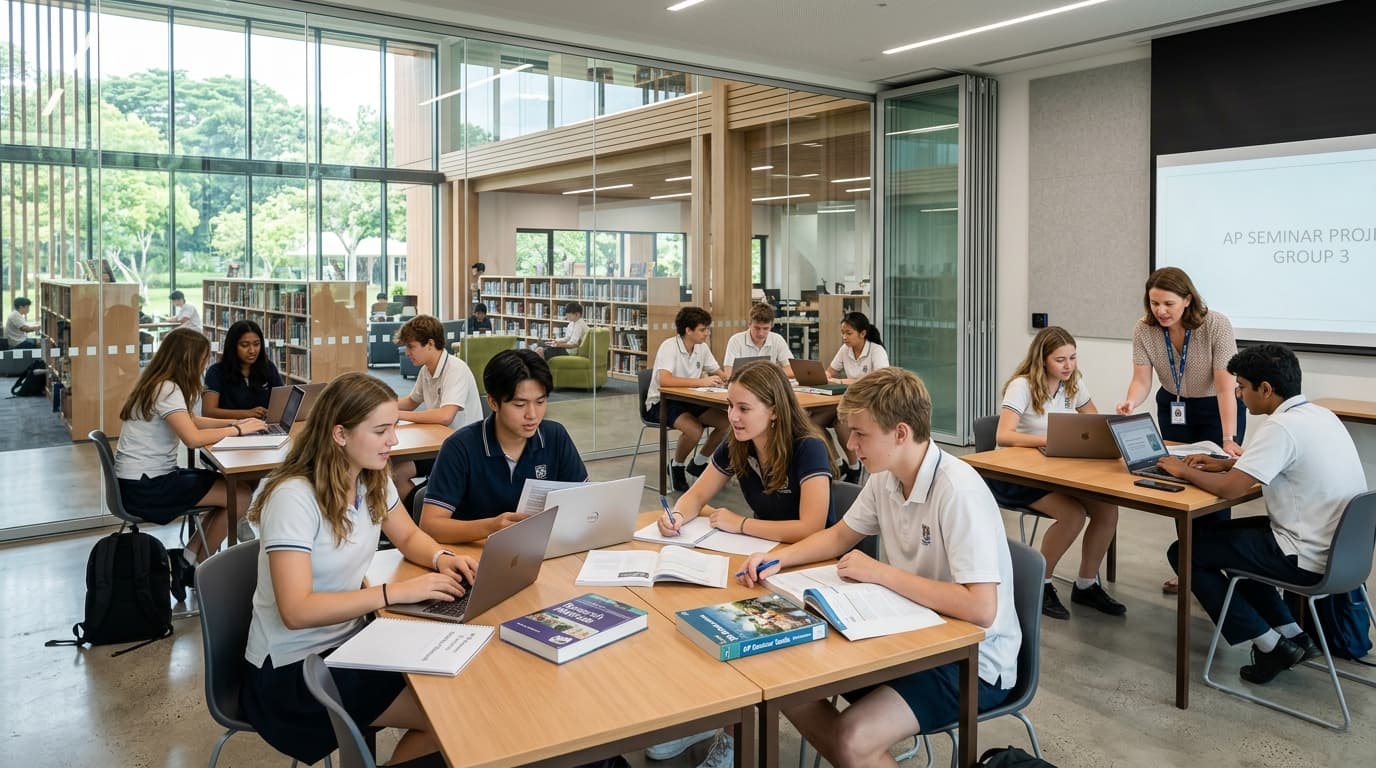
The introduction of the AP Capstone Diploma program—comprising two interconnected, year-long courses: AP Seminar (typically Grade 10 or 11) and AP Research (Grade 11 or 12)—has fundamentally redefined the value proposition of the American international curriculum. Built around the foundational QUEST pedagogical framework, AP Capstone equips secondary scholars with rigorous academic research methodologies, critical line-of-inquiry interrogation, cross-disciplinary synthesis, collaborative team defense, and formal academic writing that rivals undergraduate dissertations.
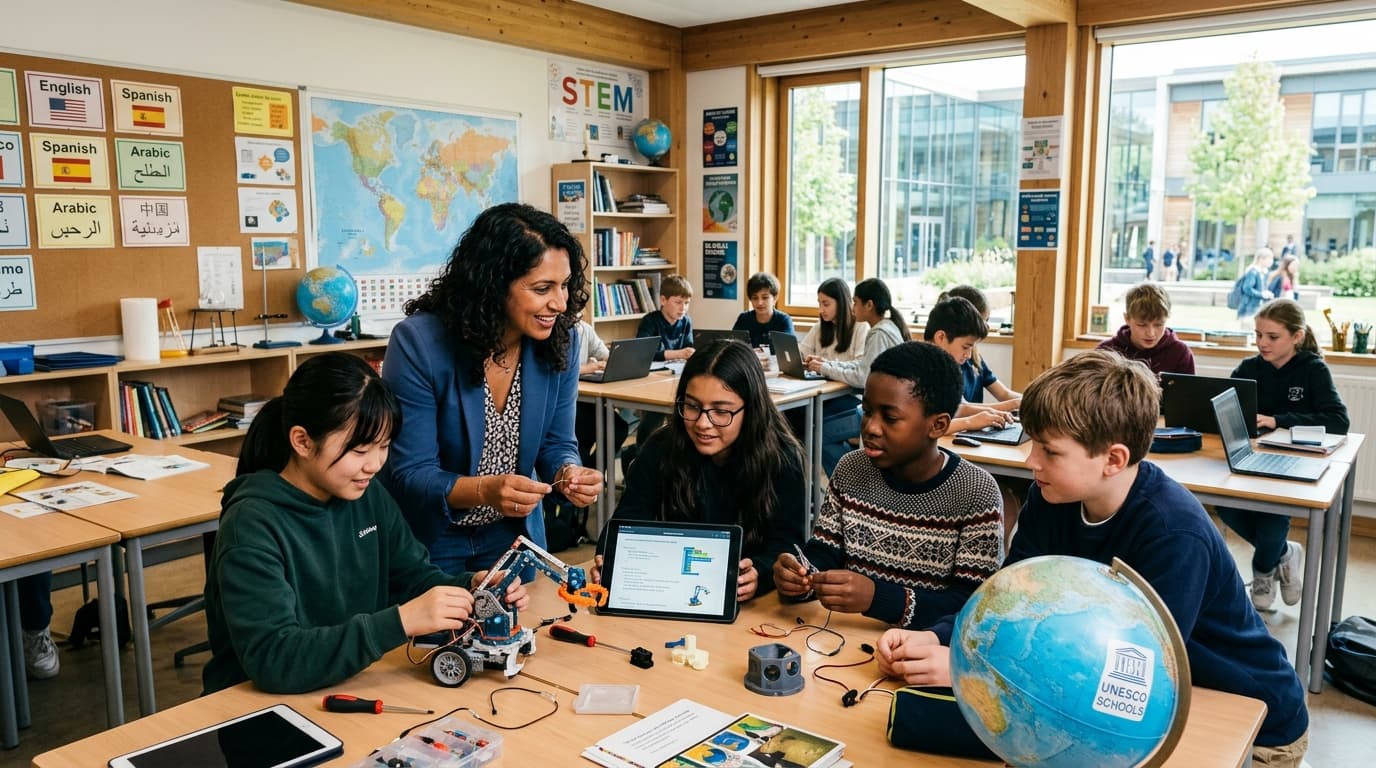
For international educators, leading AP Capstone presents distinct, exciting pedagogical opportunities alongside formidable cross-cultural challenges. Students in international schools frequently bring diverse linguistic backgrounds, disparate prior educational experiences, and differing cultural norms regarding intellectual property and authoritative truth. Guiding a multilingual cohort of students through independent research requires intentional scaffolding, unwavering adherence to academic integrity, and systematic mastery of evidence evaluation.
This master guide provides an end-to-end pedagogical blueprint for AP Capstone educators and department heads in international schools. From establishing foundational QUEST inquiry habits to mastering Performance Tasks (PT1, PT2, and the AP Research Academic Paper and Defense), this guide details actionable instructional routines, concrete rubrics, scaffolding protocols, and ethical guardrails designed to elevate student scholarly voice on the global stage.
Deconstructing the QUEST Pedagogical Framework
The College Board structures the AP Capstone curricular trajectory around an iterative inquiry loop known as QUEST. In international classrooms, where students frequently transition between disparate national curricula, QUEST serves as a universal, unifying intellectual compass:
Unpacking the Five Competencies for Multilingual Scholars:
- Question and Explore (Q): Multilingual students often default to broad, descriptive topics ("Pollution in the South China Sea" or "The History of Artificial Intelligence"). Teachers must scaffold the transition from broad topics to focused, contentious, open-ended research questions with clear contextual boundaries.
- Understand and Analyze Arguments (U): Students must move beyond merely summarizing a text's surface content to rigorously mapping the anatomy of its argument: Identifying the thesis, isolating intermediate premises, scrutinizing empirical evidence, and unmasking logical fallacies.
- Evaluate Multiple Perspectives (E): In international settings, students frequently equate "perspective" with simple geographic origin or crude binary debates (e.g., "Pro vs. Con"). Capstone educators must teach students that an authentic scholarly perspective represents a cohesive point of view supported by specific arguments, context, and values (e.g., economic viability vs. ethical indigenous stewardship vs. ecological preservation).
- Synthesize Ideas (S): True synthesis is not a disjointed "laundry list" of disparate article summaries. It requires students to weave diverse scholarly voices into a structured intellectual dialogue, highlighting where authorities agree, where they conflict, and where critical gaps emerge.
- Team, Transform, and Transmit (T): Scholars must master the conventions of scholarly oral presentation: engaging delivery, logical slide economy, confident body language, and the ability to articulate spontaneous, evidence-grounded responses to probing oral defense questions.
AP Seminar: Mastering the Instructional Workflow and Assessment Tasks
AP Seminar serves as the foundational laboratory where students transition from consumer-learners into critical evaluators and argumentative writers. The course culminates in three distinct assessment components totaling 100% of the AP score:
1. Performance Task 1 (PT1): Navigating Team Dynamics and the IRR
PT1 presents unique socio-emotional hurdles in international schools. Because cohorts often comprise students with varying English proficiencies and differing cultural attitudes toward teamwork, unmanaged group work can degenerate into friction.
Instructional Blueprint for PT1:
- The Team Contract Protocol: Before selecting any research topic, student teams (3–5 members) must draft and sign a formal "Academic Collaboration Charter." This document outlines internal milestone deadlines, communication channels, procedures for addressing uneven workloads, and protocols for escalating unresolvable conflicts to the instructor.
- Scaffolding the IRR (Individual Research Report): The IRR must not be an argument; it is an objective, critical investigation of a chosen problem filtered through a distinct, assigned lens (e.g., economic, ethical, political, environmental, scientific).
- The Source Evaluation Matrix (RAVEN Framework): Teach students to formally audit every cited peer-reviewed source using the RAVEN rubric:
- Reputation: What is the author’s institutional standing, peer-review status, and publication credibility?
- Ability to Observe: Does the author have firsthand, direct access to the primary data or phenomenon?
- Vested Interest: Does the author or funding organization gain financially or politically from a specific outcome?
- Expertise: What specific advanced training or credentials qualify the author to speak on this precise topic?
- Neutrality: Is the tone measured and objective, or does the text employ manipulative, loaded rhetorical strategies?
2. Performance Task 2 (PT2): Stimulus Interrogation and the IWA
In early January, the College Board releases a curated packet of cross-disciplinary stimulus materials (historical documents, fine art, literary excerpts, philosophical treatises, scientific data). Students must independently analyze the packet, identify a unifying thematic thread, and craft an original Individual Written Argument (IWA) of up to 2,000 words that integrates at least one stimulus source in a meaningful, non-superficial manner.
Scaffolding the Stimulus Integration Protocol:
- Avoiding the "Name-Drop" Trap: The most frequent scoring pitfall in PT2 is cosmetic citation—citing a stimulus text once in the introductory paragraph simply to fulfill the rubric checklist, after which the student pivots to an unrelated topic.
- The Thematic Matrix Routine: Have students map all stimulus sources onto a visual whiteboard matrix, identifying points of philosophical resonance, methodological contrast, and historical evolution.
- Contextual Line of Inquiry: Challenge students to connect abstract stimulus themes (e.g., "The Nature of Resilience" or "Ethical Dilemmas in Technology") to immediate, compelling international issues (e.g., food security in Southeast Asia, renewable energy transitions in the Gulf region, or cross-border water rights disputes).
AP Research: Guiding the 5,000-Word Scholarly Investigation
AP Research represents the summit of secondary school scholarly inquiry. Unlike AP Seminar, which emphasizes evaluating preexisting arguments, AP Research requires scholars to address a distinct gap in existing academic literature by designing, executing, and defending an original empirical research study.
1. Identifying the Authentic Academic Gap
High school scholars naturally struggle with the concept of an academic "gap." They either attempt to solve massive, intractable global crises ("How can we end climate change?") or replicate known findings with zero original contribution ("Does sleep deprivation hurt teen memory?").
The "Gap Clarification Funnel" Exercise:
Guide students through a three-tier narrowing process:
- The Broad Field: Cognitive Psychology / Adolescent Development.
- The Established Consensus (Literature Review): Research confirms that blue light exposure disrupts circadian melatonin synthesis, decreasing subjective sleep quality among urban youth (Smith, 2021; Chen, 2023).
- The Unexplored Scholarly Gap: While blue light impact is documented in monocultural domestic contexts, no existing study has investigated how time-zone shifting during international school travel cycles interacts with evening screen time to influence executive function recovery among adolescent expatriate boarding students in Switzerland.
2. Methodological Precision: Quantitative vs. Qualitative Scaffolding
AP Research demands that students select, justify, and execute a defensible research methodology. The methodology must not be a vague list of activities; it must be a rigorous, replicable research design:
Lesson Planner
Generate comprehensive, CAPS-aligned lesson plans in seconds.
| Methodological Approach | Typical International Student Projects | Common Pitfalls to Scaffold | Required Methodological Tooling |
|---|---|---|---|
|
Quantitative (Empirical/Experimental)
|
Correlational survey studies on bilingual vocabulary retrieval; laboratory chemistry trials on local water contaminants.
|
Confounding variables ignored; inadequate sample sizes ($N < 30$); claiming causal relationships from simple correlations.
|
Descriptive & inferential statistics ($p$-values, ANOVA, regression, Cohen's $d$); Google Sheets / R / Python analysis.
|
|
Qualitative (Phenomenological/Case Study)
|
Semi-structured interviews analyzing how expatriate students navigate cultural code-switching in host communities.
|
Leading interview questions; anecdotal summaries lacking systematic thematic coding; confirmation bias.
|
Inductive thematic analysis; inter-coder reliability checks; transcript anonymization; NVivo / Taguette coding.
|
|
Mixed Methods (Explanatory Sequential)
|
School-wide quantitative survey on mental wellbeing followed by in-depth focus groups exploring institutional root causes.
|
Failure to explain why both methods were necessary; treating qualitative data merely as ornamental pull-quotes.
|
Triangulation matrices; explicit sequencing narratives explaining how qualitative phases clarify quantitative outliers.
|
Safeguarding Academic Integrity in the Era of Generative AI
The emergence of sophisticated Large Language Models (LLMs) like GPT-4 and Claude has fundamentally disrupted traditional secondary school research assignments. In AP Capstone, where authentic intellectual wrestling, original data synthesis, and scholarly voice are paramount, unmonitored generative AI usage threatens the very integrity of the program.
The College Board has instituted strict policies regarding AI: while AI tools may be consulted for preliminary brainstorming or search keyword formulation, the generation of text, literature reviews, methodology outlines, or data interpretations by AI constitutes an egregious integrity violation resulting in a score of zero.
The In-Class Defense Check-In Routine:
At random intervals during drafting months, conduct spontaneous three-minute verbal check-ins with every student:
- "Walk me through how you arrived at this specific synthesis between author X and author Y."
- "Why did you choose a Likert scale for question 7 of your survey instead of a semantic differential scale?"
- "What does this advanced econometric term in your literature review actually mean in simple words?" A student who wrote their paper with genuine intellectual sweat will answer effortlessly; a student who generated or outsourced their text will immediately falter.
Scaffolding Multilingual Learners in AP Capstone
In international schools, many students taking AP Capstone are learning in their second or third language. While these students possess sophisticated conceptual thinking, they can be intimidated by dense academic English and Anglo-centric rhetorical conventions.
1. Decoding Dense Academic Journal Articles
Scholarly articles from JSTOR or Nature can overwhelm multilingual learners. Teach students the strategic Three-Pass Academic Reading Strategy:
- Pass 1 (The Bird’s Eye Scan - 5 mins): Read only the Title, Abstract, Introduction conclusion, and Section Subheadings. Identify the core thesis and whether the paper is directly relevant to the student's research question.
- Pass 2 (The Architecture Mapping - 15 mins): Read the Introduction and Conclusion fully. Examine the Figures, Graphs, and Tables. Highlight key operational definitions.
- Pass 3 (The Methodological Deep-Dive - 30 mins): Read the Methodology and Discussion sections with a pen in hand. Annotate limitations, sample parameters, and unanswered questions that could represent an authentic gap.
2. Sentence Stems for Academic Synthesis and Argumentation
Provide multilingual writers with high-utility academic transition frameworks to elevate their scholarly tone:
- While [Author A] posits that [Argument], their analysis remains bounded by [Contextual Limitation], an oversight directly illuminated by [Author B's] investigation into [Phenomenon].
- Although existing scholarship has extensively documented [Established Fact] (Author C, 2022; Author D, 2024), a critical empirical void persists regarding how [Variable 1] interacts with [Variable 2] within [Specific Non-Western / International Setting].
- Rather than viewing [Perspective A] and [Perspective B] as mutually exclusive, this investigation reconciles their tension by demonstrating that [Original Synthesized Claim].
- The methodological limitations inherent in [Author E’s] cross-sectional survey necessitate a longitudinal qualitative inquiry to uncover the underlying psychological mechanisms.
Curricular Sequencing: The Year-Long Instructional Roadmap
Successful AP Capstone instruction requires disciplined backwards planning to ensure all College Board submission deadlines, digital portfolio uploads, and internal mock presentations are executed seamlessly.
Complete Rubric Scaffolding Tool: The Oral Defense Preparation Protocol
The Oral Defense constitutes a pivotal scoring component in both AP Seminar (TMP/IMP) and AP Research (POD). International students frequently rehearse memorized speeches but freeze when challenged by spontaneous, probing defense questions.
To inoculate students against presentation anxiety, train them using this structured oral defense response framework:
Essential Oral Defense Practice Prompts:
- "How did your initial assumptions about this problem evolve after you reviewed the literature?"
- "If you had an additional six months and a research grant of $10,000, what methodological adjustment would you implement first?"
- "How does your conclusion challenge or extend the findings of your primary source author?"
- "Which alternative perspective did you find most compelling, and what ultimately led you to dismiss it in favor of your chosen resolution?"
Conclusion: Empowering the Next Generation of Global Scholars
AP Capstone is far more than an advanced curriculum designed to burnish university applications; it is a transformative intellectual apprenticeship. In an interconnected world inundated with algorithmic echo chambers, disingenuous political rhetoric, and superficial soundbites, the ability to dissect a complex global problem, trace the lineage of an argument, interrogate evidence with clinical precision, and express an ethical, evidence-based voice is a profound civic superpower.
For educators working in international schools, teaching AP Seminar and AP Research is an opportunity to cultivate genuine scholarly independence. By embracing the QUEST framework, instituting rigorous academic integrity safeguards, honoring the unique linguistic assets of multilingual learners, and maintaining high expectations for scholarly rigor, we prepare our students not merely to succeed on high-stakes examinations, but to navigate university research and lead global discourse with clarity, empathy, and intellectual conviction.