How to Implement Trauma-Informed Restorative Circles During Morning Meetings
In public elementary schools across the United States, children arrive each morning carrying an invisible emotional load: chronic family stress, housing instability, community violence, adverse childhood experiences (ACEs), and intense social-emotional dysregulation. When a child arrives with a nervous system locked in survival mode (fight, flight, or freeze), their prefrontal cortex is neurologically offline. Demanding that they sit down, open a math textbook, and memorize multiplication facts is biologically futile.
Traditional punitive school responses—yelling, clip charts, lost recess, and threats of office referrals—only trigger further amygdala hijacking, perpetuating cycles of behavioral disruption and academic disengagement.
The evidence-informed antidote is Trauma-Informed Restorative Circles. Embedded seamlessly within the 15- to 20-minute daily Morning Meeting structure pioneered by the Responsive Classroom approach, restorative circles create an unshakeable container of psychological safety, relational belonging, and neurobiological regulation.
This guide provides an exhaustive, practical handbook for elementary educators to plan, introduce, facilitate, and sustain high-impact restorative circles that transform classroom culture and unlock academic readiness.
Table of Contents
- 1. Neurobiology of Trauma and the Window of Tolerance
- 2. The 4-Component Morning Meeting Architecture
- 3. Step-by-Step Guide: Facilitating a Daily Restorative Circle
- Step 1: Arrange the Physical Circle (Eliminating Hierarchy & Furniture Barriers)
- Step 2: Introduce and Honor the Sacred Talking Piece
- Step 3: Lead Somatic Calming and Co-Regulation Breathing Rituals
- Step 4: Facilitate Low-Risk to Vulnerable Sharing Prompts
- Step 5: Facilitate Community-Building Group Activities and Initiatives
- Step 6: Conclude with the Daily Morning Message and Academic Prime
- 4. Complete Worked 20-Minute Morning Meeting Circle Script
- 5. 50 Trauma-Informed Circle Sharing Prompts Categorized by Emotional Depth
- 6. Restorative Repair Circles: Resolving Classroom Peer Conflict
- 7. Differentiating for Neurodivergent and Non-Verbal Students
- 8. Overcoming Common Circle Roadblocks and Reluctance
- 9. Digital Tools, Mood Meters, and AI Circle Planning Assistants
- 10. Frequently Asked Questions (FAQ)
- 11. Action Plan for Elementary Practitioners
- 12. Scholarly References and Restorative Justice Frameworks
- 13. Related Teaching Resources and Social-Emotional Tools
1. Neurobiology of Trauma and the Window of Tolerance
To facilitate restorative circles with genuine empathy, educators must understand the nervous system through Dr. Dan Siegel's concept of the Window of Tolerance:
- Hyperarousal (Fight/Flight): The sympathetic nervous system is flooded. Children exhibit physical restlessness, clenched jaws, verbal defiance, emotional outbursts, or frantic impulsivity.
- Hypoarousal (Freeze/Fawn): The parasympathetic dorsal vagal system shuts down. Children exhibit glazed-over eyes, extreme withdrawal, head on the desk, or complete verbal mutism.
- The Window of Tolerance (Social Engagement): The ventral vagal system is active. The child feels safe, calm, connected, and capable of analytical problem-solving and academic learning.
Dr. Bruce Perry's Neurosequential Model in Education (NME) articulates the mandatory three-step sequence of human cognitive interaction:
$$\text{1. REGULATE} \rightarrow \text{2. RELATE} \rightarrow \text{3. REASON}$$
You cannot jump straight to Reason (academics) until the brain stem is Regulated (rhythmic breathing and sensory safety) and the limbic system is Related (relational connection in the circle). Morning restorative circles provide the essential daily platform for regulation and relationship.
2. The 4-Component Morning Meeting Architecture
Originating from the Responsive Classroom framework, an effective 20-minute morning restorative circle consists of four distinct, predictable components:
3. Step-by-Step Guide: Facilitating a Daily Restorative Circle
Step 1: Arrange the Physical Circle
The physical geometry of the circle is non-negotiable:
- Eliminate all tables, desks, and obstacles from the center. Furniture creates psychological shields that impede vulnerability.
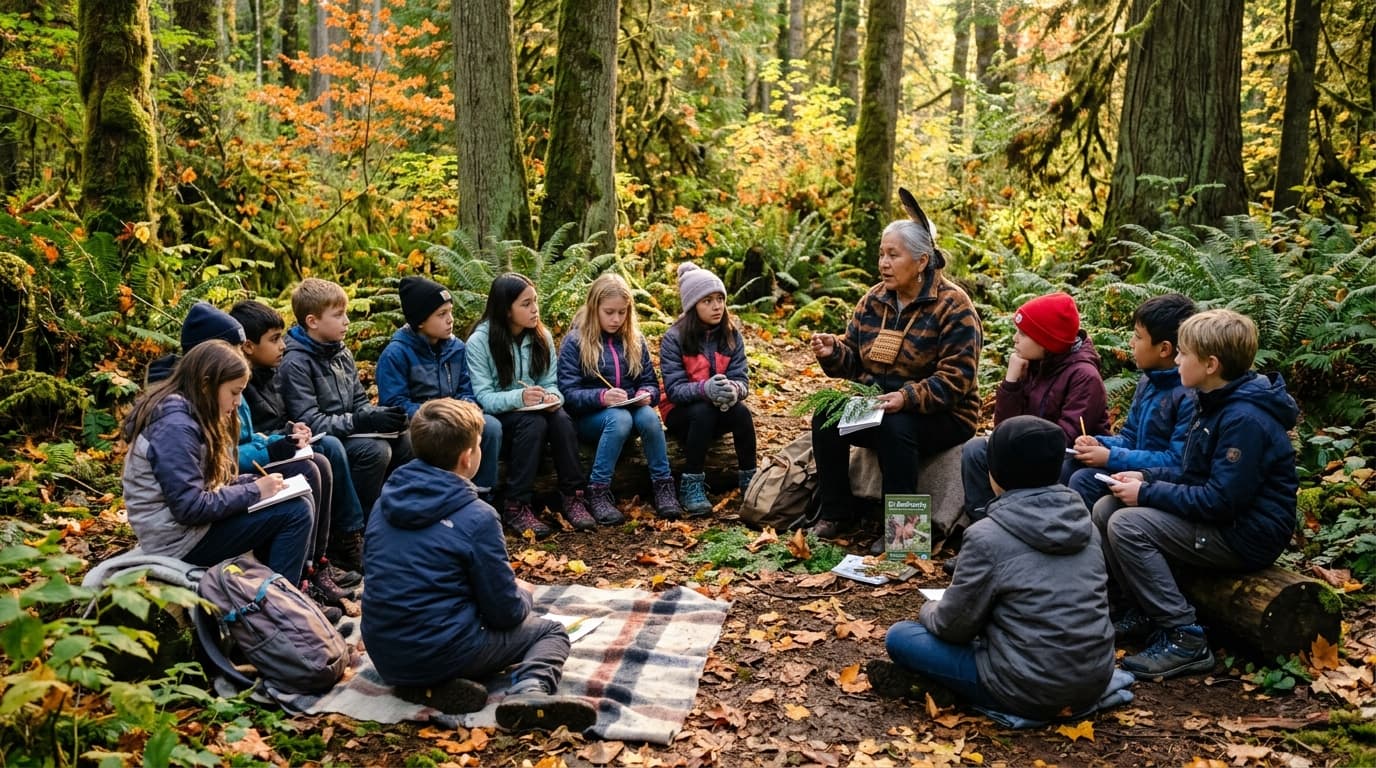
- Arrange chairs in an unbroken, eye-level circle, or have students sit cross-legged on a perimeter carpet.
- The teacher sits directly in the circle as an equal participant, not standing outside with a clipboard.
Step 2: Introduce and Honor the Sacred Talking Piece
Borrowing from Indigenous restorative traditions, use an intentional, tactile Talking Piece (a smooth river stone, a plush mascot, or a handcrafted wooden baton):
- Rule 1: Only the person holding the talking piece has the floor.
- Rule 2: Everyone else listens with their eyes, ears, and heart (active non-verbal presence).
- Rule 3: The right to pass is absolute. A child may hold the piece, pause, and pass it without penalty. Forced disclosure re-traumatizes guarded children.
Step 3: Lead Somatic Calming and Co-Regulation Rituals
Begin every circle with 90 seconds of somatic nervous system regulation:
- Box Breathing: Inhale for 4 seconds, hold for 4, exhale through the mouth for 4, hold for 4.
- 5-4-3-2-1 Sensory Grounding: Look around the room and notice 5 things you can see, 4 things you can feel, 3 things you can hear.
Step 4: Facilitate Structured Sharing Prompts
Introduce a clear, focused prompt calibrated to your classroom's developmental comfort level. Ensure prompts invite genuine self-expression without coercing traumatic disclosures.
Step 5: Facilitate Cooperative Group Initiatives
Engage in a cooperative game where everyone succeeds together (e.g., passing a continuous clap in rhythm around the circle, group counting without speaking over one another). Shared laughter releases dopamine and oxytocin, bonding the peer group.
Step 6: Conclude with the Daily Morning Message
Display an interactive chart paper message outlining today's schedule, an intriguing scientific inquiry, or a warm celebratory shoutout, bridging the social circle to morning academic blocks.
Lesson Planner
Generate comprehensive, CAPS-aligned lesson plans in seconds.
4. Complete Worked 20-Minute Morning Meeting Circle Script
1. Somatic Centering & Rhythmic Breathing (2 Minutes)
Teacher: "Good morning, Room 14. Place both feet flat on the carpet, rest your hands in your lap, and soften your shoulders. Let's take three collective belly breaths together. Inhale through the nose... 1, 2, 3, 4. Exhale gently through the mouth... blow out the candle. Again..."
2. The Micro-Greeting: "Cross-Circle Eye Contact" (4 Minutes)
Teacher: "Today's greeting is the 'Wink and Wave'. Make eye contact across the circle, give a polite nod, and say: 'Good morning, [Name], I'm glad you are here today.'" Students greet across the circle until every child has been named and acknowledged.
3. Structured Sharing with the Talking Piece (8 Minutes)
Teacher holds the river stone: "Our prompt today is: 'Look at our classroom Mood Meter. What color zone are you starting your morning in (Red, Yellow, Blue, or Green), and what is one word that describes why?'"
- Teacher models: "I am in the Green zone today because I had a calm cup of tea and I was excited to see your smiling faces."
- Teacher passes stone to student on the left.
- Student A: "I am in Yellow because I almost missed the bus and my heart is beating fast."
- Student B: "I am in Blue because my puppy is sick at home." (Peers give gentle silent thumbs-up empathy sign).
- Student C: Pauses for 3 seconds, takes a breath, and passes the stone. Teacher smiles warmly without pressure.
4. Cooperative Group Activity: "Group Pulse" (4 Minutes)
Teacher: "Let's see if we can pass a silent pulse clap around our circle of 22 students in under 15 seconds without breaking the rhythm." Class executes the cooperative challenge, giggling when a rhythm slips, resetting, and successfully completing the challenge in 12 seconds.
5. Morning Message & Academic Bridge (2 Minutes)
Teacher reads chart message: "Dear Mathematicians, today we unlock the secret of multi-digit arrays. Notice how our circle has 22 equal parts. What are two different arrays we could make with 22 students? Have a marvelous Tuesday!"
5. 50 Trauma-Informed Circle Sharing Prompts Categorized
Tier 1: Low-Risk / Icebreakers (Safe & Fun)
- If you could have any superpower on the playground, what would it be?
- What is your favorite breakfast food on a cold morning?
- Which animal sound can you make most realistically?
- Would you rather fly like a bird or swim like a dolphin?
- What is a song that always puts a smile on your face?
- If you designed a new Crayola crayon color, what would you name it?
- What is your favorite game to play when it rains?
- If our classroom had a class pet, what would it be?
- Sweet snacks or salty snacks?
- What is the funniest joke you know?
Tier 2: Self-Awareness & Social-Emotional Identification
- Which color on our Mood Meter matches your energy right now?
- What is one physical sensation you feel in your body when you feel stressed?
- What is one thing you do that helps you calm down when you feel angry?
- What is a mistake you made recently that taught you something new?
- Name one person in your life who always makes you feel safe.
- What is something you are proud of accomplishing this week?
- If your brain was a weather forecast today, what would the weather be?
- What is one word that describes your mood this morning?
- How do you know when a friend is having a tough day?
- What is something that requires courage for you to try?
Tier 3: Empathy, Community & Relationship Building
- What is one quality you value most in a true friend?
- Share a time when someone in this room showed you unexpected kindness.
- What can our class do today to make sure everyone feels included at recess?
- How do you feel when someone interrupts you while you are talking?
- What is one thing you wish teachers understood about being a kid today?
- If you could send a bucket of happiness to anyone in the world today, who would it be?
- What is one thing that made you feel grateful yesterday?
- How can we support classmates who are feeling sad or quiet today?
- What does respect look like when we disagree with each other?
- If our classroom was a sports team, what position would you play to help us win?
6. Restorative Repair Circles: Resolving Classroom Peer Conflict
When interpersonal conflict erupts (name-calling, exclusion on the soccer field, stealing supplies), do not lecture or send both children to detention. Convene a Restorative Repair Circle:
| 1 | THE 5 RESTORATIVE QUESTIONS |
| 2 | 1. What happened? (Tell your perspective without blaming). |
| 3 | 2. What were you thinking and feeling at the time? |
| 4 | 3. What have you thought about since? |
| 5 | 4. Who has been affected by what you did, and 700;">in what way? |
| 6 | 5. What do you need to do to make things right and repair the harm? |
By shifting the focus from "What rule was broken and what punishment is deserved?" to "Who was harmed and how can we repair the relationship?", children develop authentic moral accountability and empathy.
7. Differentiating for Neurodivergent and Non-Verbal Students
- Visual Emotion Check-In Boards: Provide non-verbal students or students with selective mutism with visual emotion cards (e.g., pointing to emojis or Zones of Regulation cards).
- Sensory Accommodations: Allow students with sensory processing sensitivity or autism to hold tactile fidgets (smooth stones, weighted lap pads) during circle.
- The "Pass with Pride" Card: Give introverted or traumatized children a physical laminated card they can hand to the teacher to signal that they wish to pass quietly.
8. Overcoming Common Circle Roadblocks
9. Digital Tools, Mood Meters, and AI Circle Planning Assistants
Utilize interactive digital tools like the Yale Center for Emotional Intelligence's Mood Meter App or Google Forms for asynchronous emotion check-ins. Teachers can leverage the SA Teachers Lesson Planner to generate culturally responsive circle prompts tailored to weekly themes.
10. Frequently Asked Questions (FAQ)
What if I don't have time for a 20-minute circle every morning?
Even a 7-minute abbreviated circle (Somatic breath + 1-word Mood Meter check + quick greeting) achieves profound nervous system regulation. You will save 45 minutes of lost instructional time later in the day by preventing behavioral meltdowns.
Does restorative justice mean there are no consequences for bad behavior?
No. Restorative discipline holds students to higher accountability than traditional detention. In detention, a student sits passively. In restorative repair, the student must face the person they hurt, hear the impact of their actions, take ownership, and physically execute a plan to repair the damage.
11. Action Plan for Elementary Practitioners
- Monday Morning: Clear your carpet area and create an unbroken circle of chairs.
- This Week: Introduce an intentional talking piece and practice 90 seconds of box breathing every morning.
- This Month: Facilitate Tier 2 sharing prompts and introduce the 5 Restorative Questions when peer conflicts arise.
12. Scholarly References and Restorative Justice Frameworks
- Perry, B. D., & Winfrey, O. (2021). What Happened to You?: Conversations on Trauma, Resilience, and Healing. Flatiron Books.
- Siegel, D. J., & Bryson, T. P. (2012). The Whole-Brain Child: 12 Revolutionary Strategies to Nurture Your Child's Developing Mind. Bantam.
- Kriete, R., & Davis, C. (2014). The Morning Meeting Book (3rd ed.). Center for Responsive Schools.
- Zehr, H. (2002). The Little Book of Restorative Justice. Good Books.
- Brackett, M. (2019). Permission to Feel: Unlocking the Power of Emotions to Help Our Kids, Ourselves, and Our Society Thrive. Celadon Books.
13. Related Teaching Resources and Social-Emotional Tools
- International Teaching Resources Hub — Explore comprehensive guides for inclusive and trauma-informed pedagogy worldwide.
- AI Lesson Planner — Generate social-emotional learning lesson plans and morning meeting community prompts.
- AI Report Comments Assistant — Draft asset-based social-emotional growth narratives for student progress reports.
9. Advanced Restorative Protocol: De-Escalation & Tier 2 Tiered Responses
When high-intensity behaviors emerge in Title I classrooms, circle work must seamlessly interface with trauma-informed de-escalation. Below is the multi-tiered response protocol:
The 4-Stage Co-Regulation De-Escalation Model
Student-Led Restorative Reflection Script (Printable Desk Card)
To empower elementary learners to resolve peer friction independently during station work or recess, laminate and distribute these 4 pocket prompts:
- "What happened from your perspective?" (Describe observed actions without calling names or assigning blame).
- "What were you feeling in your body right before that happened?" (Tight chest, clenched fists, hot face, heavy stomach).
- "Who was affected by what took place, and how did it impact them?" (Disrupted learning, caused sadness, damaged classroom trust).
- "What concrete action can we agree on right now to make this right?" (Verbal apology, replacing materials, giving space for 15 minutes, doing a joint activity).
Administrator and Caregiver Alignment Letter (Bilingual Template)
"Dear Families and School Leadership: In Room 14, we begin every morning with a 15-minute Restorative Community Circle. This practice is rooted in pediatric neurobiology: children cannot access higher-order analytical reasoning (PFC) until their nervous systems feel secure and connected (limbic regulation). Circles do not replace accountability; they heighten accountability by asking students to face the human impact of their actions rather than serving passive, isolated detentions. If you would like to observe our morning circle or join as an honored community guest, our doors are open every Tuesday at 8:15 AM."