How to Embed Aboriginal and Torres Strait Islander Histories and Cultures: The 8 Aboriginal Ways of Learning Framework
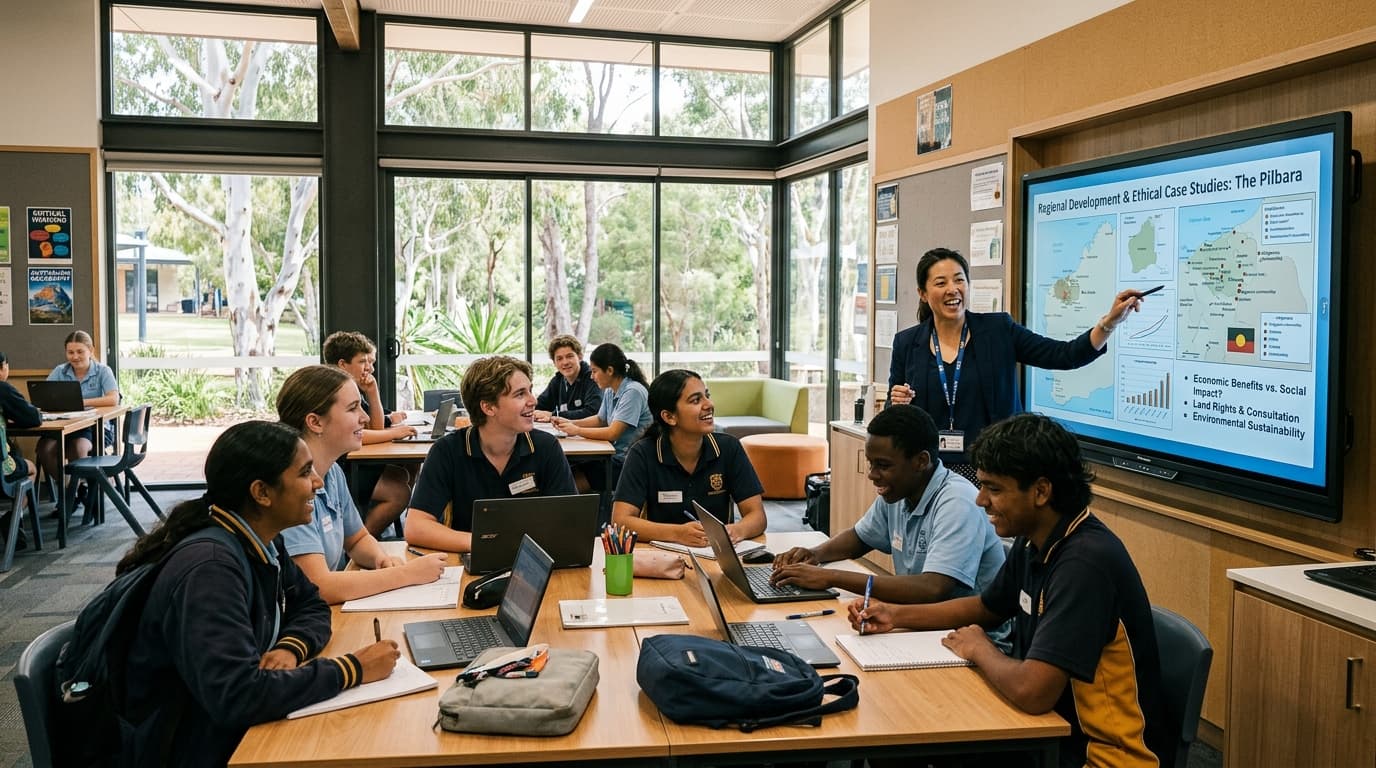
Embedding Aboriginal and Torres Strait Islander Histories and Cultures across all learning areas is a non-negotiable cross-curriculum priority in the Australian Curriculum (ACARA Version 9.0). It reflects a profound national commitment to reconciliation, cultural truth-telling, and honoring the enduring sovereignty and wisdom of the oldest continuous living cultures on Earth.
Yet, many non-Indigenous Australian teachers approach this priority with acute anxiety. Educators worry about inadvertently causing cultural offense, perpetuating stereotypes, or committing cultural appropriation. Fearful of "doing it wrong," teachers often retreat into safe, tokenistic superficiality: pulling out brown paint for "dot painting" activities during NAIDOC Week, reading an isolated Dreamtime story once a year, or reciting hurried Acknowledgements of Country that feel like administrative compliance.
Authentic integration requires shifting from learning about Indigenous Australians as historical subjects to learning through Indigenous pedagogical frameworks. The most transformative, evidence-informed tool for achieving this shift is the 8 Aboriginal Ways of Learning framework (8ways), developed through extensive research by Tyson Yunkaporta and the NSW Department of Education.
This masterclass equips Australian primary and secondary educators, curriculum coordinators, and school leaders with an evidence-informed pedagogical architecture for embedding First Nations perspectives, deep connection to Country, and ethical protocols across every subject area from Foundation through Year 10.
1. The Statutory Framework: ACARA Cross-Curriculum Priority
Under the Australian Curriculum, the Aboriginal and Torres Strait Islander Histories and Cultures priority is structured around three interconnected organizing ideas:
The Concept of "Country" in First Nations Worldviews
In Western thought, "land" is typically viewed as a physical space, an economic asset, or real estate to be bought and sold. In Aboriginal and Torres Strait Islander worldviews, Country (always capitalized) is a living entity:
- Country encompasses lands, waters, skies, seasons, animals, plants, songs, kinship, and ancestral spirits.
- People do not "own" Country; people belong to Country. You are born of Country, sustained by Country, and return to Country upon passing.
- Understanding this sacred custodial connection is the foundation of genuine reconciliation and environmental stewardship.
2. The 8 Aboriginal Ways of Learning Framework (8ways)
Developed by Dr. Tyson Yunkaporta in collaboration with Western New South Wales communities, the 8 Ways of Aboriginal Learning is a pedagogical framework that allows teachers to include Aboriginal perspectives through Aboriginal learning processes, rather than merely Aboriginal content.
| 8ways Pedagogy | Traditional Indigenous Meaning | Modern Classroom Translation |
|---|---|---|
|
1. STORY SHARING
|
Approaching learning through personal narrative and yarning.
|
- Opening units with personal narratives - Using mentor texts, storytelling, case studies before abstract theory.
|
|
2. LEARNING MAPS
|
Visualizing the whole journey and explicit learning trajectories.
|
- Visual roadmaps on classroom walls - Concept maps, mind maps, explicit rubrics showing end destination.
|
|
3. NON-VERBAL
|
Kinaesthetic learning, physical action, silent observation.
|
- Hands-on manipulation of materials - Watching teacher model before trying - Non-verbal reflection routines.
|
|
4. SYMBOLS & IMAGES
|
Using visual images, metaphors, and symbols to encode knowledge.
|
- Dual-coding text with symbolic icons - Creating visual infographics and models - Drawing diagrams to explain math/science
|
|
5. LAND LINKS
|
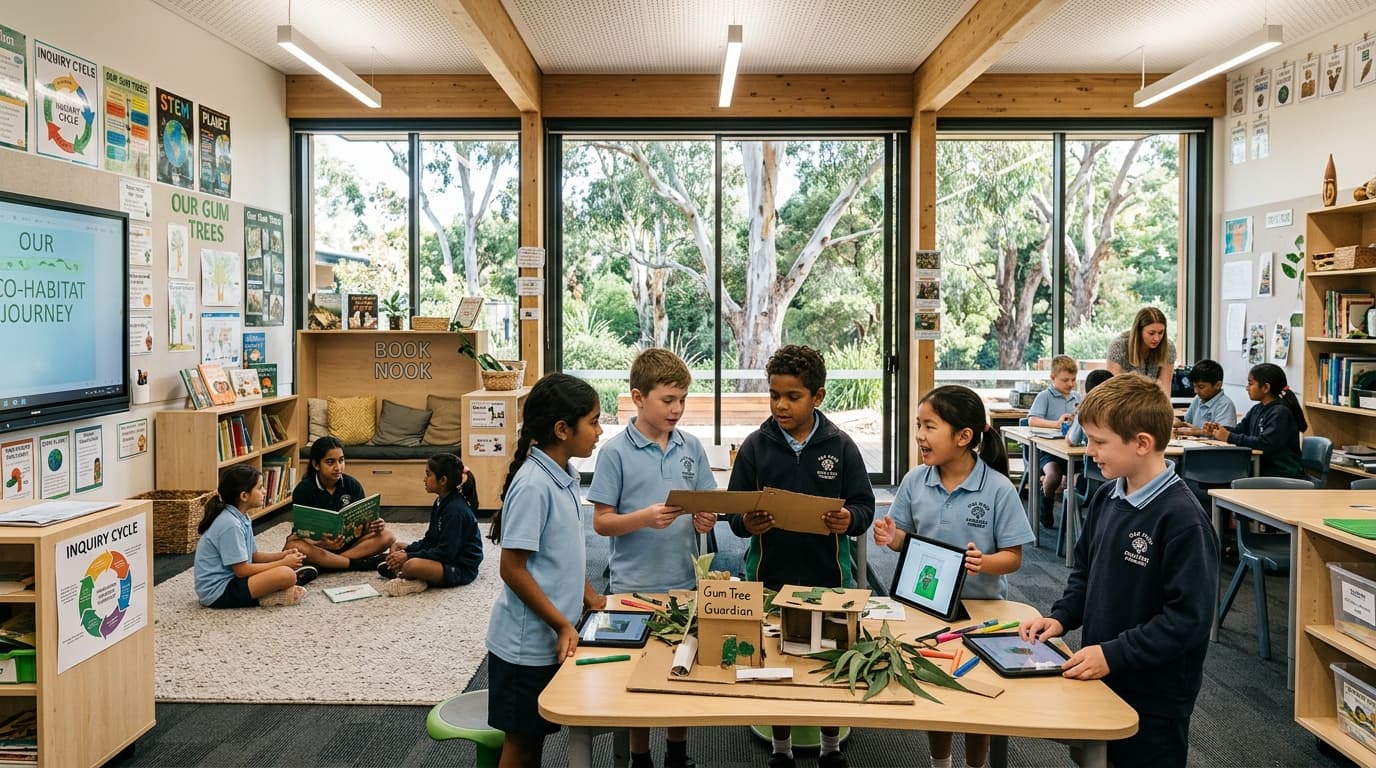
Grounding learning in local place, ecology, and natural Country.
|
- Outdoor fieldwork on local Country - Using local rivers, flora, and soil as live scientific laboratory sites.
|
|
6. NON-LINEAR
|
Indirect, cyclical thinking; making lateral, creative links.
|
- Returning to concepts in spiral cycles - Connecting cross-curricular subjects - Celebrating alternative problem-solving.
|
|
7. DECONSTRUCT / RECONSTRUCT
|
Watching the whole, breaking into parts, modeling, rebuilding.
|
- Deconstructing mentor exemplar texts - Teacher models whole product; guides step-by-step; students build own.
|
|
8. COMMUNITY LINKS
|
Connecting learning to real-world family and community benefit.
|
- Projects with authentic community impact - Exhibitions for parents & local elders - Solving genuine local neighborhood needs
|
The Power of 8ways: Universal Benefit
The beauty of the 8ways framework is that while it is rooted in ancient Indigenous epistemologies, it is exceptionally high-impact pedagogy for ALL students, including neurodivergent learners, English as an Additional Language or Dialect (EAL/D) students, and visual-spatial thinkers.
3. Cultural Appreciation vs. Cultural Appropriation: Navigating Protocols
The greatest source of teacher hesitation is fear of cultural appropriation. Clear understanding of ethical boundaries empowers teachers to act with integrity:
| Dimension | Cultural Appreciation (Ethical) | Cultural Appropriation (Harmful) |
|---|---|---|
|
Visual Arts
|
Studying the cultural meaning, techniques, and symbols of an authentic Indigenous artist.
|
Having non-Indigenous students paint faux "dot paintings" using cotton buds on boomerangs or paper plates.
|
|
Sacred Stories
|
Reading published Dreamtime / Creation stories authored by recognized First Nations elders.
|
Having students invent their own fictional "Dreaming stories" or make up fake totems and spiritual animals.
|
|
Traditional Tools
|
Inviting a local community elder or ranger to demonstrate weapons, tools, and weaving techniques.
|
Attempting to build and throw boomerangs without cultural context, treating sacred implements as disposable carnival toys.
|
|
Local Protocol
|
Identifying the specific local Traditional Custodians (e.g., Wurundjeri, Gadigal, Whadjuk).
|
Homogenizing Indigenous Australians into a generic monolithic culture without naming distinct nations and languages.
|
The "Dot Painting" Fallacy
A common mistake across Australian primary schools is believing that "Aboriginal Art = Dot Painting."
- Dot painting (associated primarily with Western Desert art movements like Papunya Tula) was developed in the 1970s as a specific strategy to obscure sacred symbols from uninitiated eyes.
- Forcing students in coastal Sydney or Melbourne to do "dot painting" ignores the rich diversity of First Nations visual traditions—such as Arnhem Land cross-hatching (rarrk), Kimberley wandjina paintings, and south-eastern line engraving.
- Non-Indigenous students should NOT produce imitation dot paintings. Instead, students study contemporary First Nations artists, learn the cultural stories behind their art, and then create their own original personal artwork using their own personal symbols.
4. Welcome to Country vs. Acknowledgement of Country
Understanding the crucial distinction between a Welcome to Country and an Acknowledgement of Country is a foundational protocol for every Australian school:
Lesson Planner
Generate comprehensive, CAPS-aligned lesson plans in seconds.
| Dimension / Category | Key Details & Guidance |
|---|---|
|
WELCOME TO COUNTRY (Ceremonial Right)
|
- Can ONLY be delivered by a recognized Traditional Custodian or Elder of the specific local Country where the school sits - A sacred cultural welcoming welcoming guests onto ancestral lands; may involve a traditional smoking ceremony or dance. - Requires professional honorarium and respectful hosting.
|
|
ACKNOWLEDGEMENT OF COUNTRY (Civic Respect)
|
- Can be spoken by ANYONE (students, non-Indigenous teachers, principals, visitors) to show respect for the Custodians. - Spoken at the start of assemblies, staff meetings, classes. - Must be personal, reflective, and connected to action.
|
Guiding Students to Author Personalized Acknowledgements
Ban generic, monotone script recitations. Teach students the 3-Part Personalized Acknowledgement Framework:
- Acknowledge: Name the specific local Traditional Owners ("We acknowledge the traditional custodians of this land, the Awabakal people...").
- Reflect: Reflect on the physical Country and its continuity ("We pay our respects to Elders past and present, and recognize that under the concrete of our basketball court, this land was loved, nurtured, and walked upon for over 60,000 years...").
- Commit: Commit to personal custodial action ("Today, as we learn science and care for our school garden, we promise to walk gently upon this land and protect our local creeks.").
5. Integrating Indigenous Perspectives Across Subject Areas
The cross-curriculum priority belongs in EVERY learning area, not just History:
| Learning Area | Authentic Disciplinary Integration under ACARA Version 9.0 |
|---|---|
|
Science
|
- Indigenous Seasonal Calendars (e.g., D'harawal 6 seasons) vs 4 European seas - Traditional ecological knowledge of bush medicine (tea tree, eucalyptus). - First Nations astronomy: dark constellation mapping (The Emu in the Sky).
|
|
Mathematics
|
- Spatial symmetry in traditional sand drawings and string games. - Kinship network permutations and relational graph theory. - Traditional calendar cycles, lunar tide predictions, and navigation math.
|
|
Technologies (Design & Tech)
|
- Traditional engineering: aerodynamics of boomerangs and woomeras. - Indigenous fish traps (Brewarrina fish traps: ancient stone aquaculture). - Sustainable thermal architecture of traditional shelters (gunyahs).
|
|
Health & PE
|
- Traditional Indigenous Games (Yulunga games: Wana, Buroinjin, Gorri). - Holistic health models: physical, spiritual, family, and Country connection.
|
The D'harawal Six Seasons Science Inquiry
In Year 3-6 Weather and Seasonal Changes units (Science), contrast the rigid European four-calendar model (Summer, Autumn, Winter, Spring) with the D'harawal Seasonal Calendar of the Sydney basin:
- Burran (January - March): Hot, humid; male cicadas singing; time of harvest for coastal fish.
- Marrai'gang (April - May): Cool; crying of quolls; golden wattle flowering marks the arrival of colder rains.
- Yarrwng (June - July): Cold; frost on grass; elder trees lose leaves. Students investigate how local flowering, animal migrations, and meteorological shifts provide far more accurate environmental indicators than arbitrary calendar dates.
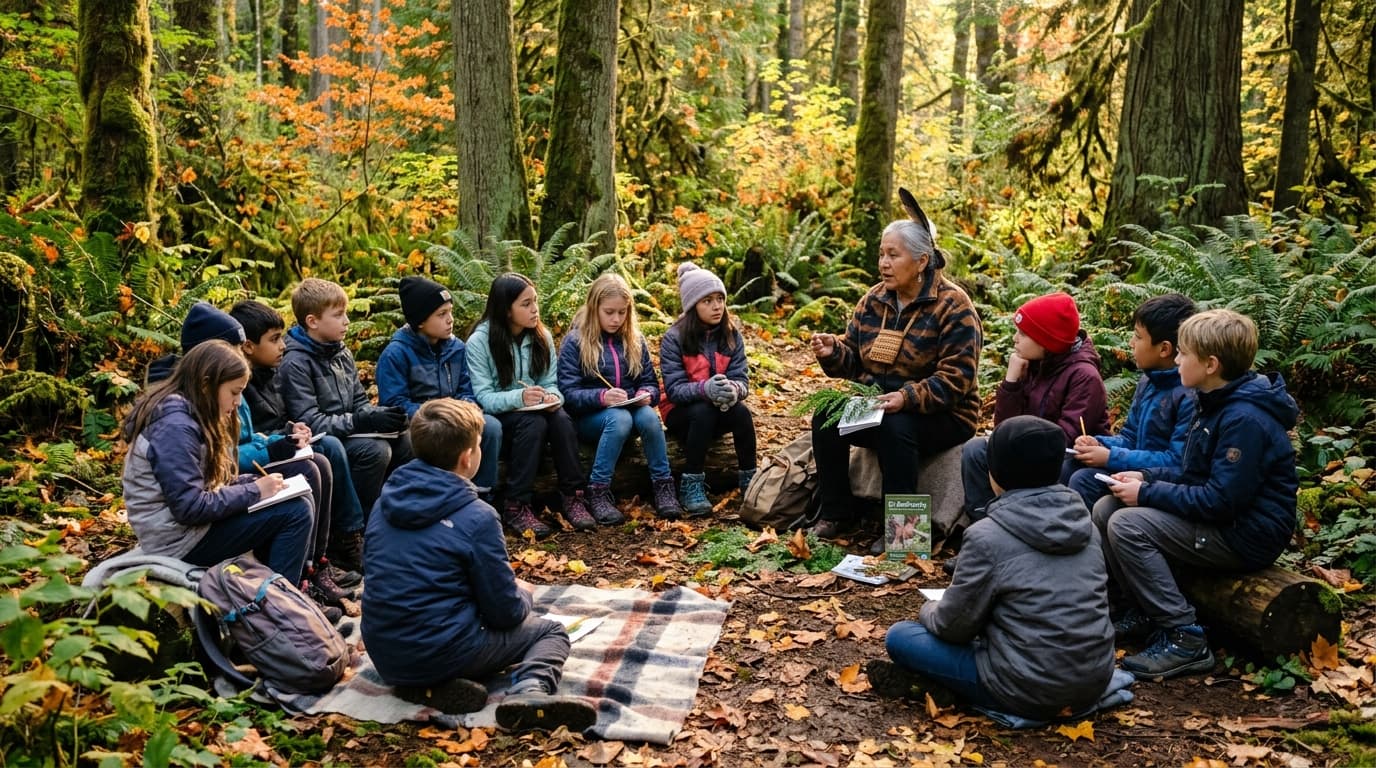
6. The "Yarning Circle": Cultivating Authentic Classroom Oracy
The Yarning Circle is an ancient First Nations cultural practice that provides an inclusive, safe, and egalitarian space for dialogue, shared learning, and conflict resolution in the modern classroom.
7. Connecting with Local Elders and Community: Protocols and Respect
To ground learning in authentic community, schools must cultivate enduring, respectful partnerships with local Aboriginal Land Councils, Elders, and Knowledge Keepers.
Protocols for Inviting Elders into Schools
- Consult Early: Reach out to your local Aboriginal Education Consultative Group (AECG) or school board Indigenous Education Officer months in advance.
- Offer Equitable Honoraria: Elders are cultural scholars and community leaders. Compensate them at professional consultation rates ($300-$500+), accompanied by travel reimbursements and gifts of respect.
- Caring Hospitality: Greet the Elder at the car, provide a quiet, comfortable space to rest, offer hot tea and food, and never rush their storytelling.
8. Two-Way Science in Action: Cultural Burning and Fire Ecology
An exemplary manifestation of authentic First Nations integration in Australian classrooms is the Two-Way Science framework, pioneered by the CSIRO in partnership with remote Indigenous ranger programs and Western Australian schools. Two-Way Science braids Western science curriculum outcomes with Aboriginal ecological knowledge, using Country as the primary learning laboratory:
The Bush Medicine Chemical Investigation
In Year 7-10 Chemistry and Biology, investigate the active chemical compounds utilized in traditional bush medicine:
- Tea Tree (Melaleuca alternifolia): Crushed leaves traditionally applied to wounds; students extract essential oils and test antimicrobial inhibition zones on agar plates against E. coli.
- Eucalyptus Leaves: Steam inhalation for respiratory ailments; students analyze 1,8-cineole (eucalyptol) and its expectorant properties. Students evaluate how thousands of years of empirical observational testing by Aboriginal healers anticipated modern pharmaceutical chemistry.
9. Frequently Asked Questions (Australian Educators & School Leaders)
What if I don't know who the Traditional Custodians of our school's land are?
Consult the AIATSIS Map of Indigenous Australia online, contact your local municipal council's Indigenous liaison officer, or reach out to your state AECG (Aboriginal Education Consultative Group). They will identify the traditional language group and local custodians.
What should a teacher do if students hold racist or biased attitudes learned at home?
Respond with calm, evidence-based truth-telling. Address historical facts:
- Deconstruct the legal fiction of Terra Nullius (land belonging to no one) using the landmark 1992 Mabo High Court decision.
- Explore the undeniable sophisticated agricultural, architectural, and astronomical systems documented by historians like Bruce Pascoe (Dark Emu) and Bill Gammage (The Biggest Estate on Earth).
- Teach that reconciliation is built on truth-telling, mutual respect, and human dignity.