Unlocking Potential: Practical Inclusive Education Strategies for Diverse South African CAPS Classrooms
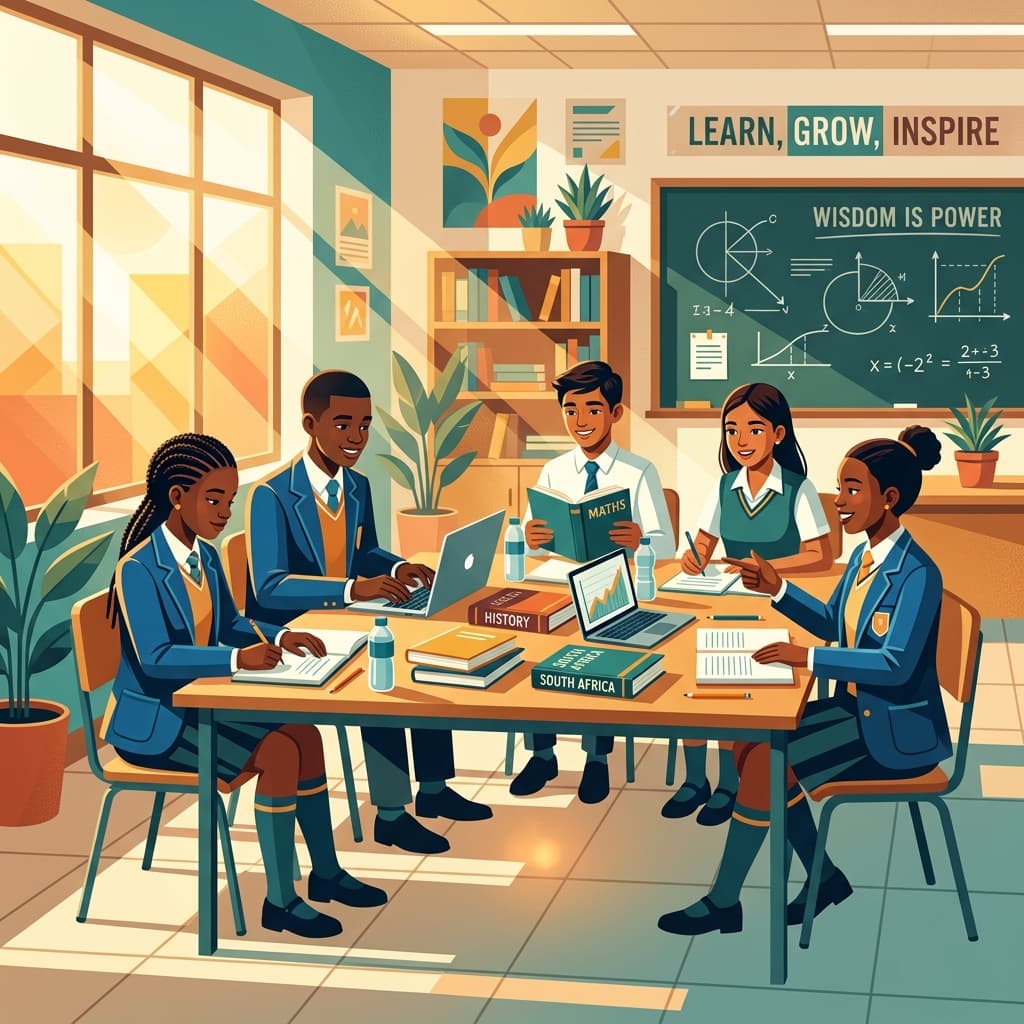
In the vibrant, complex, and often challenging reality of a South African classroom, diversity is not an exception—it is the norm. Every day, educators across the country stand before a rich tapestry of learners, each with a unique background, language, culture, learning style, and set of abilities. The Curriculum and Assessment Policy Statement (CAPS) provides the 'what' of our teaching, but the 'how'—how we make that curriculum accessible and meaningful for every single learner—is the art and science of inclusive education.
This is not merely a philosophical ideal; it is a national imperative, enshrined in policies like Education White Paper 6. Yet, for many teachers, HODs, and school management teams, the gap between policy and practice can feel immense. How do you cater to a learner with dyscalculia, support an English Second Language speaker, engage a gifted child, and manage a class of 45, all while staying on track with the CAPS schedule?
This comprehensive guide is designed for you, the South African educator on the front lines. We will move beyond the jargon to provide highly practical, SEO-optimized, and actionable inclusive education strategies that you can implement within your diverse CAPS classroom tomorrow.
The Foundation: Understanding Inclusive Education in the South African Context
Before diving into strategies, it's crucial to align our understanding. Inclusive education in South Africa is not simply about integrating learners with disabilities into mainstream schools. It is a far broader, more profound concept.
Education White Paper 6: A Paradigm Shift
The cornerstone of our national policy is Education White Paper 6: Special Needs Education, Building an Inclusive Education and Training System (2001). Its most critical shift was moving away from a 'medical model' (focusing on what is 'wrong' with the learner) to a 'social model'. This means we no longer focus on fixing the child, but rather on identifying and removing barriers to learning within the system itself.
These barriers are diverse and deeply rooted in our societal context:
- Socio-economic Barriers: Poverty, malnutrition, lack of access to basic services, and instability at home.
- Systemic Barriers: Overcrowded classrooms, lack of resources, inadequately trained teachers, and inflexible curriculum implementation.
- Pedagogical Barriers: Inappropriate teaching methods, inaccessible materials, and unfair assessment practices.
- Language and Cultural Barriers: Teaching and learning not happening in the learner's home language, and a curriculum that may not reflect the learner's cultural reality.
- Intrinsic Barriers: Neurological, physical, sensory, and cognitive impairments that affect learning.
Recognising these barriers is the first step. The strategies that follow are designed to systematically dismantle them within the four walls of your classroom and beyond.
The Three Pillars of an Inclusive CAPS Classroom
To make inclusion manageable and sustainable, we can group our strategies into three core pillars: Differentiated Instruction, Universal Design for Learning (UDL), and creating a Supportive Classroom Culture.
Pillar 1: Differentiated Instruction: The Art of Flexibility within CAPS
Differentiation is not about creating 40 individual lesson plans. It is about strategic and purposeful adjustments to what you teach, how you teach it, and how learners demonstrate their understanding. CAPS is content-heavy, but it is not entirely rigid. There is room to manoeuvre.
**H3: Differentiating the Content (What Learners Learn)**
This involves varying the material and concepts to meet the readiness levels of different learners.
- Tiered Activities: Design tasks at different levels of complexity, all focused on the same core CAPS concept. For a Grade 5 Maths lesson on fractions, you could have:
- Tier 1 (Support): Learners use physical fraction circles to identify halves, thirds, and quarters.
- Tier 2 (On-level): Learners complete worksheet problems involving comparing and ordering simple fractions.
- Tier 3 (Extension): Learners solve word problems involving the addition of fractions with the same denominator.
- Compacting the Curriculum: For gifted learners who quickly master a concept, allow them to 'test out' and move on to more challenging extension activities or independent projects related to the topic.
- Varied Resources: Present information using multiple formats. Instead of relying solely on the textbook, supplement it with simpler summary texts, diagrams, educational videos, or audio recordings for learners who struggle with reading.
**H3: Differentiating the Process (How Learners Engage)**
This focuses on the 'how' of learning. It’s about giving learners different pathways to make sense of the content.
- Flexible Grouping: This is your most powerful tool. Move fluidly between whole-class instruction, small teacher-led groups for targeted support, peer-learning pairs, and individual work. A single 45-minute lesson can incorporate all these groupings.
- Learning Stations: Set up different stations around the classroom, each with a different task related to the learning objective. Learners rotate through them. This allows you to include a technology station, a hands-on manipulative station, a reading station, and a teacher-led station for direct instruction.
- Choice Boards: Create a grid of activities (like a tic-tac-toe board). Learners must choose a certain number of activities to complete. You can structure it so they must choose one from each row, ensuring they engage with different skills. This gives learners agency and caters to their interests.
**H3: Differentiating the Product (How Learners Show What They Know)**
CAPS has prescribed formal assessments (SBA), but there is often flexibility in how learners can demonstrate their knowledge in informal tasks and even in some project-based assessments.
- Offer Assessment Choices: Instead of a standard essay, could a learner create a poster, write and perform a short play, record a podcast-style explanation, or design a detailed mind map? As long as the assessment criteria target the same CAPS skill, the format can be flexible.
- Use Rubrics: A clear, well-defined rubric allows you to assess diverse products fairly. The rubric should focus on the core skills and knowledge required by CAPS, regardless of the format of the final product.
- Allow for Varied Response Methods: For daily classwork, allow learners to answer verbally, type their answers, use a scribe, or draw their responses if it helps them communicate their understanding more effectively.
Pillar 2: Universal Design for Learning (UDL): Building an Accessible Classroom from the Start
Lesson Planner
Generate comprehensive, CAPS-aligned lesson plans in seconds.
If differentiation is the reactive adjustment, UDL is the proactive design. It’s about building a flexible and accessible learning environment from the ground up, so that fewer adjustments are needed later. UDL is based on three main principles.
**H3: Provide Multiple Means of Representation (The 'What' of Learning)**
Present information and content in different ways.
- Visual: Use diagrams, charts, videos, and colour-coding on the board.
- Auditory: Explain concepts verbally, use class discussions, provide audio recordings of texts, and use music or rhythm to teach concepts.
- Tactile/Kinaesthetic: Incorporate hands-on activities, models, experiments, and movement into your lessons. A history lesson on trade routes can become a classroom simulation. A science lesson on circuits can involve learners building their own.
**H3: Provide Multiple Means of Action and Expression (The 'How' of Learning)**
Give learners alternative ways to demonstrate what they know. This goes hand-in-hand with differentiating the product.
- Vary the Tools: Provide access to both high-tech (if available) and low-tech tools. Allow learners to use word processors with spell check, voice-to-text software, or simple pencil grips and specialised writing paper.
- Scaffold the Skills: Break down large tasks into smaller, manageable steps. Provide checklists, graphic organisers, and sentence starters to help learners structure their work, especially for extended writing or projects.
**H3: Provide Multiple Means of Engagement (The 'Why' of Learning)**
Tap into learners’ interests, challenge them appropriately, and motivate them to want to learn.
- Make it Relevant: Connect the CAPS content to learners' lives and the South African context. When teaching percentages in Mathematical Literacy, use examples like calculating discounts at Shoprite or understanding VAT.
- Foster Collaboration: Create a community of learners where collaboration is valued. Well-structured group work teaches academic content as well as vital social skills.
- Give Feedback, Not Just Marks: Provide constructive, specific feedback that helps learners understand their mistakes and see a clear path to improvement. This builds a growth mindset and resilience.
Pillar 3: Creating a Supportive and Respectful Classroom Culture
No strategy will work if the classroom is not a safe, respectful, and supportive space. This is the foundation upon which all inclusive teaching is built.
- Celebrate Diversity as a Strength: Make your classroom a mirror and a window. Learners should see their own cultures, languages, and experiences reflected (a mirror) and also get to learn about others (a window). Use multilingual posters, incorporate stories and examples from various South African cultures, and explicitly teach respect for differences.
- Build Authentic Relationships: Know your learners. Greet them by name at the door. Learn something about their interests, families, and lives outside of school. A learner who feels seen and valued is more likely to engage and take academic risks.
- Establish Predictable Routines: For many learners who face chaos and uncertainty outside of school, the classroom needs to be a place of safety and predictability. Clear, co-created classroom rules, visual timetables, and consistent routines reduce anxiety and free up cognitive space for learning.
Navigating the System: The SIAS Process and Collaboration
Effective inclusion is not a solo act. It requires a whole-school approach and an understanding of the formal support systems.
The Screening, Identification, Assessment, and Support (SIAS) process is the DBE's official framework for identifying and addressing barriers to learning. As a teacher, your role is crucial, particularly in the early stages.
- Screening: Your professional judgement and observations are the first line of screening. Use checklists and observation notes to document a learner's strengths and areas of challenge.
- Identification (SNA 1 & 2): If you have a concern, you will begin by completing the Learner Profile and the SNA 1 (Support Needs Assessment) form. This involves gathering information from the learner's records, parents, and your own observations.
- Collaboration with the School-Based Support Team (SBST): The SBST (often comprising HODs, senior teachers, and a learning support educator) is your first port of call. You will present your concerns and collaboratively develop an Individual Support Plan (ISP) with practical strategies to try in the classroom.
- Involving Parents: Keep parents informed and involved throughout the process. They are valuable partners who hold deep knowledge about their child.
- District Support (DBST): If school-level interventions are not sufficient, the SBST will involve the District-Based Support Team for more specialised assessment and support.
Your Practical Takeaway: Keep meticulous, objective records. Dated anecdotal notes on a learner's progress, work samples, and records of parent communication are invaluable evidence for the SIAS process.
Low-Resource, High-Impact Strategies for the Real South African Classroom
We cannot discuss inclusion without acknowledging the reality of resource constraints and large class sizes. Here are strategies that require more creativity than cash.
- Leverage Peer Power: Implement "Each One, Teach One." Pair stronger learners with those who are struggling for specific tasks. This reinforces learning for the tutor and provides targeted support for the tutee. Use structured cooperative learning techniques where each member has a role to ensure accountability.
- Embrace Multilingualism as a Superpower: Don't view home languages as a barrier. Encourage learners to discuss concepts in their home language to ensure understanding before attempting to express it in English (code-switching). Create multilingual word walls with key CAPS terminology.
- Think in Chunks: Break down lessons and tasks into smaller, more digestible pieces. A 15-minute explanation followed by a 10-minute activity is far more effective than a 45-minute lecture.
- Use the Environment: Make your classroom a "third teacher." Display learner work, anchor charts with key concepts, and visual aids. Even simple, hand-drawn posters can be powerful tools.
- Master the Art of Questioning: Use a variety of questioning techniques. Instead of just asking "Do you understand?", ask probing questions that require learners to explain their thinking. Use "wait time" to give all learners a chance to process before answering.
Conclusion: Inclusion is a Journey, Not a Destination
Creating a truly inclusive CAPS classroom is not about having all the answers or a perfect set of resources. It is a mindset and a continuous professional commitment. It is about believing that every single learner who walks through your door has the capacity to learn and succeed.
Start small. Choose one strategy from this article—perhaps flexible grouping or offering a choice board—and try it in your next lesson. Collaborate with your HOD and fellow teachers. Share what works and what doesn't. Celebrate the small victories.
By embracing these inclusive education strategies, you are not just ticking a policy box. You are honouring the incredible diversity of our nation and fulfilling the profound promise of education: to unlock the unique potential within every South African child.
Siyanda. M
Dedicated to empowering South African teachers through modern AI strategies, research-backed pedagogy, and policy insights.