The Digital Dilemma in South African Classrooms
It is a scene every South African educator knows all too well: you are mid-way through explaining a complex concept in the CAPS Mathematics or Life Sciences curriculum when you notice a learner’s gaze fixed firmly on their lap. The tell-tale glow on their chin and the rhythmic movement of their thumbs give it away immediately—they aren’t checking their textbook; they are on TikTok, WhatsApp, or Instagram.
The ubiquity of smartphones has fundamentally altered the landscape of the South African classroom. From affluent independent schools to rural quintile 1-3 schools where data is precious, the "phone problem" is universal. While the Department of Basic Education (DBE) provides broad guidelines, the day-to-day management of these devices falls squarely on the shoulders of the teacher.
Dealing with constant phone usage isn't just about discipline; it is about competition. We are competing with world-class algorithms designed to capture and hold attention. To win this battle, we need more than just a "no-phone" policy. We need a comprehensive strategy that involves high-quality lesson design, clear boundaries, and the smart integration of technology.
Why Learners Reach for Their Phones
Before we can solve the problem, we must understand the "why." In a South African context, learners often turn to phones for three primary reasons:
- The Engagement Gap: If the lesson feels disconnected from their reality or is paced too slowly, the phone becomes an escape.
- Social FOMO (Fear Of Missing Out): For the modern teenager (FET phase specifically), social status is tied to digital presence. Missing a message feels like a social catastrophe.
- Academic Frustration: When a learner doesn't understand the content and feels overwhelmed by the Annual Teaching Plans (ATPs), they disengage and seek the dopamine hit of a game or video.
To combat this, we must address the root causes by making our classrooms more engaging and our administrative burdens lighter, allowing us to focus on the human element of teaching.
Strategy 1: Bridge the Engagement Gap with High-Quality Lesson Planning
The most effective classroom management tool is a well-planned lesson. When learners are active, challenged, and interested, the urge to check their phones diminishes. However, with the heavy administrative load of the CAPS curriculum, teachers often lack the time to innovate.
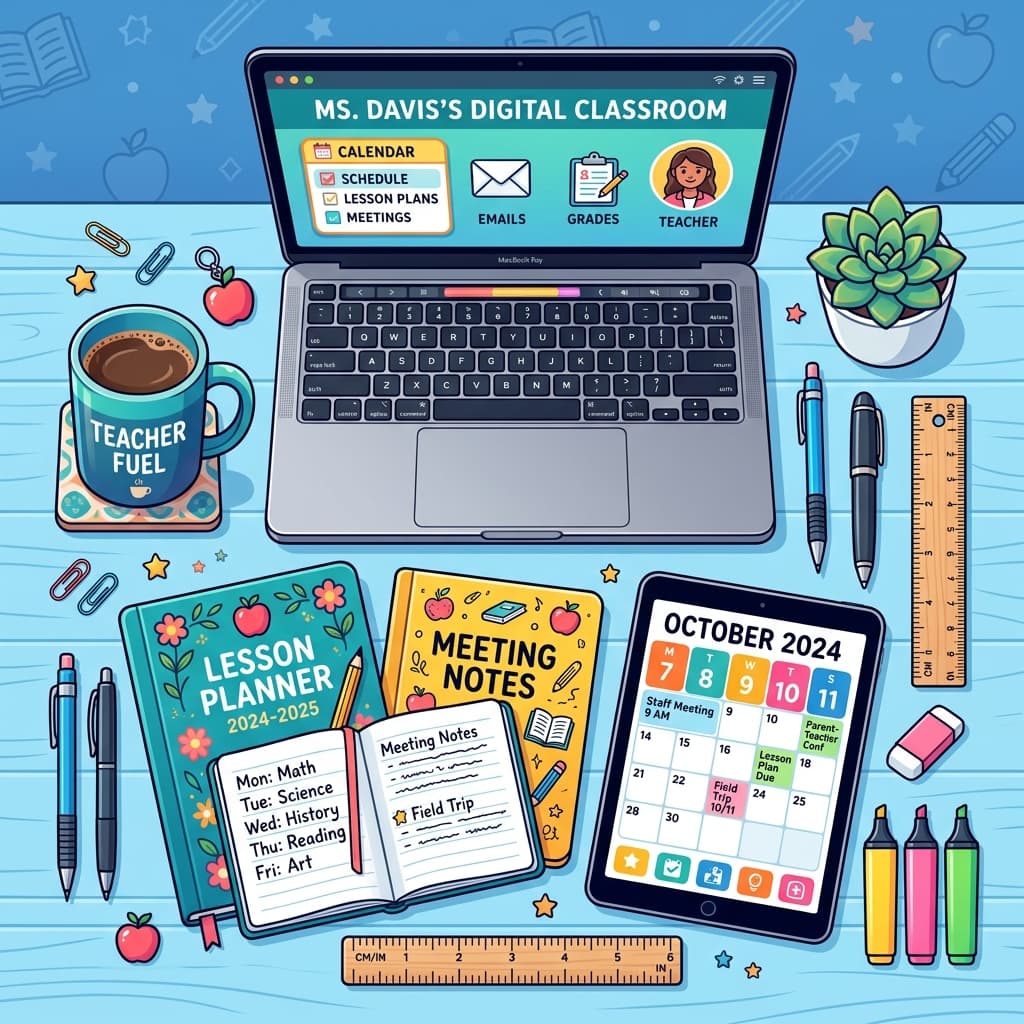
This is where the CAPS-Aligned Lesson Planner on SA Teachers becomes an essential ally. Instead of spending hours scouring the internet for relevant examples, this tool allows you to generate structured, engaging lesson plans that are perfectly aligned with the South African curriculum.
By using the AI-powered planner, you can incorporate:
- Hook Activities: Start the lesson with a provocative question or a real-world South African scenario that makes phones irrelevant.
- Varied Pacing: Ensure the lesson moves quickly enough that there are no "dead spots" where learners naturally reach for their devices.
- Interactive Elements: Plan for group work and discussions that require physical presence and verbal participation.
When your lesson is robust and precisely timed to meet the requirements of your ATPs, learners find fewer windows of opportunity to get distracted.
Strategy 2: Eliminate Downtime with Custom Worksheets and Tasks
A common moment for phone usage is the "limbo" period—those five to ten minutes when some learners have finished their work while others are still struggling. In a traditional classroom, the fast finishers reach for their phones.
To prevent this, you need a steady supply of high-quality, differentiated material. The Worksheet & Exam Generator on SA Teachers allows you to produce supplementary tasks in seconds. If you see your top-performing learners finishing a task early, you can provide them with an "extension" worksheet that challenges their critical thinking.
By keeping a folder of AI-generated worksheets ready for each topic, you ensure that every learner is occupied from the first bell to the last. This isn't "busy work"; it's targeted practice that helps improve the school’s overall pass rate while simultaneously solving a disciplinary issue.
Strategy 3: Transform the Phone from an Enemy into a Tool
If you can't beat them, involve them. In the FET phase (Grade 10-12), learners are often tech-savvy but lack "digital literacy." Instead of a blanket ban, try "Tech-On" intervals.
One of the most innovative ways to do this is by introducing the AI Tutor tool from SA Teachers. You can allow learners to use their phones for a specific 10-minute window to interact with the AI Tutor.
For example, if you are teaching a difficult section of Geography or Accounting:
- Instruct learners to take out their phones.
- Have them navigate to the AI Tutor to ask clarifying questions about the specific concept they are struggling with.
- The AI Tutor provides immediate, personalized feedback, acting as a teaching assistant for every child in the room.
By formalising phone use for academic purposes, you strip away the "forbidden fruit" appeal and demonstrate that the device is a tool for their future, not just a toy.
Strategy 4: Clear Boundaries and the "Phone Parking Lot"
Every classroom needs a clear, enforceable policy developed in conjunction with the School Management Team (SMT) and the School Governing Body (SGB). A "Phone Parking Lot" is a practical South African solution. This can be a repurposed shoe organiser or a designated shelf where learners must "park" their phones at the start of the lesson.
However, a policy only works if the teacher is consistent. To be consistent, you need to be present and not bogged down by marking. If you are sitting at your desk marking essays while the class works, they will mirror your behaviour and check their phones.
The Essay Grader & Rubric Creator on SA Teachers can revolutionise your marking load. By using the AI to assist in grading and generating detailed rubrics, you can return feedback faster and spend more time "circulating" the room. When you are moving between desks and engaging with learners, the opportunity for them to sneak a glance at a screen disappears.
Lesson Planner
Generate comprehensive, CAPS-aligned lesson plans in seconds.
Strategy 5: Addressing the Cognitive Load of Study Guides
Often, learners use phones to look up information because their textbooks are either outdated or too dense to navigate quickly. This "information seeking" often leads them down a rabbit hole of social media notifications.
You can prevent this by providing them with streamlined, high-impact study materials. Use the Study Guide Creator to generate summaries of the CAPS content. These guides can be printed or shared as PDFs. When a learner has a concise, easy-to-read guide on their desk, the cognitive load is reduced, and they are less likely to feel the "mental fatigue" that leads to digital distraction.
Strategy 6: Communication and "The Why"
South African learners, particularly those in the Senior Phase, respond better to transparency than to authoritarianism. Have a "Real Talk" session about the impact of "continuous partial attention." Explain how the brain struggles to switch between a WhatsApp notification and a complex physics equation.
Link this to their future goals. Whether they want to study at UCT, Wits, or a TVET college, they need to master deep work.
Use the Report Comments Generator to provide meaningful feedback on their focus and self-discipline. Instead of generic comments like "must pay more attention," use the tool to create specific, encouraging feedback regarding their digital habits and classroom presence. When parents read a specific comment about a learner's improvement in focus, it reinforces the school's policy at home.
Dealing with the "Addicted" Learner: A Tiered Approach
In some cases, phone usage is not just a habit but a genuine behavioral issue. Here is a tiered approach relevant to the SA school context:
Tier 1: The Verbal Warning
A simple "Phone away, please, Sipho" is usually enough. At this stage, don't stop the flow of the lesson. Use "proximity control"—walk towards the learner while continuing to speak.
Tier 2: The Temporary Confiscation
If the phone reappears, it goes to the "Parking Lot" or the teacher’s drawer until the end of the period. Ensure this is documented.
Tier 3: SMT Involvement and Parental Contact
If a learner is a repeat offender, it becomes a disciplinary matter for the SMT. This is where your documentation is vital. Using the Report Comments Generator and keeping a record of AI-assisted assessments can help you show a correlation between the learner's phone usage and their academic performance during parent-teacher meetings.
The Role of SA Teachers in Classroom Management
At sateachers.co.za, we believe that technology should empower teachers, not overwhelm them. The reason learners are so drawn to their phones is that the digital world is personalised, fast, and responsive. To compete, our teaching must also become more efficient and data-driven.
By integrating our suite of tools, you are not just "fixing" a phone problem; you are upgrading your entire teaching practice:
- The CAPS-Aligned Lesson Planner ensures your content is relevant and paced correctly.
- The Worksheet & Exam Generator ensures no learner is left idle.
- The Study Guide Creator provides the clarity learners crave.
- The AI Tutor provides the 1-on-1 attention that keeps learners on task.
- The Essay Grader & Rubric Creator gives you back your time to be a mentor, not just a marker.
- The Report Comments Generator helps you communicate effectively with parents to build a support system.
Practical Scenarios: How to Respond
Scenario A: The "Hidden" Phone. A learner has their phone in their blazer pocket and is clearly messaging under the desk.
- Response: Do not make a scene. Give the class a 2-minute "Think-Pair-Share" task based on a worksheet you generated. During this time, walk to the learner and quietly ask them to place the phone on your desk.
Scenario B: The "But I'm using it for a dictionary" excuse.
- Response: Acknowledge the intent, but point them towards the AI Tutor on a shared classroom device or provide a printed glossary generated by the Study Guide Creator. This removes the excuse while still supporting the learner’s need for information.
Scenario C: The "My mom is calling me" excuse.
- Response: Remind the learner (and the parents during orientation) that emergency calls must go through the school's front office as per DBE safety protocols.
Conclusion: Reclaiming the Classroom
The battle for our learners' attention is one of the greatest challenges of the 21st-century South African classroom. However, by shifting our focus from "punishment" to "engagement," we can create an environment where phones are no longer a constant distraction.
When we use tools like those found on SA Teachers, we reduce our stress and administrative load. This allows us to bring our best selves to the classroom—the passionate, energetic, and focused educator that no algorithm can ever replace.
Reclaim your classroom today. Start by planning your next high-engagement lesson with the CAPS-Aligned Lesson Planner, and watch as the phones stay in pockets and the "lightbulb moments" return to your learners' eyes.
For more tools and resources designed specifically for the South African educator, visit sateachers.co.za and join our community of innovative teachers today.
Siyanda M.
Dedicated to empowering South African teachers through modern AI strategies, research-backed pedagogy, and policy insights.


