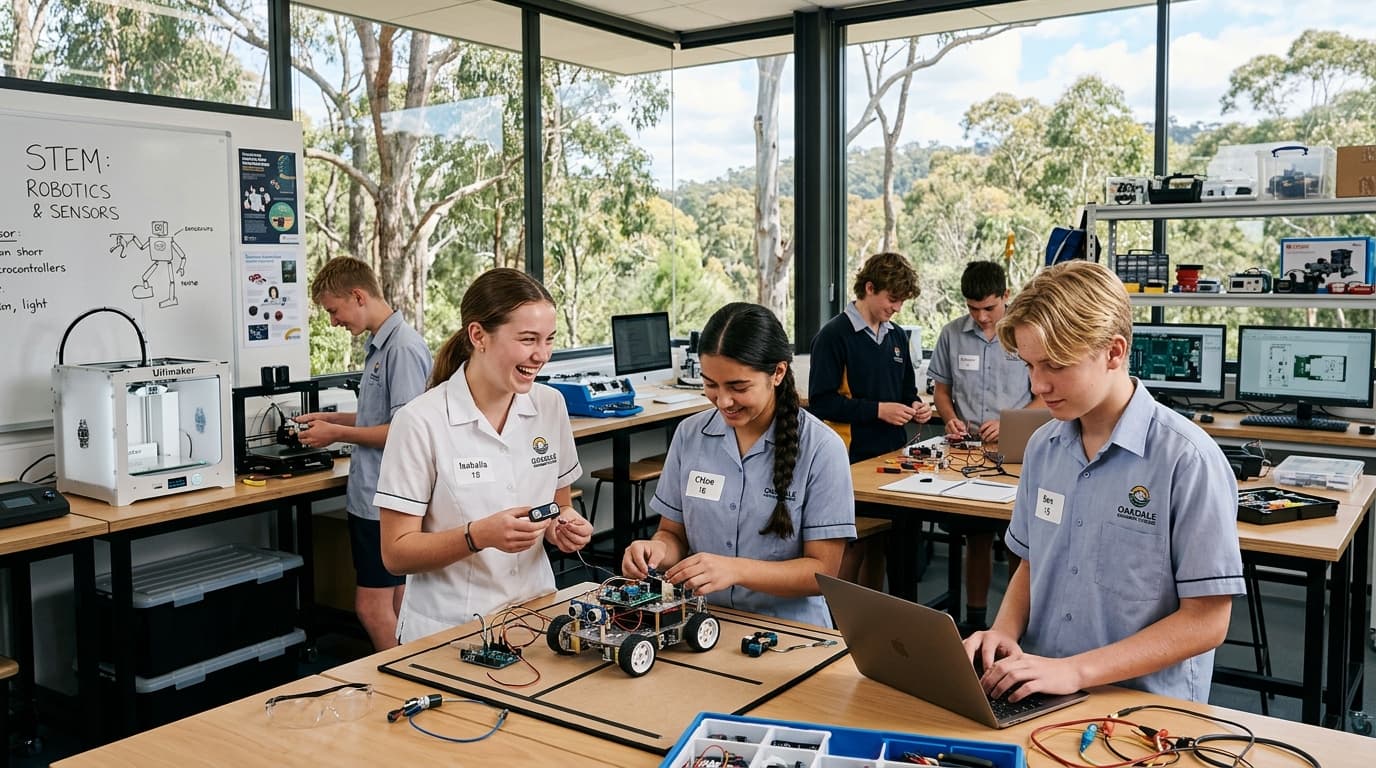
Project-Based Learning (PBL) in the Primary School: Step-by-Step Implementation
In the twenty-first-century educational landscape, foundational mathematical competency and scientific literacy are not merely academic subjects—they are essential cognitive lenses through which children interpret, navigate, and shape their world. Within the primary school ecosystem, Project-Based Learning (PBL) in the Primary School: Step-by-Step Implementation represents an instructional paradigm that moves beyond rote procedural memorization toward deep conceptual understanding, spatial reasoning, and epistemic curiosity.
Elementary school teachers stand at the critical frontier where children either develop lifelong mathematical confidence or fall victim to debilitating math anxiety and scientific intimidation. Cognitive neuroscience confirms that early mathematical understanding is the single strongest predictor of later academic success—surpassing even early reading abilities. When primary educators master the principles governing elementary project based learning, they engineer classroom cultures where mistakes are celebrated as valuable neurological feedback, conceptual relationships are uncovered through tangible exploration, and every learner discovers their identity as a capable mathematician and scientific thinker. This guide provides an evidence-based roadmap for implementing elementary project based learning with rigor, joy, and developmental precision.
1. Cognitive Foundations and Educational Neuroscience of elementary project based learning
To teach elementary project based learning effectively, elementary school teachers must understand how the human brain processes numerical and empirical relationships. Cognitive scientists, notably Stanislas Dehaene (The Number Sense), have demonstrated that humans are born with an innate evolutionary mechanism known as the Approximate Number System (ANS)—the intuitive ability to perceive and compare quantities without counting.
However, formal mathematics requires mapping this primitive intuitive system onto symbolic cultural representations (Arabic numerals, place-value systems, and operational signs). This neural rewiring involves multiple brain regions:
- Intraparietal Sulcus (IPS): Represents non-verbal numerical magnitude.
- Angular Gyrus: Facilitates verbal arithmetic fact retrieval (e.g., multiplication tables).
- Prefrontal Cortex: Orchestrates working memory, multi-step problem solving, and error detection.
When elementary instruction relies exclusively on rote memorization without conceptual grounding, it overtaxes the working memory of young children. Sweller’s Cognitive Load Theory demonstrates that attempting to manipulate abstract symbols without an underlying mental model causes severe cognitive overload.
Conversely, when teachers ground instruction in Jerome Bruner's Enactive-Iconic-Symbolic progression (the precursor to the CPA approach), learners construct durable mental schema. Physical manipulatives (Enactive) provide tactile and kinesthetic anchors; visual pictorial representations (Iconic) bridge concrete experience to abstraction; and formal mathematical equations (Symbolic) encode those concepts into efficient operational language. By aligning classroom instruction in elementary project based learning with natural cognitive architecture, teachers eliminate learning bottlenecks and cultivate authentic mathematical mastery.
2. Core Components of Conceptual Mastery and Inquiry in elementary project based learning
Achieving excellence in elementary project based learning requires elementary school teachers to balance conceptual understanding, procedural fluency, and real-world application:
1. Concrete-Pictorial-Abstract (CPA) Scaffolding
Master teachers never rush to the abstract algorithm. When introducing a mathematical or scientific concept:
- Concrete: Students touch, move, and physically manipulate base-ten blocks, fraction strips, beakers of water, or geometric solids.
- Pictorial: Students sketch bar models, number bonds, ten-frames, or scientific diagrams that visually represent the physical interaction.
- Abstract: Students record the mathematical symbols, equations, and formal scientific vocabulary that describe the concept.
2. Low-Floor, High-Ceiling Mathematical Tasks
Traditional classrooms often present closed problems with single answers, creating a false divide between "fast" and "slow" math students. Master educators utilize Low-Floor, High-Ceiling tasks—problems that are accessible to all learners (low barrier to entry) yet extend to extraordinary mathematical complexity (infinite ceiling). This ensures that every child experiences intellectual stretch without hitting an impenetrable wall of frustration.
3. Number Talks and Academic Discourse
Mathematical thinking is refined through verbal articulation. Number Talks are brief, 10-minute daily mental math routines where teachers present a computation problem (e.g., $18 \times 5$) and ask students to solve it mentally without pencil or paper. Learners share their mental strategies, while the teacher acts as a scribe, documenting different visual pathways on the board. This normalizes alternative mathematical strategies, builds flexible number sense, and demystifies mathematical agility.
4. Inquiry-Driven Scientific Investigation
Rather than treating science as a collection of static facts to be memorized from a textbook, exemplary primary teachers implement the 5E Instructional Model (Engage, Explore, Explain, Elaborate, Evaluate). Students generate hypotheses, design simple controlled tests, record empirical observations, and debate conclusions based on evidence, embodying the authentic scientific method from Grade 1 onward.
3. Step-by-Step Implementation Sequence in the Primary Classroom
To implement elementary project based learning with structured pedagogical momentum, primary educators can execute this five-phase lesson cycle:
Phase 1: Number Talk & Mental Warmup (10 mins)
Prime working memory with a dynamic mental math warmup or scientific observation prompt ("Notice and Wonder"). Present an intriguing visual pattern, geometric puzzle, or mental calculation prompt. Prompt learners to use silent thumb signals at their chests to signal ready answers, preventing rapid hand-wavers from intimidating peers.
Phase 2: The Problem Launch (15 mins)
Introduce a rich, contextual story problem or scientific inquiry question. Model the problem using physical manipulatives or visual anchor charts following the "I Do, We Do" framework. Explicitly think aloud about potential stumbling blocks, vocabulary meanings, and estimation strategies.
Phase 3: Differentiated Math Stations (25 mins)
Release students into structured rotations:
- Station 1 (Teacher-Led Horseshoe Table): Intensive targeted intervention using concrete manipulatives with students who demonstrated baseline struggles on yesterday's exit slip.
- Station 2 (Collaborative Problem Solving): Peer pairs tackle low-floor, high-ceiling challenges using whiteboards and tactile tools.
- Station 3 (Fluency & Games): Students play strategic math games (e.g., multiplication bingo, fraction war) to build automaticity without anxiety.
Phase 4: Mathematical Debrief (10 mins)
Gather the entire class back on the carpet. Select two students who solved a problem using radically different strategies to showcase their thinking. Lead a facilitated discussion: "How are Sarah's bar model and Sipho's number bond connected? What makes both approaches mathematically sound?"
Phase 5: Formative Exit Slip (5 mins)
Administer a single, carefully targeted exit problem. Collect responses to immediately categorize students into three intervention tiers for the following day’s guided math block.
4. Remediating Math Anxiety and Supporting Diverse Needs
Mathematical and scientific learning can evoke acute anxiety in primary learners, triggering emotional shutdown and avoidance behaviors.
Diagnosing and Deconstructing Math Anxiety
Math anxiety is a genuine physiological condition that temporarily disables working memory. When a child panics during a timed math drill, cortisol floods the brain, preventing access to arithmetic facts stored in the angular gyrus.
Lesson Planner
Generate comprehensive, CAPS-aligned lesson plans in seconds.
- Eliminate High-Stakes Timed Drills: Replace stressful one-minute sprint tests with self-paced fluency games, personal growth charts, and untimed strategy challenges.
- Reframe Errors as Synaptic Growth: Explicitly teach children that making a mistake causes synapses in the brain to fire and grow (Boaler, 2016). When a student makes an error, respond with enthusiastic curiosity: "What a brilliant mistake! Let's explore what that teaches us about how numbers work."
Accommodating Dyscalculia and Spatial Deficits
Developmental dyscalculia affects approximately 5–7% of children, impairing their ability to perceive magnitude, sequence numbers, and recognize spatial relationships.
- Color-Coded Place Value: Utilize consistent color schemes (e.g., green for units, blue for tens, red for hundreds) across base-ten blocks, place-value charts, and written numerals.
- Rekenreks and Five-Frames: Utilize structured counting frames with distinct color groupings of 5 and 10 to help dyscalculic learners subitize (instantly recognize quantities without one-by-one counting).
- Physical Number Lines: Tape large number lines on the classroom floor, allowing kinesthetic learners to physically walk forward for addition and backward for subtraction.
5. Classroom Case Studies: Primary STEM & Numeracy in Action
Case Study 1: Moving from Procedural Confusion to Concrete Mastery in Grade 3
In Mrs. Naidoo’s Grade 3 class, 65% of students consistently failed double-digit subtraction with regrouping (borrowing). When calculating $52 - 27$, students routinely subtracted the smaller digit from the larger ($2 - 7 = 5$, giving an answer of 35 instead of 25).
The Intervention: Mrs. Naidoo banned pencil-and-paper subtraction worksheets for three weeks, transitioning entirely to Base-Ten Block Concrete Modeling:
- Students built the number 52 using 5 ten-rods and 2 unit-cubes on place-value mats.
- When asked to take away 7 units, students physically realized it was impossible without trading. They brought one ten-rod to the "Classroom Bank," exchanged it for 10 unit-cubes, and placed them on their mat, creating 4 tens and 12 units.
- Only after master physical manipulation did students draw sketches of their exchanges, before finally connecting the process to the standard vertical algorithm.
The Outcome: Regrouping accuracy on subsequent term assessments reached 91%. More importantly, student surveys indicated that 88% of learners reported feeling "confident" or "excited" when encountering subtraction word problems.
Case Study 2: Low-Cost STEM Inquiry in a Resource-Constrained Grade 5 Class
In Mr. Dlamini’s Grade 5 Natural Sciences class in Mpumalanga, textbooks were scarce and science laboratory facilities did not exist.
The Intervention: Mr. Dlamini instituted a weekly Recycled Materials STEM Challenge:
- Students collected plastic bottle caps, cardboard boxes, plastic bags, and newspaper from home.
- The driving challenge: "Design an earthquake-resistant tower at least 40 cm tall that can support a 200g weight using only 20 newspaper tubes and 30 cm of tape."
- Students worked in collaborative engineering teams, creating blueprint sketches, testing prototypes on a simulated shake-table (a tray on marbles), and calculating structural weight-to-height ratios.
The Outcome: Learners mastered structural engineering principles, forces, and material properties through direct hands-on inquiry. In end-of-year provincial assessments, Mr. Dlamini’s cohort achieved the highest average Natural Sciences score in their circuit.
6. Curricular Alignment, Assessment & Diagnostic Formative Probes
Formative assessment in elementary mathematics and STEM must illuminate student thinking processes rather than merely tallying correct final answers:
1. Diagnostic Error Analysis
When reviewing student math notebooks, categorize errors into four diagnostic buckets:
- Careless Slips: The student knows the concept but miscopied a digit or rushed arithmetic. (Intervention: self-checking checklists).
- Procedural Errors: The student understands the goal but followed an incorrect algorithmic step. (Intervention: step-by-step visual anchor charts).
- Conceptual Gaps: The student does not understand what the mathematical operation represents. (Intervention: concrete CPA physical modeling).
- Linguistic/Vocabulary Barriers: The student misread the word problem vocabulary (e.g., confusing "difference" with "sum"). (Intervention: dual-language math glossaries).
2. Formative Exit Tickets via AI Tools
Utilize the SA Teachers Quiz Generator to craft quick, differentiated 3-tier exit tickets at the end of each instructional unit. Combine multiple-choice conceptual questions with one open-ended "Explain Your Thinking" prompt to evaluate mathematical reasoning.
7. Comparative Framework: International Standards vs. South African Realities
| STEM & Numeracy Dimension | International / Global Primary Standard | South African Primary Context (CAPS / DBE) | Practical Bridging Strategy |
|---|---|---|---|
|
Instructional Philosophy
|
Inquiry-based, problem-solving, Singapore Math / U.S. Common Core
|
Prescriptive CAPS Mathematics & Natural Sciences ATPs
|
Embedding CPA manipulatives and inquiry challenges directly within weekly CAPS pacing
|
|
Manipulative Availability
|
Abundant commercial plastic blocks, 3D shapes, digital math apps
|
Limited formal resources in Quintile 1–3 schools
|
Crafting homemade manipulatives from bottle caps, egg cartons, beans, and grid paper
|
|
Language of Instruction
|
Instruction delivered in learners' primary language
|
Critical transition from Mother Tongue to English in Grade 4 Natural Sciences & Math
|
Creating multilingual STEM word walls with visual diagrams and cultural contextual anchors
|
|
Assessment Focus
|
Formative rubric mastery; performance-based tasks
|
Heavy weighting on formal written tests and provincial common exams
|
Balancing test-taking algorithmic drills with rich conceptual understanding and verbal math talks
|
Teaching mathematics and STEM in South African primary classrooms requires blending international best practice with domestic resourcefulness. While international curricula often take digital devices and expensive laboratory kits for granted, South African educators achieve profound pedagogical breakthroughs through recycled materials, outdoor schoolyard investigations, and collaborative peer discourse. Grounding numeracy in the lived reality of learners ensures that STEM becomes an empowering, accessible vehicle for social mobility.
8. Practical Teacher Action Plan: 5 High-Impact Numeracy & Inquiry Shifts
Transform your elementary mathematics and STEM instruction this week with these five actionable steps:
- Incorporate One Weekly Number Talk: Dedicate 10 minutes on Tuesday morning to a mental math talk. Present a double-digit addition problem, ban all pencils, and record four different student mental strategies on the whiteboard.
- Conduct a Manipulative Audit: Inspect your storage cupboards. Pull out counters, dice, rulers, or bottle caps, placing them in accessible baskets at the center of student tables for daily math exploration.
- Ban the Phrase 'I'm Not a Math Person': Establish a classroom norm that mathematical capability is not an innate trait, but a muscle that strengthens with effort, curiosity, and practice.
- Implement 3-Minute Exit Slips: End each math lesson with a single index card containing one conceptual problem. Sort cards into three stacks (Mastered, Minor Error, Needs Re-teaching) to guide tomorrow's groups.
- Launch One Shoestring STEM Challenge: Challenge your students this Friday to build the longest possible paper chain using only one single sheet of A4 paper and a glue stick, bridging spatial reasoning with creative geometry.
9. Frequently Asked Questions (FAQ)
How do I help primary learners who still count on their fingers for basic single-digit addition?
Finger counting is a normal developmental stage, but relying on it indefinitely impedes mathematical fluency. Transition children by teaching visual "subitizing" using ten-frames, rekenreks, and dot cards. Teach them to see numbers as structures of 5 and 10 (e.g., seeing 8 as $5 + 3$) rather than eight isolated units.
What should an elementary teacher do when curriculum pacing moves faster than student understanding?
Prioritize foundational "linchpin" concepts. In mathematics, number sense, place value, and basic operations are linchpins upon which all future math rests. It is far better for students to master place value and multi-digit operations deeply than to rush superficially through advanced geometry and data handling without basic computational competence.
How can primary teachers integrate STEM without sacrificing essential literacy and math instructional time?
Adopt an integrated, cross-curricular approach. Have students read informational scientific texts during your reading comprehension block, write procedural lab reports during writing workshop, and analyze experimental data graphs during your mathematics hour. Integrated units maximize instructional efficiency while deepening conceptual synthesis.
Why is spatial reasoning so critical in early elementary education?
Neuroimaging research demonstrates that spatial reasoning (visualizing shapes, rotating objects mentally, understanding coordinate space) recruits the exact same parietal brain networks required for advanced numerical calculation. Developing spatial awareness in early grades directly enhances later algebraic and geometric competence.
10. Sibling Resources and Educational Tools
Explore companion numeracy, inquiry, and pedagogical guides across our elementary collection:
- STEAM Integration: Blending Visual Arts into Elementary STEM Curricula
- Math Anxiety in Elementary Students: Prevention, Diagnosis, and Cognitive Remediation
- Elementary School Teachers: The Definitive Guide to Roles, Responsibilities, and Pedagogy
Generate customized math problem sets, diagnostic exit slips, and inquiry rubrics via the SA Teachers Quiz & Diagnostic Generator and Lesson Planner.
References and Scholarly Literature
- Boaler, J. Mathematical Mindsets: Unleashing Students' Potential through Creative Math, Inspiring Messages and Innovative Teaching. Jossey-Bass.
- Dehaene, S. The Number Sense: How the Mind Creates Mathematics. Oxford University Press.
- Van de Walle, J. A., et al. Elementary and Middle School Mathematics: Teaching Developmentally. Pearson.
- Bruner, J. S. Toward a Theory of Instruction. Harvard University Press.
- Department of Basic Education (DBE) South Africa. Curriculum and Assessment Policy Statement (CAPS): Mathematics & Natural Sciences.
- National Council of Teachers of Mathematics (NCTM). Principles to Actions: Ensuring Mathematical Success for All.