The Turning Point in South African Pedagogy
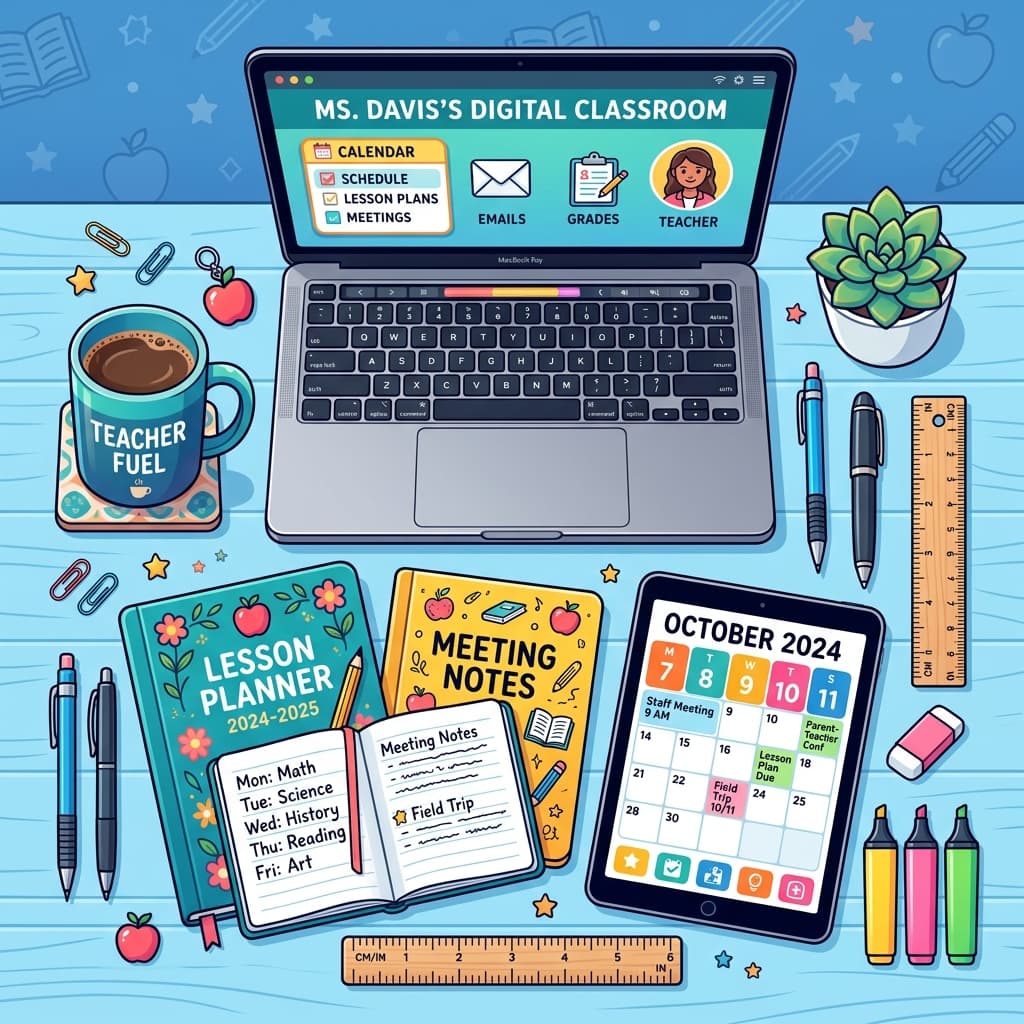
It is a Sunday evening in March 2026. A decade ago, a South African teacher would likely be surrounded by piles of marking, a dog-eared CAPS document, and the looming anxiety of a Monday morning lesson for a class of 45 learners. Today, the scene is different. Thousands of educators across the country, from the rural schools of Limpopo to the urban hubs of Gauteng, are closing their laptops by 7:00 PM, fully prepared for the week ahead.
The difference? The widespread adoption of purposeful, curriculum-aligned Artificial Intelligence.
In 2026, the conversation has shifted from "Will AI replace teachers?" to "How did we ever teach without it?" South African educators are currently facing unprecedented pressures: increasing administrative demands from the Department of Basic Education (DBE), the need for rapid curriculum recovery, and the challenge of managing diverse learner needs in overcrowded classrooms.
At SA Teachers (sateachers.co.za), we have witnessed a 400% increase in the use of our AI-powered tools over the last twelve months. This isn't just a trend; it is a structural shift in how the South African school system operates. Here is an in-depth look at why AI has become the essential partner for the modern South African teacher.
1. Reclaiming Time from the Annual Teaching Plans (ATPs)
The Annual Teaching Plans (ATPs) are the roadmap for every educator in the country. However, staying on track while ensuring deep conceptual understanding is a constant battle. In 2026, teachers are no longer spending their entire Sunday afternoon trying to map out their weeks.
The Problem: Administrative Overload
Teachers are often bogged down by the "admin of teaching"—the paperwork that happens before a single word is spoken in the classroom. Aligning every lesson to specific CAPS criteria, identifying cognitive levels, and ensuring all formal assessment tasks are scheduled is a monumental task.
The Solution: CAPS-Aligned Lesson Planner
The CAPS-Aligned Lesson Planner on sateachers.co.za has become the gold standard for South African educators. Unlike generic AI tools like ChatGPT, which often hallucinate or provide Americanised content, this tool is hardwired with the South African National Curriculum Statement.
How it works in practice: Imagine a Grade 9 Natural Sciences teacher needing to introduce the concept of "The Life Cycle of Stars." By inputting the grade, subject, and specific ATP week, the AI generates a lesson plan that includes:
- Prior knowledge requirements.
- Step-by-step methodology (Introduction, Body, Conclusion).
- Specific resources needed within a South African context.
- Homework assignments that reflect the complexity required by the DBE.
By using this tool, teachers report saving an average of five to eight hours per week. That is time redirected toward one-on-one learner support or, crucially, personal well-being.
2. High-Stakes Assessment Without the Burnout
Assessment is the heartbeat of the South African school system. Whether it’s the GET (General Education and Training) phase or the high-stakes FET (Further Education and Training) phase, creating quality assessments is time-consuming and difficult to standardise.
The Problem: The Quality-Time Paradox
Creating a balanced exam paper requires a precise mix of lower-order, middle-order, and higher-order questions as per Bloom’s Taxonomy. Often, under time pressure, teachers rely on old past papers, which learners may have already seen, or they create papers that lack the necessary cognitive depth.
The Solution: Worksheet & Exam Generators
Teachers are turning to the Worksheet & Exam Generators at SA Teachers to create original, rigorous assessments in seconds. These tools allow educators to:
- Generate multiple-choice, short-answer, and paragraph-style questions.
- Automatically create a matching marking memorandum (memo), ensuring accuracy and consistency.
- Customise the difficulty level to suit the specific needs of their class, whether it is for a remedial group or an extension task.
In 2026, the ability to generate a unique, CAPS-aligned class test on a Friday morning for a period 3 lesson is a reality that has drastically reduced teacher stress levels.
3. Solving the Marking Crisis with AI Rubrics
Marking essays and long-form responses is perhaps the most draining task for English HL or FAL teachers, as well as History and Life Orientation educators. The subjectivity of marking and the sheer volume of scripts often lead to delayed feedback for learners.
The Problem: Feedback Lag
Learners need immediate feedback to correct misconceptions. If an essay is returned three weeks after it was written, the "teachable moment" has passed. Furthermore, School Management Teams (SMTs) and departmental moderators demand strict adherence to rubrics.
The Solution: Essay Grader & Rubric Creator
The Essay Grader & Rubric Creator provides a solution that balances efficiency with pedagogical integrity.
- The Rubric Creator: Teachers can generate a custom, criteria-based rubric that aligns perfectly with the DBE's assessment guidelines for any subject.
- The Essay Grader: By uploading or inputting learner work, the AI provides a preliminary grade based on the rubric, along with detailed, constructive feedback.
Note for Educators: Teachers in 2026 use this as a "First Pass" or "Co-Marker." It doesn't replace the teacher's judgment but provides a consistent baseline, allowing the teacher to focus on the nuance of the learner's voice rather than repetitive grammatical corrections.
4. Personalised Learning in Overcrowded Classrooms
South Africa continues to grapple with large class sizes. In a class of 40 to 50 learners, the "one-size-fits-all" approach to teaching inevitably leaves some learners behind while others become disengaged.
The Problem: The "Missing Middle" and Remediation
A teacher cannot be in five places at once. Providing a study guide for a learner struggling with Mathematics and a different set of extension notes for a top achiever is nearly impossible without technological assistance.
The Solution: Study Guide Creator and AI Tutor
The Study Guide Creator on our platform allows teachers to take a complex topic—for example, "The South African Economy" in EMS—and summarise it into a digestible, structured guide tailored to a specific grade level.
Furthermore, the AI Tutor tool is being integrated into many schools' computer labs or tablet programmes. It acts as a 24/7 assistant for learners, programmed with the school’s specific curriculum. If a learner doesn't understand "Cellular Respiration" at 8:00 PM, they can ask the AI Tutor, which will explain the concept using South African examples and terminology, ensuring they come to class prepared the next day.
5. The "Reporting Season" Revolution
Ask any teacher what they dread most about the end of the term, and the answer is unanimous: report comments. Writing 200+ unique, professional, and encouraging comments is a recipe for mental exhaustion.
The Problem: Repetitive and Vague Comments
After the 50th report, comments tend to become generic ("Doing well," "Must work harder"). This provides very little value to parents and learners.
The Solution: Report Comments Generator
The Report Comments Generator at SA Teachers uses AI to synthesise a learner's performance data into meaningful prose. By inputting a few data points—such as a learner’s mark, their effort level, and a specific area for improvement—the tool generates a professional comment that sounds human and remains encouraging.
Example of a generated comment:
"Jabu has shown a commendable understanding of Algebraic expressions this term. While his test results are strong, he would benefit from participating more actively in class discussions to build his confidence in verbalising mathematical concepts."
This tool ensures that every learner receives a personalised reflection on their term, while the teacher completes the task in a fraction of the time.
6. Bridging the Digital Divide with Practicality
A common critique of AI in South African education is the "digital divide." However, in 2026, AI is actually seen as a tool for equity.
AI as a Resource Leveler
In schools with limited library resources or outdated textbooks, AI serves as an infinite resource generator. A teacher in a rural school can use our platform to generate the latest information on climate change or global politics, ensuring their learners are not disadvantaged compared to those in affluent private schools.
Language Support
With eleven official languages, South African classrooms are multilingual environments. AI tools are increasingly being used to translate complex scientific or mathematical concepts into a learner's home language (FAL or SAL) to facilitate better understanding before transitioning back to the language of learning and teaching (LoLT).
7. Professionalism and Ethics: The Teacher in the Loop
While the AI tools on sateachers.co.za are powerful, the 2026 teacher knows that they are the "Pilot" and the AI is the "Co-Pilot."
The Importance of Human Oversight
AI can hallucinate or produce generic content. The professional South African educator uses AI to generate the draft, which they then refine with their local knowledge and understanding of their specific learners. This "Human-in-the-Loop" approach ensures that the content is not only factually correct but also culturally relevant and emotionally resonant.
Ethical AI Usage
Teachers are also using these tools to model ethical AI use for their learners. By being transparent about how AI is used to create study materials, teachers are preparing learners for a workforce where AI literacy will be a non-negotiable skill.
How to Get Started with SA Teachers Tools
If you are a South African educator looking to reduce your workload and improve your classroom impact, the transition to AI-assisted teaching is simpler than you might think. Here is a step-by-step approach to integrating these tools:
- Start Small with the Report Comments Generator: Experience the immediate relief of finishing your end-of-term admin in record time.
- Use the CAPS-Aligned Lesson Planner for a Single Topic: Pick your most difficult topic for the month and let the AI structure the lessons for you.
- Generate a Formative Assessment: Use the Worksheet Generator to create a quick "exit ticket" or quiz for your next lesson.
- Explore the AI Tutor for Learner Support: Introduce your learners to the AI Tutor during a computer lab session to show them how to ask the right questions.
Conclusion: The Future of Teaching is Here
The reason teachers are turning to AI tools in 2026 is simple: Human connection is the heart of teaching, and AI handles the rest.
By automating the "drudgery" of lesson planning, marking, and reporting, AI allows teachers to do what they do best—inspire, mentor, and guide the next generation of South Africans. The tools available on sateachers.co.za are not just software; they are a support system designed specifically for the unique challenges of the South African classroom.
The transition from a stressed, overworked educator to a prepared, impactful professional starts with a single click. Join the thousands of South African teachers who have already embraced the future.
Visit sateachers.co.za today to explore our suite of AI tools designed for CAPS educators.
Andile M.
Dedicated to empowering South African teachers through modern AI strategies, research-backed pedagogy, and policy insights.