The Silent Crisis in South African Classrooms
The South African education landscape is currently facing a quiet but devastating exodus. From the bustling primary schools of Gauteng to the rural FET colleges in the Eastern Cape, seasoned educators and enthusiastic new graduates alike are hanging up their chalkboards. But the question we must ask is: Why?
The profession of teaching has always been regarded as a noble calling—a "vocation" rather than just a job. However, the reality on the ground in 2024 and 2025 is that passion is being extinguished by a mountain of administrative red tape, overwhelming Annual Teaching Plans (ATPs), and a lack of support for the mental well-being of those at the front lines.
For many South African teachers, the decision to leave isn’t sparked by a lack of love for the learners. Instead, it is a survival mechanism against a system that feels increasingly unsustainable. In this article, we will dive deep into the specific pressures within the Department of Basic Education (DBE) framework and explore how we can use modern technology, like the tools provided by SA Teachers, to reclaim the joy of teaching.
1. The Administrative Mountain: The Weight of ATPs and CAPS Compliance
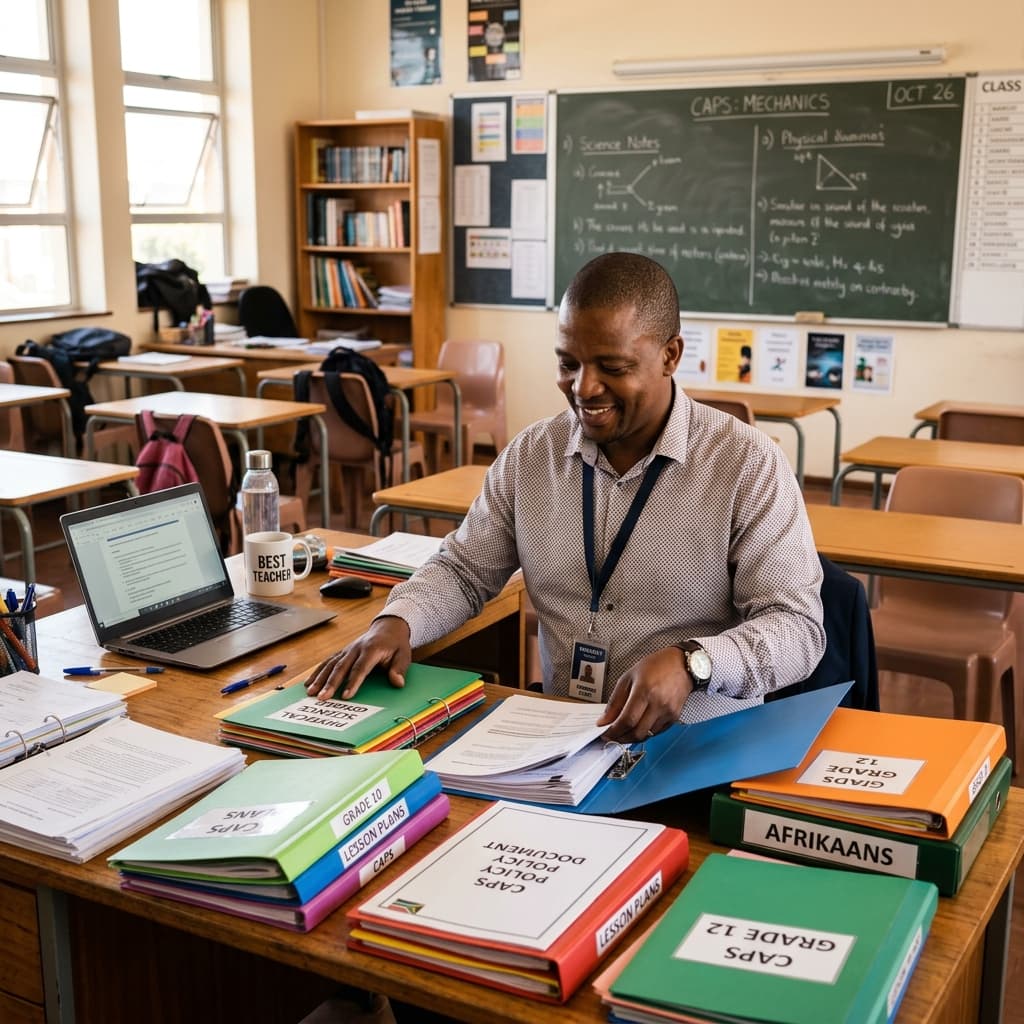
If you ask any teacher in the Foundation Phase or Senior Phase what keeps them up at night, the answer is rarely "the children." It is almost always "the paperwork."
The Curriculum and Assessment Policy Statement (CAPS) is comprehensive, but the administrative burden of tracking every single outcome in the Annual Teaching Plans (ATPs) is immense. Teachers are required to document every lesson, align it with specific taxonomies, and ensure that every file is "SGB and District ready" at a moment’s notice.
How the Administrative Load Leads to Burnout
When a teacher spends four hours every Sunday evening drafting lesson plans and mapping them to the ATPs, they aren't resting. They aren't spending time with their families. By Monday morning, they are already operating on a deficit. This constant state of "catching up" with paperwork leads to a phenomenon known as "decision fatigue," where the quality of actual classroom instruction begins to suffer because the teacher is simply too exhausted to be creative.
The Solution: CAPS-Aligned Lesson Planner
At SA Teachers, we realised that the manual creation of lesson plans is one of the primary drivers of teacher resignation. Our CAPS-Aligned Lesson Planner is designed specifically for the South African context.
Instead of starting from a blank page, you can input your subject and grade (from Grade R to Grade 12), and the AI generates a structured lesson plan that is already mapped to the relevant ATPs. This tool doesn't just save time; it ensures compliance, giving you the peace of mind that your files are up to standard without sacrificing your entire weekend.
2. The Assessment Trap: Marking, Moderation, and Monitoring
Assessment is the heartbeat of the CAPS curriculum, but for many educators, it has become a chokehold. The requirement for continuous School-Based Assessment (SBA) means that teachers are in a constant cycle of setting tests, marking scripts, and recording marks.
In a typical South African classroom, where class sizes often exceed 40 or 50 learners, a single essay assignment for Grade 10 English First Additional Language can result in over 2000 pages of marking. When you multiply this by four terms, it’s easy to see why FET phase teachers feel like they are drowning.
The Problem with Traditional Assessment
- Delayed Feedback: Because marking takes so long, students often receive feedback weeks after the task, losing the pedagogical window for improvement.
- Inconsistency: Fatigue leads to "marking drift," where the first paper is graded more strictly than the last.
- Lack of Differentiation: Teachers are so pressured to produce any test that they often lack the time to create differentiated versions for learners with different barriers to learning.
The Solution: Worksheet & Exam Generators and Essay Grader
To combat this, SA Teachers offers two transformative tools. First, the Worksheet & Exam Generator allows you to create high-quality assessments in minutes, complete with memorandums. You can specify the cognitive levels (Bloom’s Taxonomy) to ensure the paper is balanced according to DBE requirements.
Secondly, our Essay Grader & Rubric Creator is a game-changer for language and humanities teachers. By uploading or inputting student work, the AI provides a preliminary grade based on your specific rubric and offers constructive, personalised feedback. This doesn't replace the teacher's judgment; it provides a high-level starting point that slashes marking time by up to 70%.

3. Large Class Sizes and the Struggle for Differentiation
South Africa’s "bulge" in learner numbers has resulted in overcrowded classrooms where individual attention is nearly impossible. In a class of 55 learners, how does a teacher support the one student struggling with dyscalculia while simultaneously challenging the three gifted learners who have already finished the work?
This inability to reach every child is a major source of "moral injury" for teachers. They joined the profession to make a difference, but the sheer scale of the classroom makes them feel like they are failing their students every day.
Using AI to Bridge the Gap
The Study Guide Creator on the SA Teachers platform allows educators to generate custom revision materials tailored to the specific needs of their class. If a group of learners is struggling with "Chemical Change" in Physical Sciences, you can generate a simplified, step-by-step guide specifically for them.
Furthermore, the AI Tutor tool can be integrated into the classroom (or shared for home use) to provide students with 24/7 support. This acts as a "teaching assistant" that never gets tired, answering student questions and explaining complex CAPS concepts in simple terms, which frees up the teacher to focus on small-group interventions.
Andile M.
Dedicated to empowering South African teachers through modern AI strategies, research-backed pedagogy, and policy insights.