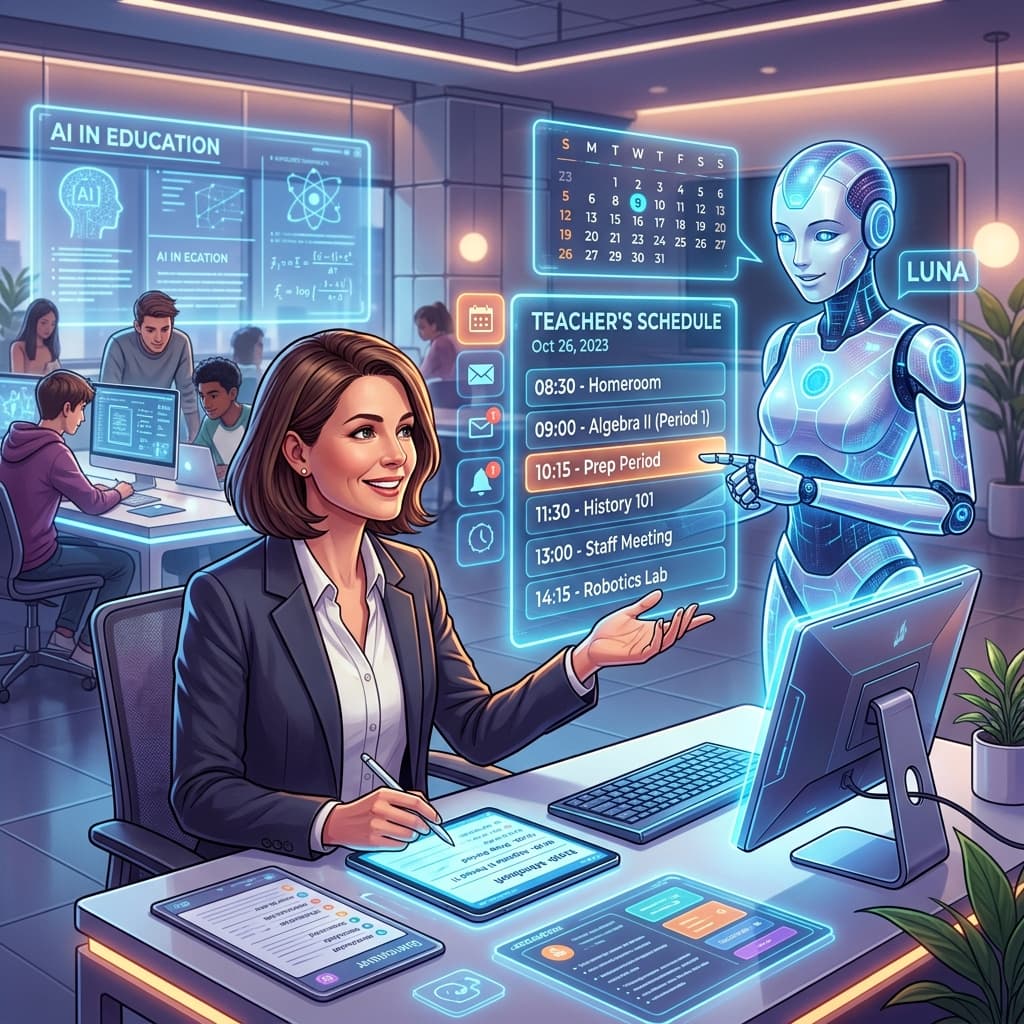
The Evolution of the South African Classroom
The South African educational landscape is uniquely demanding. From the bustling urban centres of Gauteng to the remote rural schools in the Eastern Cape, educators face a common set of hurdles: overcrowded classrooms, a rigorous Curriculum and Assessment Policy Statement (CAPS) mandate, and the relentless pressure of Annual Teaching Plans (ATPs). In this high-stakes environment, the traditional methods of resource creation are no longer sustainable.
For years, teachers have spent their Sundays and late evenings manually compiling notes, scouring old textbooks, and photocopying past papers. However, a significant shift is occurring. Teachers across the country—from Foundation Phase to FET (Further Education and Training)—are increasingly turning to AI-powered study guides. This interest isn't just about following a trend; it is a strategic response to the need for efficiency, differentiation, and improved learner performance.
The Burden of Administrative Load and CAPS Compliance
Every South African educator knows the weight of the ATP. If a teacher falls a week behind in the syllabus, the ripple effect can compromise the entire term’s School-Based Assessment (SBA). This pressure often leads to "teaching to the test," where the deep, conceptual understanding of a subject is sacrificed for the sake of speed.
AI-powered study guides offer a solution to this "time poverty." By automating the synthesis of complex CAPS content into digestible summaries, teachers can reclaim hours of their lives. But it goes beyond mere summarisation. The interest in AI stems from its ability to align perfectly with the Department of Basic Education (DBE) requirements while providing high-quality, structured content that learners can actually use.

Why Manual Creation is Failing
Manual study guide creation is prone to human error and is incredibly time-consuming. A teacher attempting to create a comprehensive guide for Grade 12 Life Sciences, for example, must ensure they cover every specific objective listed in the CAPS document, include relevant diagrams, and provide practice questions that mirror the cognitive levels required by the DBE. Doing this for multiple subjects or grades is an Herculean task.
AI tools, particularly those found on SA Teachers, are designed to understand these specific curriculum frameworks. They don't just generate generic content; they generate South African content.
Personalisation: The Holy Grail of Teaching
One of the most compelling reasons South African teachers are migrating toward AI-powered study guides is the ability to differentiate instruction at scale. In a typical South African classroom, a teacher might have learners who excel in English Home Language (HL) sitting alongside those for whom English is a First Additional Language (FAL) and who struggle with technical terminology.
Catering to Diverse Learning Needs
With the Study Guide Creator available on sateachers.co.za, a teacher can input a core topic—such as the causes of the French Revolution or the properties of an isosceles triangle—and generate multiple versions of a study guide. One version can focus on simplified language and visual aids for struggling learners, while another can offer extension activities and complex problem-solving scenarios for high achievers.
This level of personalisation was previously impossible for a single teacher to manage. AI allows the teacher to act as a facilitator of learning rather than just a dispenser of information. By providing a learner with a guide that meets them at their current reading level, the teacher reduces learner anxiety and boosts confidence.
At SA Teachers, we have developed a suite of AI-powered tools specifically tailored for the local context. These aren't just global AI wrappers; they are built to solve the specific headaches of the South African school system.
1. CAPS-Aligned Lesson Planner
Before a study guide can be effective, the lesson itself must be sound. Our CAPS-Aligned Lesson Planner ensures that every minute spent in the classroom is focused on the correct objectives. It helps teachers map out their terms in accordance with the ATPs, ensuring that the study guides generated later are a perfect reflection of what was taught in class.
2. Worksheet & Exam Generators
A study guide is incomplete without practice. Teachers are using our Worksheet & Exam Generators to instantly create formative assessments. These tools allow educators to select the difficulty level and the specific Bloom’s Taxonomy cognitive levels, ensuring that learners are prepared for both the basic recall questions and the complex "Level 4" questions found in matric finals.
3. Study Guide Creator
The heart of the interest lies here. Our Study Guide Creator takes a topic or a set of notes and transforms them into a professional, structured document. It includes definitions, key concepts, and "exam tips" that help learners navigate the specific pitfalls of South African examinations.
4. AI Tutor: The 24/7 Support System
South African teachers are often frustrated by the fact that learning stops when the school bell rings, especially for learners who do not have access to private tutoring. By recommending the AI Tutor on our platform, teachers provide their learners with a safe, curriculum-aware environment where they can ask questions like, "Can you explain the difference between mitosis and meiosis in simple terms?" at 8:00 PM on a Tuesday.

Solving the Assessment Crisis
Assessment is arguably the most stressful part of the South African academic calendar. Between marking hundreds of scripts and ensuring moderation is up to standard, teachers are often burnt out by the end of the term.
The Role of the Essay Grader & Rubric Creator
In subjects like English FAL, History, or Business Studies, marking essays is a massive bottleneck. Teachers are interested in AI study guides because they can be paired with our Essay Grader & Rubric Creator.
Imagine providing learners with a study guide that includes a model essay. The learners then write their own versions, and the AI provides instant, rubric-based feedback. This doesn't replace the teacher's final mark, but it allows for "low-stakes" practice where learners can improve their writing before the formal SBA is due. It teaches learners how to self-correct based on the specific criteria defined by the DBE.
At the end of each term, School Management Teams (SMTs) require detailed, personalised report comments for every learner. This task can take days of manual work. Our Report Comments Generator integrates with the data gathered through AI-assisted assessments to produce professional, encouraging, and accurate comments in a fraction of the time. This allows teachers to enter their holidays refreshed rather than depleted.
Language and Accessibility: A South African Priority
South Africa has 12 official languages, and the transition from learning in a mother tongue to learning in English in Grade 4 remains a significant barrier for many. AI-powered study guides are proving invaluable in this transition.
Teachers can use AI to "code-switch" or provide glossaries within study guides. For example, a Natural Sciences guide on "Photosynthesis" can include a sidebar with key terms translated into isiZulu or Sesotho. This doesn't just help the learner understand the content; it validates their linguistic background and makes the curriculum more accessible.
Furthermore, the ability to quickly "summarise" long, dense textbook chapters into bullet points is a lifesaver for learners who are reading in their second or third language. AI tools can strip away the academic "fluff" and leave the core concepts, making the content far less intimidating.
Enhancing Classroom Management and Engagement
When learners have high-quality, easy-to-follow study guides, classroom management improves significantly. A common cause of disruption is learner frustration—when a child doesn't understand the work, they are more likely to disengage or act out.
By providing AI-generated guides that are visually appealing and logically structured, teachers can keep the class on track. These guides often include checklists, which give learners a sense of agency and progress. "I have mastered the first three points of the ATP for this week" is a powerful motivator.
Moreover, because the teacher isn't spent hours creating these resources from scratch, they have more emotional energy to engage with their learners. They can spend less time at the chalkboard and more time moving between desks, providing the one-on-one support that no AI can ever replace.
Addressing the Concerns of School Management Teams (SMTs)
It is natural for SMTs and Department heads to be cautious about AI. There are concerns regarding plagiarism, the accuracy of the content, and the potential for "lazy teaching." However, the interest from teachers is driving a more nuanced conversation.
Accuracy and Moderation
Teachers using SA Teachers tools understand that AI is a co-pilot, not an autopilot. The expert educator remains the "Human in the Loop." They generate the study guide, but they use their professional judgement to vet, edit, and tailor the output. This process is actually more rigorous than relying on a single, outdated textbook.
Professional Development
The use of AI in education is a form of professional development. Teachers who master these tools are becoming more digitally literate, a key requirement in the 4th Industrial Revolution (4IR) goals set out by the South African government. SMTs are starting to see that encouraging the use of AI tools actually increases the "pedagogical capital" of their staff.
Practical Advice for Implementing AI Study Guides
If you are a teacher looking to start using AI-powered study guides, here is a step-by-step approach to doing it effectively:
- Start Small: Choose one "problem topic"—a section of the curriculum that learners consistently struggle with (e.g., Euclidean Geometry or Accounting ratios).
- Use the SA Teachers Study Guide Creator: Input your existing notes or the specific CAPS requirements. Generate a draft.
- Refine the Output: Add your own classroom "inside jokes," local examples (e.g., using Rand and Cents in math problems), and specific hints for the upcoming test.
- Create a Scaffolded Version: Use the Worksheet Generator to create a basic, intermediate, and advanced set of questions to accompany the guide.
- Gather Feedback: Ask your learners which parts of the guide were most helpful. Did the AI-generated summary make more sense than the textbook?
- Iterate: Use the feedback to improve the guide for next year's cohort.
The Socio-Economic Impact of AI in SA Schools
We cannot discuss South African education without acknowledging the digital divide. However, AI-powered study guides are actually a tool for equity. In many under-resourced schools, textbooks are shared between three or four learners, or they are years out of date.
A teacher with a single smartphone and a connection to the SA Teachers platform can generate and print (or share via WhatsApp) up-to-date, high-quality study materials that rival those of the most expensive private colleges in the country. This levels the playing field, ensuring that a learner’s success is determined by their hard work and intellect, not by the wealth of their school.
Conclusion: The Future is Collaborative
The intense interest in AI-powered study guides among South African teachers is a sign of a profession that is evolving. We are moving away from the "sage on the stage" model toward a more dynamic, responsive, and efficient way of teaching.
By embracing tools like the CAPS-Aligned Lesson Planner, Worksheet Generators, and the Study Guide Creator, teachers are not just making their lives easier; they are providing their learners with a better chance at success in a competitive world.
At SA Teachers, we are committed to supporting this journey. Our platform is built by people who understand the unique heartbeat of South African schools. We invite you to explore our tools and join the thousands of educators who are redefining what is possible in our classrooms.
The ATPs might be demanding, and the marking piles might be high, but with AI as your assistant, you can get back to what you love most: teaching.
Ready to transform your classroom? Sign up for SA Teachers today and start generating your first AI-powered study guide in minutes. Empower your learners, save your time, and master the CAPS curriculum with ease.
SA
Dedicated to empowering South African teachers through modern AI strategies, research-backed pedagogy, and policy insights.