Unlock Your Geography Lesson Potential: Gemini for CAPS Curriculum Success (Case Study 58)
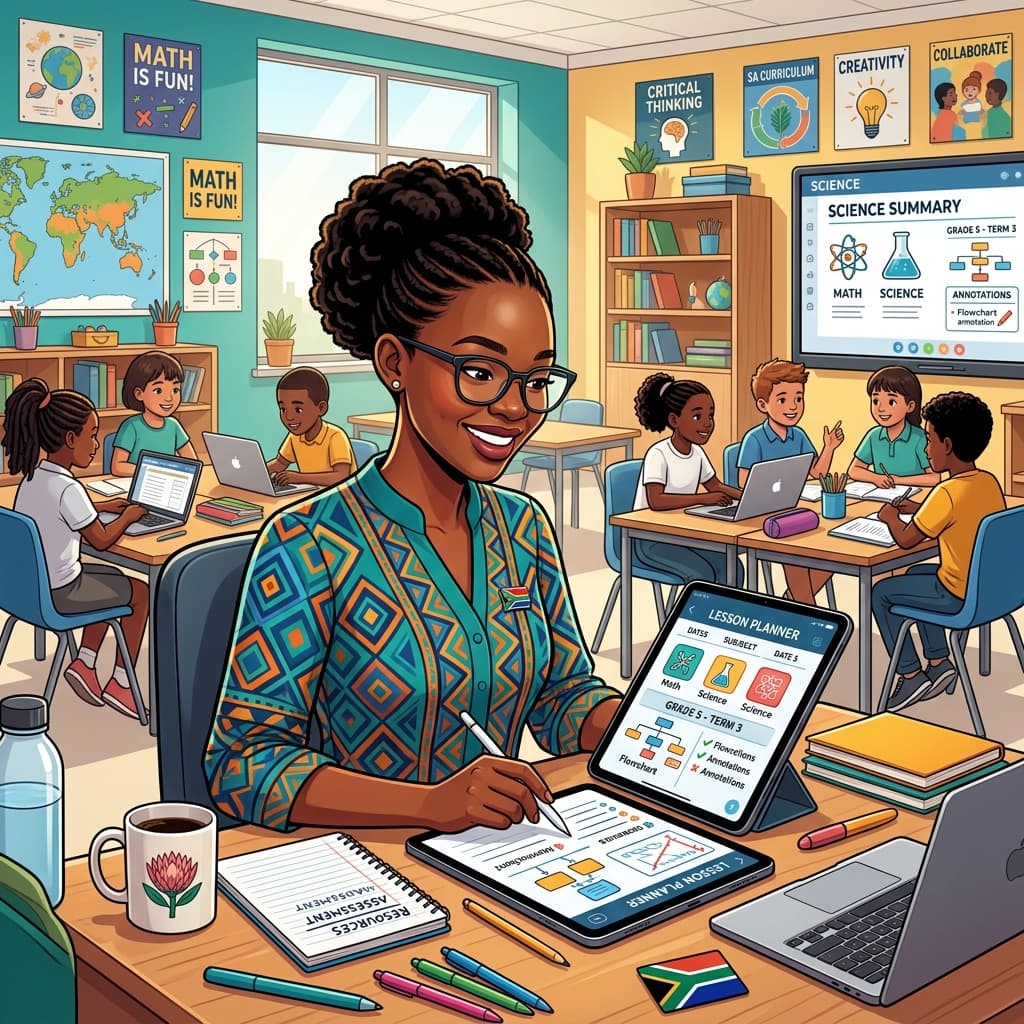
Are you a South African Geography teacher juggling lesson planning, curriculum demands, and the ever-present need for engaging content? We understand the unique challenges of our classrooms – the diverse learning needs, the resource limitations, and the vital importance of aligning with the CAPS (Curriculum and Assessment Policy Statement). This is where innovative tools can become your greatest allies. In this, our 58th case study, we delve into how Gemini, a powerful AI assistant, can revolutionise your Geography lesson preparation, specifically tailored for the South African context.
Forget generic AI prompts. We're talking practical, actionable strategies designed to support your journey from Grade R to Grade 12, making your teaching more efficient, effective, and, dare we say, enjoyable.
Understanding Gemini: More Than Just a Chatbot
Gemini isn't just a tool for quick answers; it's a sophisticated AI that can understand context, generate creative content, and synthesise information. For us South African educators, this translates into a potent assistant capable of:
- Content Generation: Creating diverse explanations, examples, and narratives.
- Curriculum Alignment: Helping to break down CAPS requirements into teachable segments.
- Differentiated Learning: Suggesting activities and resources for varied learning styles and abilities.
- Assessment Design: Assisting in crafting relevant and challenging assessment tasks.
- Resource Curation: Identifying potential South African case studies and relevant local data.
Let's move beyond theory and explore how Gemini can be applied in real-world South African Geography classrooms.
Case Study 58: Gemini in Action - Grade 7 Plate Tectonics
The Challenge: A Grade 7 teacher needs to explain the complex concept of plate tectonics, focusing on convergent boundaries and their impact, while aligning with CAPS Content Area: "Earth Systems" and specifically, the achievement standard related to understanding Earth's geological processes. The teacher also wants to incorporate relatable South African examples and cater to a class with mixed understanding levels.
Gemini's Role:
Deconstructing the CAPS:
- Teacher Prompt: "Break down the CAPS requirements for Grade 7 Geography on plate tectonics and convergent boundaries. What are the key concepts and learner outcomes?"
- Gemini's Output (Simulated): Gemini can provide a concise summary of the CAPS requirements, highlighting key terms like 'lithosphere', 'asthenosphere', 'convergent boundaries' (oceanic-continental, oceanic-oceanic, continental-continental), and associated landforms (volcanoes, fold mountains, trenches). It can also list the expected learner outcomes, such as understanding the mechanisms of plate movement and identifying landforms created by convergent boundaries.
Simplifying Complex Concepts for Young Learners:
- Teacher Prompt: "Explain plate tectonics and convergent boundaries to a Grade 7 learner using simple language and analogies. Focus on how the Earth's crust moves and creates mountains and volcanoes."
- Gemini's Output (Simulated): Gemini can generate analogies like comparing tectonic plates to pieces of a cracked eggshell or puzzle pieces floating on a thick, gooey caramel. It can then explain convergent boundaries as plates "crashing" into each other, with one often diving beneath the other (subduction), leading to melting rock and volcanic eruptions, or crumpling up to form massive mountains like the Himalayas (though we'll link this to a South African example later).
Identifying South African Relevance:
- Teacher Prompt: "What are some South African geographical features that are indirectly related to plate tectonics or the geological processes caused by them? I need examples that are accessible for Grade 7s and highlight Earth's dynamic nature."
- Gemini's Output (Simulated): While South Africa isn't on a major plate boundary, Gemini can point to the Great Escarpment as a significant geological feature shaped by ancient tectonic activity and erosion. It can also explain how the Drakensberg Mountains, part of the Great Escarpment, are remnants of ancient volcanic activity and erosion, illustrating long-term geological processes. It can even mention the Cape Fold Mountains as a result of ancient continental collisions from millions of years ago, even if not directly linked to current convergent boundaries. The key is to show learners that Earth's surface is constantly changing over geological time.
Generating Engaging Explanations and Activities:
- Teacher Prompt: "Create a short, engaging explanation of a convergent boundary (oceanic-continental) and suggest a hands-on activity for Grade 7s to demonstrate how mountains and volcanoes form."
- Gemini's Output (Simulated): Gemini could draft an explanation like: "Imagine the Earth's skin is like a giant jigsaw puzzle made of huge pieces called tectonic plates. When two plates push together, it's called a 'convergent boundary.' If a heavy, watery plate (oceanic) bumps into a lighter, rocky plate (continental), the watery one gets pushed underneath. As it sinks, it melts, creating hot magma. This magma can rise to the surface, like a fizzy drink bubbling out of a bottle, forming volcanoes! The scraping and pushing can also crumple the land, forming mighty mountain ranges."
- For an activity, Gemini might suggest: "Using playdough or modelling clay, have learners represent two plates. Demonstrate one plate sliding under the other, showing how the land above crumples to form mountains and how 'magma' (e.g., red-coloured playdough) can erupt."
Differentiating Learning:
- Teacher Prompt: "Suggest differentiated activities for Grade 7 plate tectonics. I need something for learners who need more visual aids and something for those who can explore research."
- Gemini's Output (Simulated):
- Visual Learners: "Create a flowchart or comic strip illustrating the process of subduction and volcano formation." or "Use pre-made diagrams and have learners label the different parts and processes."
- Research-Oriented Learners: "Investigate a specific active volcano on a convergent boundary (e.g., Mount Fuji in Japan, Mount Kilimanjaro in Tanzania) and present its geological history and impact on local communities."
Beyond Grade 7: Gemini's Versatility Across the Grades
The power of Gemini extends across all Geography phases in South Africa:
Grade R-3 (Environmental Studies):
- Prompt: "Generate simple rhymes or short stories about different weather patterns in South Africa (sunshine, rain, wind) for Grade 2 learners."
- Prompt: "Suggest ideas for nature walks around a South African school to observe landforms (hills, flat areas) for Grade 1."
Grade 4-6 (Human and Physical Geography):
- Prompt: "Create a simplified explanation of the water cycle, focusing on evaporation and condensation, suitable for Grade 5 learners in the Western Cape, mentioning how it impacts local water supply."
- Prompt: "Develop a list of key questions for Grade 6 learners to investigate about the population distribution in the Gauteng province, considering urbanisation and economic factors."
Grade 8-9 (Intermediate Phase - CAPS Content Areas):
- Prompt: "Outline a lesson plan for Grade 8 on urbanisation in South Africa, focusing on the push and pull factors of migration to cities like Johannesburg, and potential challenges like informal settlements."
- Prompt: "Generate a compare-and-contrast table for Grade 9 learners on the characteristics of different types of farming (e.g., commercial vs. subsistence) in South Africa, including examples of crops grown."
Grade 10-12 (Senior & FET Phases - CAPS Content Areas):
- Prompt: "For Grade 10 Geography, explain the concept of climate change and its potential impacts on South Africa's biodiversity and agricultural sector, using recent research trends."
- Prompt: "Develop a scenario-based question for Grade 11 learners about managing water resources in a drought-prone region of South Africa, incorporating concepts of supply and demand, conservation, and policy."
- Prompt: "Create a series of essay questions for Grade 12 learners exploring the geomorphology of coastal regions in South Africa, focusing on processes like wave action, erosion, and deposition."
Practical Tips for Integrating Gemini into Your Workflow
- Be Specific with Your Prompts: The more detail you provide about the grade level, CAPS content area, learning objective, and desired output format, the better Gemini's responses will be.
- Iterate and Refine: Gemini's first response might not be perfect. Don't hesitate to ask for revisions, elaborations, or different perspectives. For example, "Can you make that explanation even simpler?" or "Can you provide more local examples of X?"
- Fact-Check and Adapt: Always review Gemini's output for accuracy and relevance to the South African context. You are the expert, and Gemini is your assistant. Adapt the generated content to fit your teaching style and classroom realities.
- Use it for Inspiration: Even if you don't use Gemini's output verbatim, it can spark new ideas for lessons, activities, and assessment questions.
- Focus on Local Data and Context: Actively prompt Gemini to include South African case studies, statistics, and geographical features. This is crucial for making Geography relatable and meaningful to your learners.
- Consider Different Output Formats: Ask Gemini to generate outlines, bullet points, explanations, stories, dialogues, or even draft rubrics for assignments.
- Save Your Prompts: Keep a record of effective prompts you've used. This will build a valuable library of resources for future lesson planning.
Embracing the Future of Teaching in South Africa
Gemini, when used thoughtfully and strategically, is not a replacement for the indispensable role of a South African teacher. Instead, it's a powerful co-pilot, designed to lighten your administrative load, enrich your lesson content, and empower you to deliver high-quality Geography education that truly resonates with your learners and meets the rigorous demands of the CAPS curriculum. By embracing these innovative tools, we can continue to foster a generation of geographically literate, critical-thinking South Africans, ready to understand and engage with the world around them.
Start experimenting with Gemini today. You might be surprised at how much time you save and how much more creative your lesson preparation becomes. Happy planning!
Siyanda M.
Dedicated to empowering South African teachers through modern AI strategies, research-backed pedagogy, and policy insights.