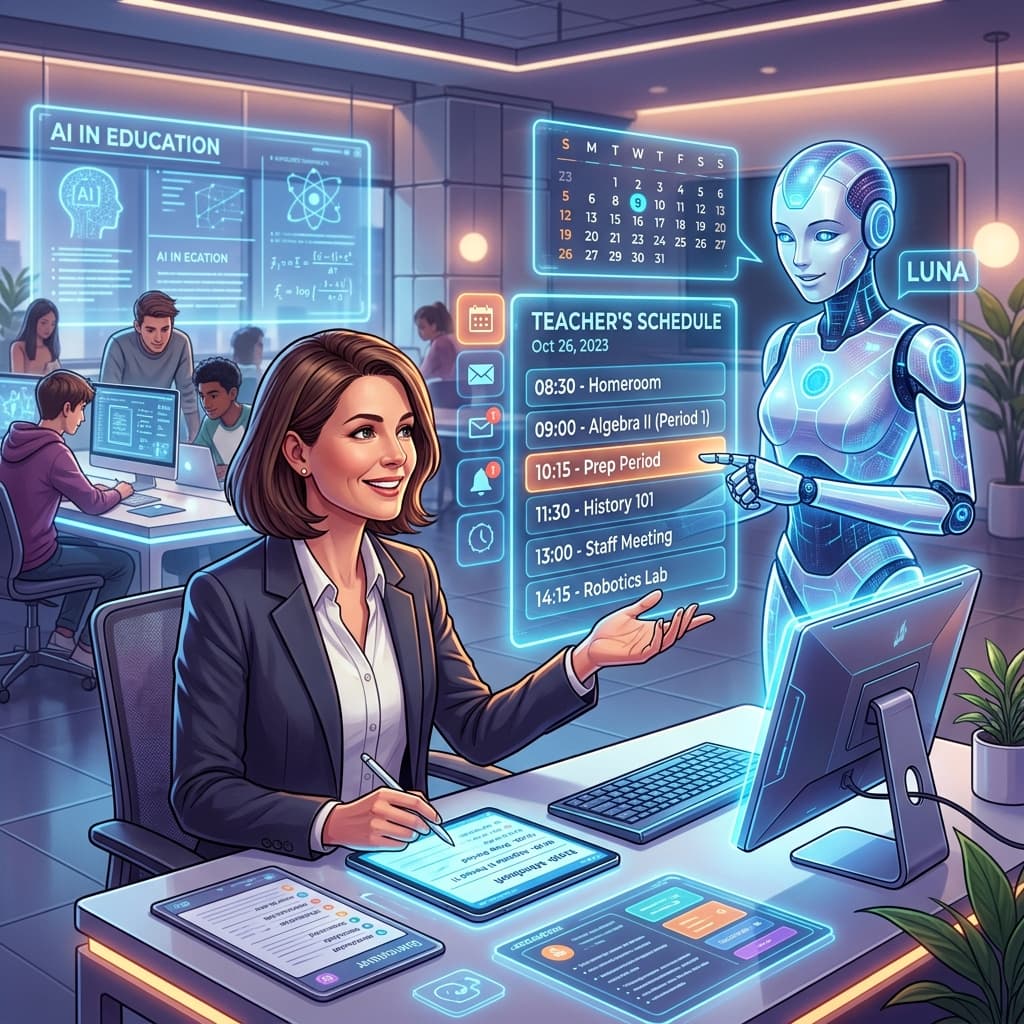
The Evolving Educator: Navigating the AI Revolution in South African Schools (Case Study 16)
The hum of artificial intelligence (AI) is no longer a distant whisper; it's a growing chorus within educational landscapes worldwide. For us in South Africa, a nation grappling with diverse socio-economic realities and committed to the principles of the CAPS (Curriculum and Assessment Policy Statement) curriculum, the integration of AI presents both exhilarating opportunities and significant challenges. This article, drawing insights from our "Case Study 16" initiative, delves into the evolving role of the educator in an AI-driven school, offering practical guidance for our dedicated Grades R-12 teachers across the nation.
We understand that the term "AI-driven school" can conjure images of futuristic, perhaps impersonal, learning environments. However, our exploration, rooted in the South African context, reveals a far more nuanced and human-centric evolution. AI, in this framework, is not a replacement for the teacher but a powerful ally, a sophisticated tool designed to augment human capacity and address some of the persistent challenges we face in our classrooms, from large class sizes and diverse learning needs to the critical imperative of preparing our learners for a rapidly changing future workforce.
AI as a Differentiator: Personalising Learning within CAPS
One of the most significant promises of AI in education is its ability to facilitate personalized learning. In a South African classroom, this is particularly crucial. CAPS, with its emphasis on developing learners' competencies, often necessitates differentiated instruction. Imagine a Grade 4 Maths class where learners are at vastly different stages of understanding fractions. Traditionally, catering to each individual's pace and specific learning gaps would require superhuman efforts from the teacher.
AI-powered platforms can analyse learner performance in real-time, identifying areas of struggle or advanced understanding. These platforms can then dynamically adjust the difficulty of exercises, offer targeted remedial resources, or provide enrichment activities. For the South African educator, this means AI can act as an intelligent assistant, flagging learners who need extra attention and suggesting specific interventions. The teacher, armed with this data, can then focus their invaluable human interaction on providing emotional support, fostering critical thinking through Socratic questioning, and facilitating collaborative learning experiences – aspects that AI cannot replicate.
- Practical Tip for Educators: Explore AI-driven adaptive learning platforms that align with CAPS Maths and Literacy outcomes. Start with a pilot program in one subject or grade level, gathering feedback from learners and colleagues. Focus on platforms that provide clear, actionable insights into learner progress.
AI in Assessment: Streamlining and Deepening Feedback
Assessment is a cornerstone of CAPS, and a significant drain on teacher time. AI can revolutionise this by automating certain aspects of assessment, freeing up educators to provide more qualitative, formative feedback. For instance, AI can efficiently grade multiple-choice questions, fill-in-the-blanks, and even provide preliminary feedback on essays by checking for grammar, spelling, and adherence to basic structural requirements.
This doesn't diminish the educator's role; it elevates it. With automated grading handled, teachers can dedicate more time to analysing the nuances of learner responses, identifying misconceptions, and providing rich, personalised feedback that guides deeper understanding and critical thinking. This is particularly relevant for subjects like English Home Language or Afrikaans First Additional Language, where nuanced understanding of expression and argumentation is key, and where AI can offer initial checks while the teacher focuses on the higher-order analytical and creative aspects.
- Practical Tip for Educators: Investigate AI tools that can assist with marking objective assessments and provide initial feedback on written work. Train yourself to interpret the AI's feedback, using it as a starting point for your own expert assessment and personalised guidance.
AI and Curriculum Development: Enhancing Resources and Lesson Planning
Developing engaging and relevant lesson plans that align with the broad scope of CAPS can be a demanding task. AI can become a powerful partner in this process. AI-powered tools can curate vast amounts of up-to-date information, suggest diverse teaching methodologies, and even generate preliminary lesson outlines based on specific CAPS learning objectives.
For a Grade 10 History teacher tasked with covering the complexities of apartheid, AI could suggest primary source materials, relevant documentaries, or even interactive timelines that bring the curriculum to life. This doesn't mean the AI writes the lesson plan; it means the teacher, an expert in their subject and the South African context, can leverage AI to gather richer resources and explore innovative pedagogical approaches, ultimately crafting a more impactful learning experience. The educator's role here is to select, adapt, and contextualise the AI's suggestions, ensuring they resonate with the unique needs and backgrounds of their learners.
- Practical Tip for Educators: Use AI tools to brainstorm lesson ideas, generate differentiated activity suggestions for specific CAPS topics, and identify relevant digital resources. Always critically evaluate the AI's output and tailor it to your classroom's specific context and learners' needs.
The Unchanging Core: The Educator as Facilitator, Mentor, and Human Connection
As AI becomes more integrated, it’s vital to reaffirm what makes the South African educator indispensable. Our role transcends the delivery of content and the grading of assignments. We are the mentors who inspire curiosity, the facilitators who foster collaboration and critical discourse, and the empathetic figures who nurture emotional intelligence and resilience.
In a nation striving for equity and social justice, the educator's ability to understand the socio-economic realities of their learners, to build trust, and to create a safe and inclusive learning environment is paramount. AI can provide data and resources, but it cannot replicate the human connection, the nuanced understanding of a learner's struggles stemming from challenges outside the classroom, or the inspiring power of a teacher's passion.
As we look ahead, educators in AI-driven schools will likely spend less time on rote tasks and more time on:
- Fostering Higher-Order Thinking Skills: Guiding learners to analyse, evaluate, and create, using AI-generated content as a springboard for deeper inquiry.
- Promoting Digital Literacy and AI Ethics: Teaching learners how to use AI responsibly, critically evaluate AI-generated information, and understand its ethical implications.
- Cultivating Socio-Emotional Learning (SEL): Nurturing empathy, collaboration, and resilience – skills that are increasingly crucial in a technologically advanced world.
- Facilitating Project-Based and Experiential Learning: Designing authentic learning experiences that connect classroom knowledge to real-world applications, often leveraging AI for research and data analysis.
Addressing the Digital Divide and Equity
A critical consideration for South Africa is the digital divide. The promise of AI-driven education must not exacerbate existing inequalities. As educational leaders and policymakers, we must ensure equitable access to the necessary technology and training for both educators and learners across all provinces and socio-economic strata. Case Study 16 highlights the need for robust infrastructure development and accessible professional development initiatives to support all teachers in embracing these advancements.
- Practical Tip for Educators: Advocate for equitable access to technology within your school and district. Explore low-tech or blended learning strategies that can incorporate AI tools in a way that is accessible to all learners.
Conclusion: Embracing the Future, Grounded in our Values
The role of the educator in an AI-driven South African school is not one of obsolescence but of transformation. AI offers us an unprecedented opportunity to enhance our teaching, personalise learning for our diverse learners, and better prepare them for the future. However, this transformation must be guided by our core values: equity, inclusivity, and the unwavering belief in the power of human connection.
As we continue to explore these evolving landscapes, let us embrace AI not as a threat, but as a powerful partner in our mission to provide quality education for all South African children, empowering them with the knowledge, skills, and critical thinking abilities they need to thrive in the 21st century and beyond. The educator remains, and will always remain, the heart of the learning experience.
Siyanda M.
Dedicated to empowering South African teachers through modern AI strategies, research-backed pedagogy, and policy insights.