The Evolving Educator: Navigating the AI Revolution in South African Classrooms - Case Study 80
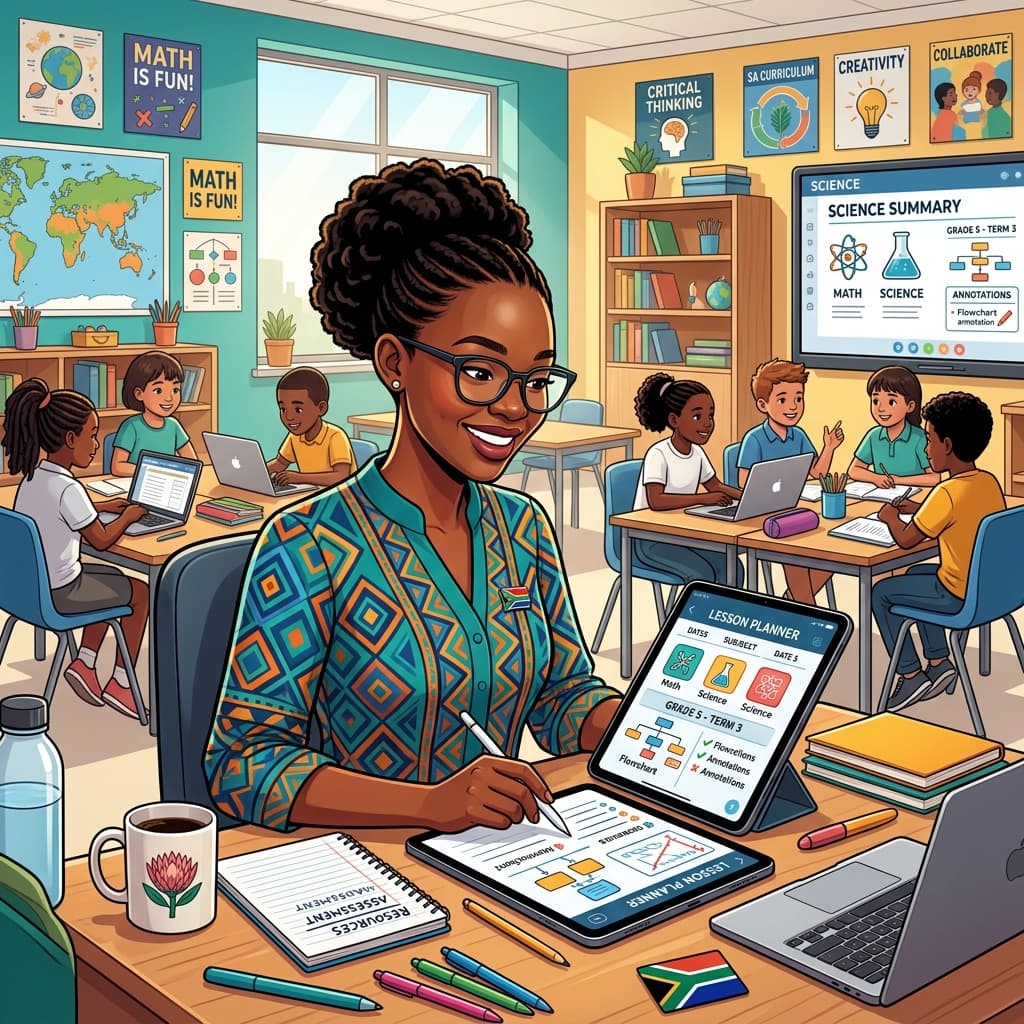
The hum of artificial intelligence (AI) is no longer a distant whisper; it's a growing chorus resonating through every sector, and our South African schools are no exception. For us, the educators in Grades R-12, the advent of AI presents both a thrilling frontier and a complex challenge. This isn't about replacing teachers; it's about redefining our roles, leveraging new tools, and ensuring our pedagogical approaches remain at the forefront of effective learning, all while staying true to the spirit of the CAPS curriculum and the unique context of South Africa.
Case Study 80 delves into this transformation, offering a pragmatic exploration of how educators are adapting, innovating, and leading in an AI-driven educational landscape. We'll move beyond the hype to focus on the practical realities, the curriculum alignment, and the indispensable human element that remains at the heart of teaching.
Understanding AI in Our South African Context
Before we delve into the educator's role, it's crucial to demystify AI in education, particularly within the South African framework. AI isn't a singular entity; it encompasses a range of technologies:
- Personalised Learning Platforms: These can adapt content difficulty and pace based on individual student performance, a concept that resonates with our CAPS focus on differentiated instruction.
- Automated Grading and Feedback Tools: AI can assist with marking objective assessments and even provide preliminary feedback on written work, freeing up valuable teacher time.
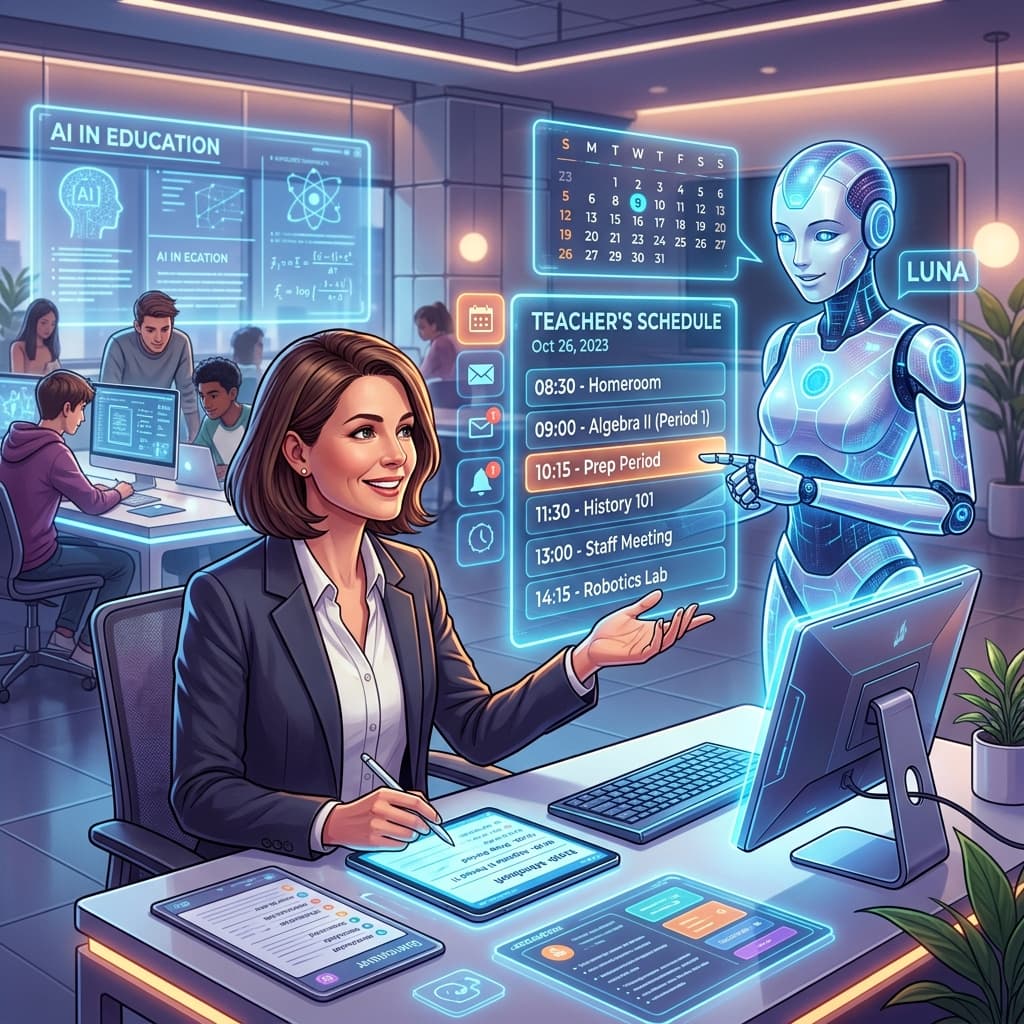
- Content Generation Tools: AI can help create lesson plans, worksheets, or even quiz questions, but always requiring our expert review and adaptation.
- Data Analytics and Insights: AI can help us understand student learning patterns, identify areas of struggle, and inform our intervention strategies.
It's vital to remember that these tools are assistants, not replacements. Our deep understanding of the CAPS curriculum, the developmental stages of our learners, and the socio-economic realities of our diverse classrooms is something AI cannot replicate.
The Educator as Curator, Collaborator, and Coach
The traditional image of the teacher as the sole purveyor of knowledge is being reshaped. In an AI-driven school, our roles become more nuanced and, arguably, more impactful.
1. The Educator as Curator: Ensuring Quality and Relevance
With AI capable of generating vast amounts of information, our role as curators becomes paramount. We are the gatekeepers, the ones who sift through the digital deluge to identify accurate, age-appropriate, and culturally relevant resources.
- CAPS Alignment is Key: AI-generated content must be scrutinised for its alignment with the specific learning objectives, content and skills outlined in the CAPS curriculum for each grade and subject. A tool might generate a historical narrative, but does it reflect the nuanced South African history we are mandated to teach? Does it challenge or perpetuate colonial narratives?
- Critical Evaluation of AI Outputs: Just because an AI generates something doesn't make it pedagogically sound or factually correct. Teachers need to critically evaluate AI-generated materials for bias, accuracy, and suitability. For instance, an AI might suggest an activity that is resource-intensive, impractical for a rural school, or culturally insensitive.
- Adapting to Local Realities: Our classrooms are not homogenous. We teach learners from diverse backgrounds with varying access to technology and prior knowledge. AI-generated content often assumes a certain level of digital literacy and access. Our curatorial role involves adapting and contextualising these resources to suit the specific needs of our learners and their communities.
Practical Advice:
- Develop a "Curator's Checklist": For any AI-generated resource, ask:
- Does it directly support a specific CAPS learning outcome?
- Is the information accurate and unbiased?
- Is it age-appropriate and engaging for my learners?
- Is it adaptable to our school's resources and learner context?
- Does it promote critical thinking and problem-solving?
- Collaborate with Colleagues: Share your findings and best practices for using AI-generated content. Discuss how you've adapted materials for your specific context.
- Train Learners in Digital Literacy: Teach your students how to critically evaluate information, whether it comes from a textbook or an AI.
2. The Educator as Collaborator: Fostering Human Connection and Deeper Learning
AI excels at tasks that are repetitive or data-intensive. What it cannot do is foster genuine human connection, empathy, or collaborative learning experiences – the bedrock of effective pedagogy.
- Facilitating Collaborative Projects: While AI can provide information, it's the teacher who designs and guides collaborative projects that encourage teamwork, communication, and peer learning. These are essential skills for the 21st century, and CAPS actively promotes them.
- Nurturing Social-Emotional Learning (SEL): AI cannot teach empathy, conflict resolution, or resilience. These vital aspects of development are fostered through direct human interaction, guided discussions, and the teacher's own modelling of these behaviours.
- Bridging the Digital Divide: In South Africa, digital access is not universal. Educators play a crucial role in ensuring that AI tools enhance, rather than exacerbate, existing inequalities. This might involve designing activities that don't solely rely on individual devices or providing alternative, non-digital pathways for learners.
- Co-creation with Learners: Empower learners to use AI tools as creative partners. They can use AI to brainstorm ideas for a story, generate different perspectives for a debate, or even help design elements of a science experiment. The teacher's role is to guide this co-creation process, ensuring it leads to deeper understanding and critical reflection.
Practical Advice:
- Design "AI-Augmented" Collaborative Activities: How can AI be used as a tool within a group project? For example, one group could use AI to generate research data, while another uses it to summarise complex information for a presentation.
- Prioritise "Unplugged" Learning: Ensure that a significant portion of your teaching involves face-to-face interaction, hands-on activities, and group discussions.
- Integrate SEL Explicitly: Use classroom discussions and scenarios to teach and reinforce SEL skills. AI can provide content on these topics, but the human interaction is where the learning truly happens.
3. The Educator as Coach: Guiding, Mentoring, and Personalising Support
Perhaps the most profound shift is the educator's evolution into a coach. AI can provide personalised learning paths and identify areas of weakness, but it is the teacher who provides the human encouragement, the tailored interventions, and the holistic support that fosters growth.
- Interpreting AI-Driven Data: AI can flag a student struggling with a particular concept. However, it's the educator who understands the why behind that struggle – is it a foundational gap, a learning difference, or an emotional barrier? This requires our professional judgment and understanding of the individual learner.
- Providing Targeted Interventions: Based on AI insights and our own observations, we design and implement personalised interventions. This could involve one-on-one support, small group work, or differentiated assignments.
- Fostering a Growth Mindset: AI can deliver feedback, but it's the teacher who inspires resilience, encourages perseverance, and helps learners see mistakes as opportunities for learning. This is particularly crucial in the South African context, where many learners face significant challenges outside of school.
- Mentoring Beyond Academics: Our role extends to mentoring our learners holistically – guiding them in their career aspirations, helping them navigate social challenges, and instilling values. AI, however sophisticated, cannot replicate this human dimension of mentorship.
Practical Advice:
- Use AI Data as a Starting Point, Not an Endpoint: When an AI flags a student, schedule a one-on-one check-in. Ask them about their learning experience, their challenges, and their goals.
- Develop a Personalised Intervention Toolkit: Create a repertoire of strategies and resources you can draw upon to support individual learners based on their specific needs.
- Celebrate Small Wins: Acknowledge and celebrate progress, no matter how small. This builds confidence and motivation, especially for learners who may be facing significant hurdles.
- Advocate for Professional Development: Stay abreast of AI tools and best practices. Seek out training opportunities that will equip you to effectively integrate AI into your teaching.
The Imperative of Human Connection
In the rush to embrace AI, it is vital that we do not lose sight of what makes education truly transformative: the human connection. AI can automate, analyse, and assist, but it cannot replicate the inspiration of a passionate teacher, the camaraderie of a classroom, or the empathy that underpins genuine learning.
As educators in South Africa, we are uniquely positioned to leverage AI as a powerful ally. By embracing our roles as curators, collaborators, and coaches, we can ensure that our classrooms remain vibrant hubs of learning, innovation, and human growth, preparing our learners not just for a future with AI, but for a future where they can thrive with it. Case Study 80 serves as a reminder that the heart of education beats with human connection, guided by skilled and adaptable educators.
Siyanda M.
Dedicated to empowering South African teachers through modern AI strategies, research-backed pedagogy, and policy insights.