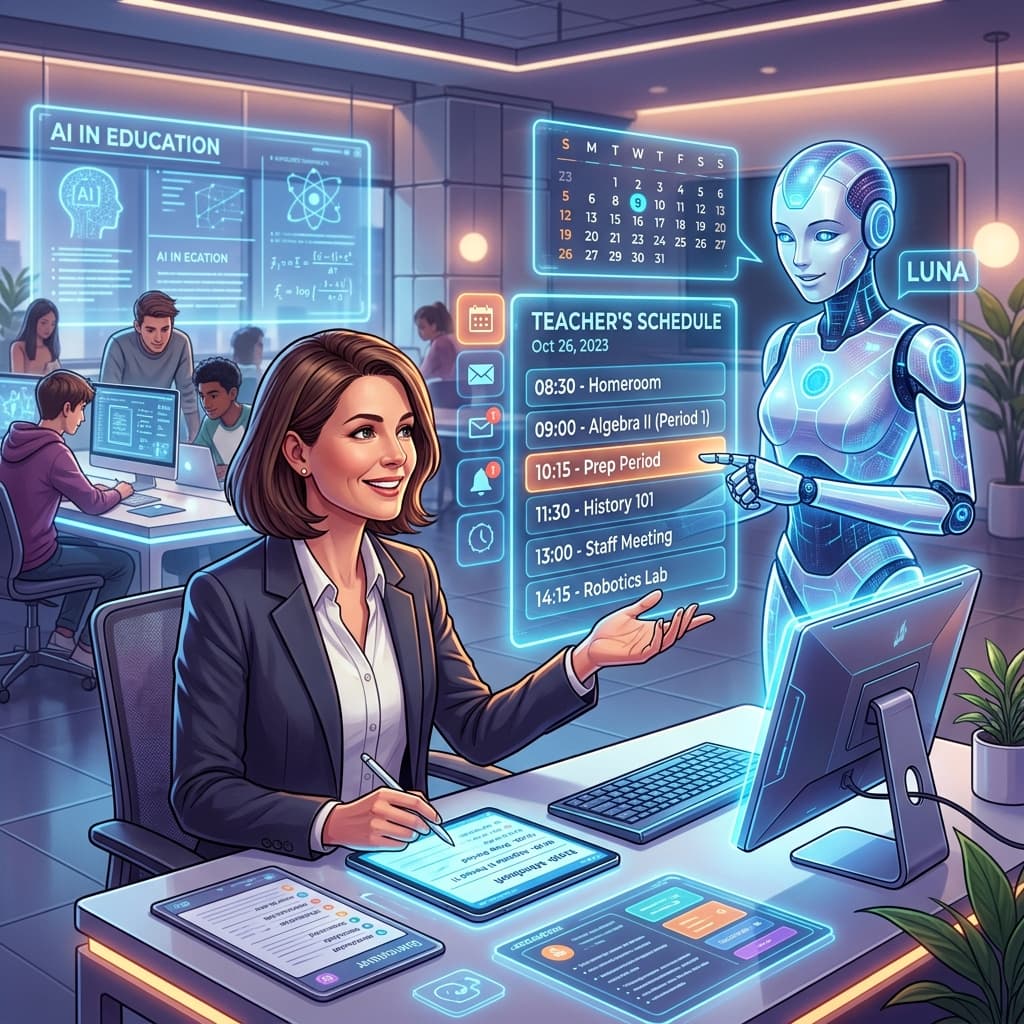
Revolutionising the South African Classroom: Implementing CAPS with AI - Case Study 73
The South African education landscape is dynamic, constantly evolving to meet the needs of our diverse learners and the demands of a rapidly changing world. At the heart of this evolution lies the Curriculum and Assessment Policy Statement (CAPS), a framework designed to ensure quality education across the nation. For Grades R-12 teachers, navigating CAPS can be a complex yet rewarding journey. But what if we told you there's a powerful new ally in this endeavor – Artificial Intelligence (AI)?
In this blog post, we delve into Case Study 73, a real-world exploration of how South African educators are successfully integrating AI tools to enhance their implementation of the CAPS curriculum. We’ll move beyond the theoretical and explore practical, actionable strategies that can transform your classroom, no matter your subject or grade level.
Understanding the Synergy: CAPS and AI in the South African Context
Before we dive into the case study, it's crucial to understand why AI is a valuable partner for CAPS. CAPS, with its emphasis on learner-centred approaches, critical thinking, and problem-solving, presents a rich environment for AI integration. AI tools aren't here to replace teachers; rather, they are designed to augment their capabilities, freeing up valuable time and providing new avenues for differentiated instruction and assessment.
Consider the realities of South African classrooms: diverse learning needs, large class sizes, and often limited resources. AI can act as a force multiplier, helping teachers to:
- Personalise Learning: Tailor content and activities to individual student needs, addressing learning gaps and extending high achievers.
- Automate Repetitive Tasks: Reduce the burden of marking, lesson planning, and administrative duties, allowing teachers to focus on teaching and student interaction.
- Enhance Engagement: Create interactive and dynamic learning experiences that capture students' attention and foster deeper understanding.
- Provide Real-time Feedback: Offer immediate support and guidance to learners, facilitating a more responsive and effective learning process.
Case Study 73 focuses on a cohort of South African teachers from various provinces and subject specialisations, grappling with the practicalities of bringing CAPS to life. Their journey highlights a shared desire to not just meet CAPS requirements but to exceed them, fostering genuine learner development and readiness for the 21st century.
Case Study 73: Unpacking the AI Integration Journey
The teachers involved in Case Study 73 were a mix of experienced educators and those newer to the profession, teaching across primary and secondary phases. Their initial apprehension about AI was palpable, often stemming from a fear of the unknown or a concern about the digital divide. However, the study's success lay in its structured approach, focusing on accessible, user-friendly AI tools that complemented existing pedagogical practices.
Phase 1: Identifying CAPS Objectives and AI Opportunities
The first crucial step for these teachers was to meticulously re-examine their CAPS documents. They identified specific learning objectives, skills, and assessment criteria that were proving challenging to address effectively within their current methodologies. This diagnostic approach was key.
Practical Advice:
- Deep Dive into CAPS: Don't just skim. Identify the "big picture" learning outcomes for each term and year. Pinpoint areas where students consistently struggle or where deeper engagement is desired.
- Subject-Specific Analysis: For Maths, it might be identifying areas where learners struggle with problem-solving strategies. For English, it could be developing critical textual analysis skills. For Natural Sciences, it might be facilitating understanding of complex scientific processes.
- Collaborative Brainstorming: Teachers within the same school or district formed small groups to discuss their CAPS challenges and brainstorm potential AI solutions. This shared exploration fostered a sense of community and reduced individual pressure.
Phase 2: Exploring Accessible AI Tools
The study deliberately avoided overly complex or expensive AI platforms. Instead, it focused on readily available tools that could be integrated with minimal technical overhead.
Examples of Tools Explored (and how they map to CAPS):
AI-Powered Content Generators (e.g., ChatGPT-like interfaces):
- CAPS Alignment: Generating differentiated reading passages, creating varied practice questions for different cognitive levels (e.g., Bloom's Taxonomy), developing comprehension exercises, drafting explanatory texts on complex topics, and even creating role-playing scenarios for language or history lessons.
- Practical Application: A Grade 7 Social Sciences teacher used an AI to generate multiple versions of a historical event's narrative, each tailored to different reading levels, ensuring all learners could access the core information required by CAPS. Another teacher used it to create cloze activities for vocabulary building in Afrikaans FAL.
AI-Assisted Assessment Tools:
- CAPS Alignment: Providing instant feedback on objective questions (multiple choice, fill-in-the-blanks), identifying common errors in short answer responses, and even offering preliminary feedback on essay structure and grammar (for older grades). This directly supports the assessment requirements within CAPS.
- Practical Application: A Grade 10 Life Sciences teacher used an AI tool to mark a quiz on cell biology. The AI identified that many students were confusing mitochondria and chloroplasts, allowing the teacher to immediately address this specific misconception in the next lesson – a targeted intervention aligned with CAPS's focus on mastery.
AI for Lesson Planning and Resource Curation:
- CAPS Alignment: Suggesting teaching strategies, recommending relevant resources (videos, articles, simulations) that align with CAPS content, generating lesson plan outlines, and even creating differentiated activity ideas.
- Practical Application: A Grade 3 teacher, feeling overwhelmed with planning for a new CAPS topic on weather patterns, used an AI to generate a series of engaging activities, including a simple experiment idea, a song suggestion, and a story prompt, all within the CAPS scope for that grade.
Phase 3: Practical Integration and Teacher Training
The success of Case Study 73 hinges on the practical implementation and the support provided to teachers. It wasn't about throwing tools at them; it was about guided adoption.
Practical Advice:
- Start Small and Experiment: Don't try to overhaul your entire teaching practice overnight. Choose one AI tool and one CAPS objective to focus on initially.
- Focus on Teacher Control: Emphasise that AI is a tool for the teacher, not a replacement. Teachers retain full control over content, pedagogy, and assessment.
- Leverage Existing Infrastructure: Encourage the use of AI tools that are compatible with existing school computer labs or even accessible via student personal devices (where appropriate and in line with school policy).
- Peer-to-Peer Learning: The case study highlighted the immense value of teachers sharing their successes and failures. Create opportunities for informal sharing sessions where teachers can showcase how they've used AI to meet specific CAPS requirements.
- Ongoing Professional Development: Short, focused workshops on specific AI tools and their application to CAPS objectives are far more effective than generic training.
Phase 4: Measuring Impact and Refining Practice
The ultimate goal of integrating AI with CAPS is to improve learner outcomes and teacher efficiency. Case Study 73 meticulously tracked the impact.
Observed Outcomes (aligned with CAPS principles):
- Improved Learner Engagement: Students showed increased enthusiasm for lessons where AI-generated content or interactive elements were used. This is a direct reflection of CAPS's emphasis on learner-centred and engaging pedagogy.
- Enhanced Differentiation: Teachers reported being able to cater more effectively to the diverse needs of their learners, providing targeted support and extension activities, a core tenet of CAPS.
- Time Savings for Teachers: Educators reported a significant reduction in time spent on administrative tasks and basic content creation, allowing them to dedicate more time to individual student interaction and pedagogical planning.
- Deeper Understanding of CAPS Objectives: The process of identifying CAPS needs and then finding AI solutions often led teachers to a more profound understanding of the curriculum's intent.
Challenges Encountered and Solutions:
- Digital Literacy Gaps: Some teachers initially struggled with the technical aspects. Solution: Targeted, hands-on training sessions and the provision of "cheat sheets" with step-by-step instructions.
- Concerns about Accuracy and Bias: Teachers were rightly concerned about the reliability of AI-generated content. Solution: Emphasising the need for critical review and fact-checking by the teacher before presenting any AI-generated material to learners. This also aligns with CAPS's focus on critical thinking.
- Equity and Access: Ensuring all learners have access to AI-enhanced learning experiences. Solution: Prioritising AI tools that can be accessed on a range of devices, and developing offline alternatives where necessary.
The Future of CAPS Implementation in South Africa with AI
Case Study 73 offers a compelling vision for the future of education in South Africa. By strategically and thoughtfully integrating AI, teachers can unlock new possibilities for delivering the CAPS curriculum effectively, fostering deeper learning, and preparing our students for the challenges and opportunities that lie ahead.
The key takeaway is that AI is not a magic bullet, but a powerful tool that, when wielded by skilled and dedicated South African educators, can significantly enhance the implementation of CAPS. It's about augmenting human expertise, personalising learning journeys, and ultimately, creating more engaging, effective, and equitable educational experiences for every learner in our nation.
We encourage you, our dedicated South African teachers, to explore these possibilities. Start small, experiment, collaborate, and discover how AI can become your valuable partner in bringing the CAPS curriculum to life. The journey of innovation is ongoing, and with AI as a tool, your impact can be even greater.
Siyanda M.
Dedicated to empowering South African teachers through modern AI strategies, research-backed pedagogy, and policy insights.