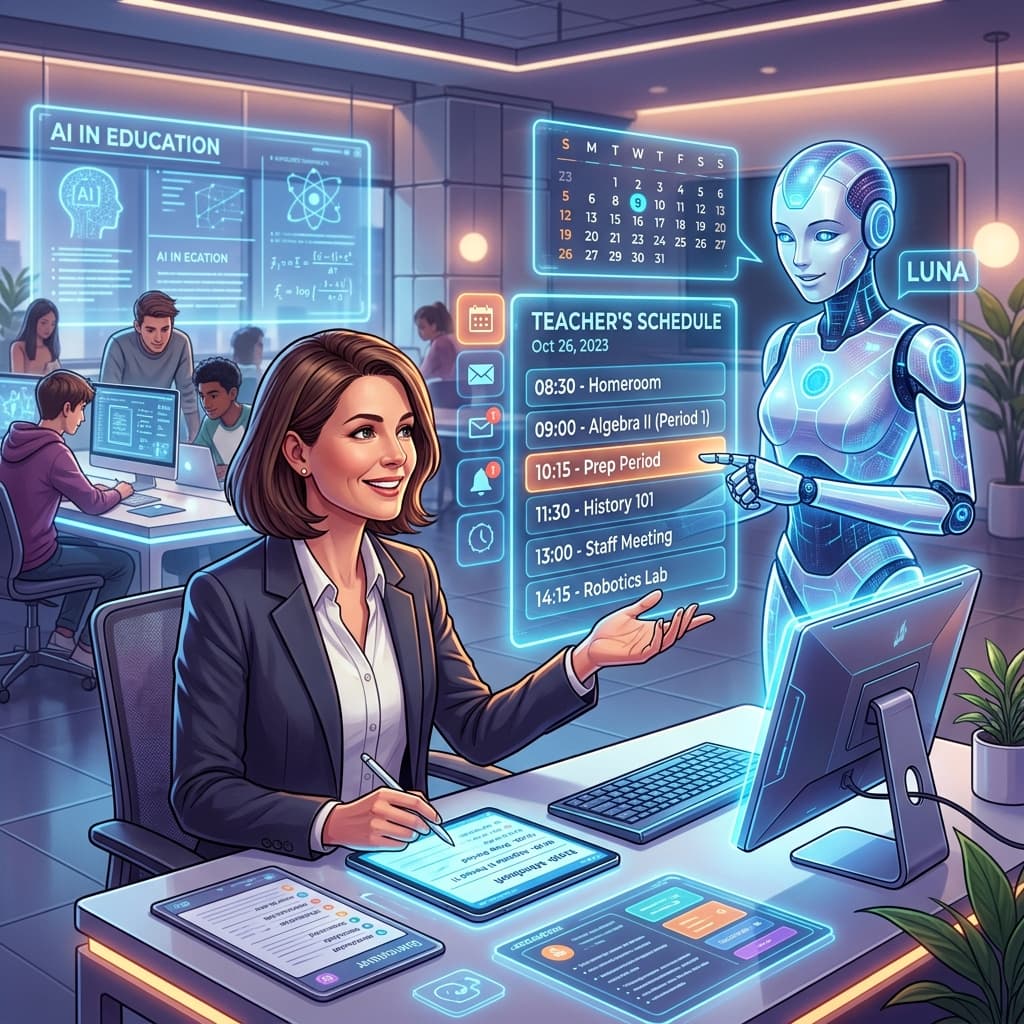
Revolutionising the Classroom: Implementing CAPS with AI in Case Study 59 – A South African Teacher's Journey
The hum of innovation is growing louder in our South African classrooms, and at its forefront is the transformative potential of Artificial Intelligence (AI). For us, as educators navigating the intricacies of the CAPS (Curriculum and Assessment Policy Statement) curriculum, the question isn't if AI can enhance our teaching, but how we can effectively integrate it to better serve our diverse learners across Grades R-12. Case Study 59 offers a compelling glimpse into this reality, showcasing a practical, grounded approach to leveraging AI within the unique context of South African education.
This article delves into the insights gleaned from Case Study 59, providing actionable strategies and a realistic perspective for South African teachers eager to explore the power of AI in their daily practice. We’ll move beyond theoretical discussions and focus on the tangible benefits and manageable steps to embrace this technological wave, all while remaining firmly rooted in the principles of CAPS.
Understanding the South African Educational Landscape and CAPS
Before we plunge into the AI integration, it’s crucial to re-centre ourselves on the bedrock of our profession: CAPS and the South African classroom. We are acutely aware of the challenges: large class sizes, varying levels of learner preparedness, limited resources in some contexts, and the constant pressure to meet curriculum demands. CAPS, while a comprehensive framework, requires dedicated pedagogical expertise to translate its learning objectives into engaging and effective learning experiences.
Our role as teachers is multifaceted. We are not just deliverers of content; we are facilitators of learning, motivators, assessors, and often, counsellors. The effectiveness of our teaching is measured by how well we foster critical thinking, problem-solving skills, and a lifelong love of learning in our students. This is where AI, when thoughtfully implemented, can become a powerful ally.
Case Study 59: A Practical AI Integration Journey
Case Study 59 focuses on a teacher, Ms. Themba, in a peri-urban primary school, grappling with differentiating instruction for a class of 40 learners in Grade 4 Mathematics. Her primary goal was to address the wide spectrum of mathematical abilities, from learners struggling with basic numeracy to those ready for advanced problem-solving, all within the CAPS framework for Number, Operations and Relationships.
Ms. Themba’s journey wasn’t about replacing her teaching, but about augmenting it. She recognised that her time was primarily spent on direct instruction and marking. AI, she hypothesised, could help offload some of these tasks, freeing her to focus on individual learner support and higher-order thinking activities.
AI Tool 1: Differentiated Practice Generation
The Challenge: Creating a variety of practice worksheets that cater to different learning levels in Mathematics, aligned with specific CAPS Grade 4 objectives (e.g., adding and subtracting whole numbers up to 100 000, introduction to multiplication and division).
Ms. Themba's AI Solution: Ms. Themba utilised an AI-powered content generation tool. Instead of spending hours crafting multiple versions of the same problem, she inputted the CAPS learning objective, the grade level, and the desired difficulty level (e.g., "basic addition with regrouping," "multiplication with two-digit numbers," "word problems involving division"). The AI generated a range of practice questions, from simple recall to more complex application, in a matter of minutes.
Practical Advice for SA Teachers:
- Start with Specific CAPS Strands: Don't try to generalise AI use immediately. Pick a specific CAPS content area (e.g., Life Skills - Personal and Social Well-being, or Natural Sciences - Matter and Materials) and explore AI tools for generating differentiated questions or summaries.
- Prompt Engineering is Key: The quality of AI output depends on your input. Be specific! Instead of "math problems," try "Generate 10 Grade 5 CAPS Geography questions on map skills, focusing on scale and direction, with varying difficulty levels, suitable for learners who are visual learners."
- Review and Refine: AI-generated content is a draft. Always review it for accuracy, pedagogical soundness, and alignment with CAPS. You are the expert; the AI is a tool.
AI Tool 2: Personalised Feedback and Assessment Support
The Challenge: Providing timely and specific feedback on written assignments and ensuring learners understand where they made errors, particularly in CAPS subjects like English Home Language (e.g., creative writing, comprehension).
Ms. Themba's AI Solution: Ms. Themba began using an AI tool that could analyse learner written responses. She would upload anonymised learner work (ensuring privacy compliance) and the AI would identify common grammatical errors, suggest alternative phrasing for clarity, and even flag potential misunderstandings of concepts related to the CAPS curriculum. The AI could also generate personalised feedback comments that Ms. Themba could then review and adapt.
Practical Advice for SA Teachers:
- Focus on Formative Assessment: Use AI to identify patterns in errors. This helps you understand which concepts need reteaching for the whole class or small groups.
- AI as a First Draft of Feedback: Imagine the AI providing a basic outline of feedback, highlighting areas for improvement. You then add your nuanced, contextualised insights, making the feedback truly yours.
- Privacy First: When using AI for assessment, always ensure learner data is anonymised and adheres to South African data protection regulations. If unsure, consult your school’s IT department or management.
AI Tool 3: Lesson Planning and Resource Curation
The Challenge: Developing engaging lesson plans that effectively cover CAPS objectives, incorporate diverse learning styles, and leverage available resources, which can be a time-consuming task for busy teachers.
Ms. Themba's AI Solution: Ms. Themba started using AI to brainstorm lesson ideas and find supplementary resources aligned with CAPS. She could ask the AI to "suggest interactive activities for Grade 6 CAPS History, focusing on the Anglo-Boer Wars, suitable for a 45-minute lesson," or "find age-appropriate videos and articles on photosynthesis for Grade 7 Natural Sciences, linking to CAPS learning outcome 2." The AI would then provide a curated list of ideas and links.
Practical Advice for SA Teachers:
- AI as a Creative Partner: Think of AI as a brainstorming buddy. It can offer a starting point for lesson ideas you might not have considered.
- Resource Vetting: Always critically evaluate AI-suggested resources. Are they accurate? Are they culturally appropriate for South African learners? Do they align with the spirit of CAPS?
- Adapt, Don't Adopt Blindly: Use AI-generated lesson plans as a framework. Personalise them with your own teaching style, local context, and specific learner needs.
Navigating the Realities: Challenges and Considerations
Case Study 59 also highlighted important considerations for any South African teacher looking to implement AI:
- Digital Divide and Access: While AI tools can be powerful, access to reliable internet and devices remains a significant challenge for many South African schools and learners. Ms. Themba's success was partly due to her school’s recent investment in technology. For those in resource-constrained environments, focusing on AI tools that can be used offline or during limited computer lab sessions is crucial.
- Teacher Training and Support: Effective AI integration requires training. Teachers need to understand not only how to use the tools but also why and when to use them effectively within their pedagogical practice and in alignment with CAPS. Ongoing professional development is essential.
- Critical Thinking and Over-Reliance: The greatest risk is over-reliance on AI. AI can provide answers, but it cannot replicate the critical thinking, nuanced questioning, and human connection that are central to effective teaching. Ms. Themba actively encouraged her learners to question AI-generated content and to think deeply, not just accept outputs.
- Cost and Sustainability: The cost of AI tools can be a barrier. Exploring free or affordable options, and advocating for institutional or government support, is vital for wider adoption.
The Future of CAPS and AI in South Africa
Case Study 59 is not an end point, but a beginning. As AI technology evolves, so too will its potential to support educators in delivering the CAPS curriculum. Imagine AI assistants that can:
- Provide real-time adaptive learning pathways for individual students based on their performance against CAPS objectives.
- Analyse classroom discourse to identify moments of engagement and areas where learners might be struggling, offering teachers immediate insights.
- Generate culturally relevant examples and case studies to make abstract CAPS concepts more relatable to South African learners.
The key to successfully implementing AI within the South African context, as demonstrated by Case Study 59, lies in a teacher-centric, CAPS-aligned, and pragmatically applied approach. It’s about empowering educators, not replacing them, and ultimately, enriching the learning experience for every South African child.
As educators, we have a unique opportunity to shape the future of education in our country. By embracing AI thoughtfully and strategically, we can unlock new possibilities, enhance our teaching practices, and ensure that our learners are not just prepared for the future, but are equipped to build it. The journey is ongoing, and Case Study 59 provides a valuable roadmap for us all.
Siyanda M.
Dedicated to empowering South African teachers through modern AI strategies, research-backed pedagogy, and policy insights.