The Crisis of the 'Spoon-Feeding' Culture in South African Schools
Every South African educator, from the rural reaches of Limpopo to the urban hubs of Gauteng, recognizes a growing challenge in our classrooms: the "spoon-feeding" epidemic. With the intense pressure of the Annual Teaching Plans (ATPs) and the heavy weighting of formal assessments, both teachers and learners often fall into a trap of passive learning. Learners wait for the notes to be written on the board, wait for the exam scope to be narrowed down to the exact page numbers, and wait for the teacher to provide every answer.
However, the Department of Basic Education (DBE) and the CAPS curriculum aim for something much deeper. The goal is to produce learners who are "critically aware," "self-motivated," and capable of "independent thought."
Teaching a learner to study independently is not merely about giving them a pile of textbooks and hoping for the best. It is a pedagogical shift that involves teaching metacognition, time management, and the technical skills of active recall. In this guide, we will explore how to transition your classroom from teacher-centred instruction to learner-led mastery, utilizing the latest AI tools from SA Teachers to bridge the gap.
Before a learner can study independently, they must understand how they learn. This is metacognition—thinking about thinking. In many South African households, learners may be the first in their families to reach Grade 12 or pursue higher education; they may lack a domestic blueprint for academic discipline.
As a teacher, you must explicitly teach "The Science of Learning." Start by explaining that the brain is like a muscle—it needs resistance to grow. If studying feels easy (like re-reading highlighted notes), it probably isn't working. If it feels difficult (like trying to recall a fact from memory), the "muscle" is growing.
Strategy: The Reflection Minute
At the end of every lesson, ask your learners: "What was the hardest part of today’s topic, and what strategy will you use to master it tonight?" This small habit shifts the responsibility of learning from your shoulders to theirs.
2. Scaffolding Independence Through CAPS-Aligned Planning
Independent study doesn't happen in a vacuum. It requires a structured environment where the learner knows exactly what is expected of them. This is where many teachers struggle due to administrative overload. If you are buried under paperwork, you cannot provide the clear roadmaps learners need.
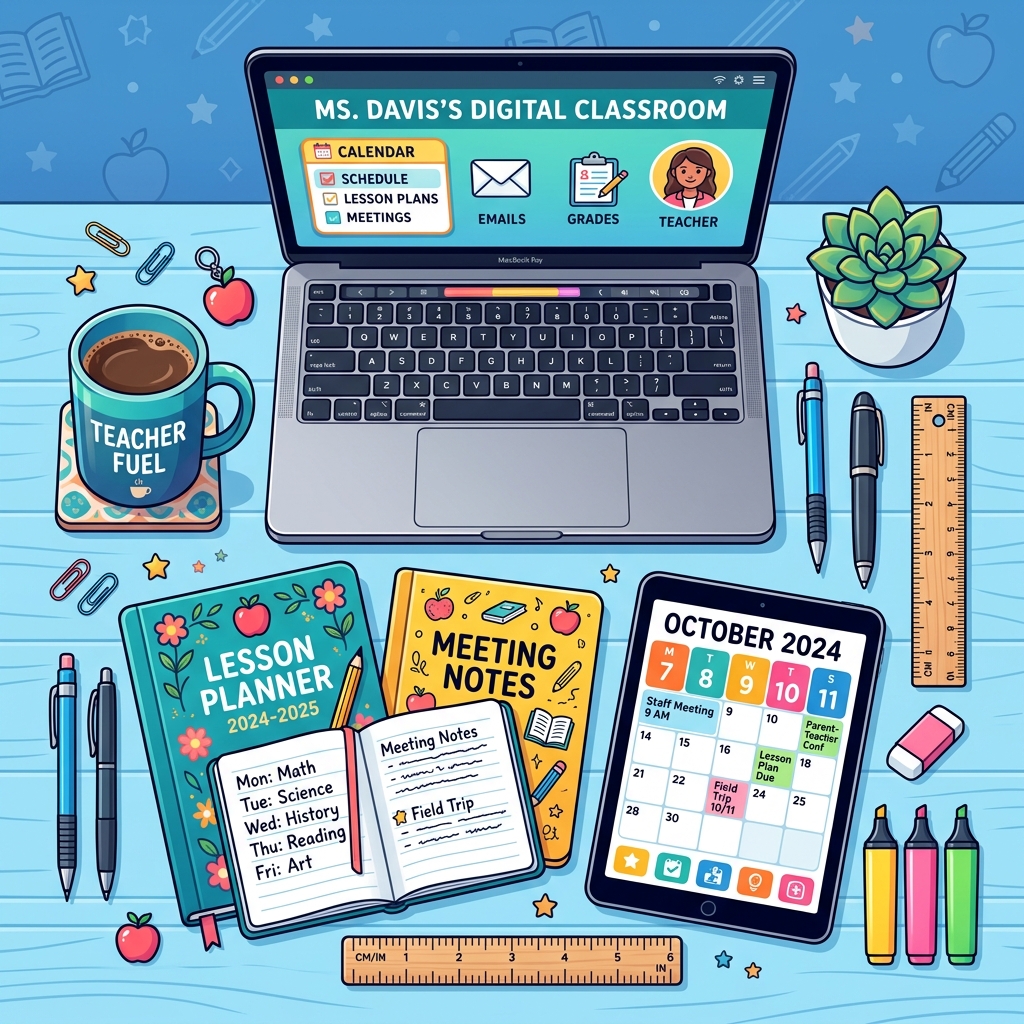
The CAPS-Aligned Lesson Planner on sateachers.co.za is a game-changer here. By automating the alignment with the DBE’s ATPs, you can generate lesson plans that include specific "Independent Practice" segments. Instead of just planning the delivery of content, the AI helps you plan the learner's activity.
For example, when teaching Grade 11 Life Sciences (Human Reproduction), the AI can suggest specific inquiry-based tasks that require the learner to find information outside the textbook. When the teacher is organized, the learner feels secure enough to explore the content independently.
3. Mastering Active Recall and Spaced Repetition
The most common "study" method used by South African learners is reading through their notebooks repeatedly. Research shows this is the least effective method. To study independently, learners must master Active Recall.
The Cornell Note-Taking System
Teach your learners to divide their page into three sections: Cues, Notes, and Summary.
- Cues: Questions based on the content.
- Notes: Information taken during class.
- Summary: A 2-3 sentence wrap-up at the bottom.
When studying independently, the learner covers the "Notes" section and tries to answer the questions in the "Cues" section.
How SA Teachers Helps: Worksheet & Exam Generators
Independent study requires high-quality practice material. Often, the questions at the back of the textbook are insufficient or outdated. Using the Worksheet & Exam Generator, you can provide your learners with fresh, CAPS-aligned practice papers.
Instead of doing the work for them, you provide the tools for their independence. Tell your learners: "Study the topic for 20 minutes, then take this AI-generated 10-minute quiz to see what you actually remembered." This builds a feedback loop that empowers the learner to identify their own weaknesses.
4. Personalising the Study Journey: The Study Guide Creator
One size does not fit all in the South African classroom. A Grade 9 learner struggling with English First Additional Language (FAL) needs a different independent study approach than a Grade 12 Mathematics student.
The Study Guide Creator on sateachers.co.za allows teachers to generate bespoke study materials that cater to the specific needs of their class. You can input your specific focus areas for the upcoming Term 3 assessments, and the AI will generate a structured guide that includes:
- Key terminology lists.
- Concept maps.
- Self-assessment checklists.
When a learner has a personalized guide that matches the teacher's classroom instructions, the "fear of the blank page" disappears, making independent study far more approachable.

AI Education Tutor
Personalized AI coaching for your specific teaching needs.
5. Bridging the Gap with the AI Tutor
A major barrier to independent study in South Africa is the lack of support at home. Many learners do not have parents who can help with complex Physics problems or Accounting equations. When these learners get stuck, their independent study session usually ends in frustration.
This is where the SA Teachers AI Tutor becomes an essential classroom companion. You can introduce this tool to your learners as their "24/7 Home Study Assistant."
- It doesn't give the answers; it explains the concepts.
- It is trained on the South African curriculum, meaning it won't give American or British examples that confuse the learner.
- It encourages the learner to "ask the right questions," which is a core skill of independent learning.
By integrating the AI Tutor into your homework routine, you ensure that no learner is left behind simply because they didn't have someone to ask for help at 7:00 PM on a Tuesday.
6. Developing Self-Assessment Skills
An independent learner must be able to judge the quality of their own work. In many schools, learners submit an essay and wait two weeks for the teacher to return it with a mark. By that time, the "learning moment" has passed.
Using the Essay Grader & Rubric Creator
To foster independence, provide your learners with the rubrics before they start. Use the Rubric Creator to generate clear, transparent criteria for any task—whether it’s a Grade 7 Creative Writing piece or a Grade 12 History research project.
Furthermore, you can demonstrate the Essay Grader tool in class. Show them how the AI evaluates a piece of writing based on the rubric. Encourage learners to "self-grade" their drafts against the rubric before submission. This develops the critical "evaluative judgement" necessary for university-level independent study.
7. The Role of Meaningful Feedback
If we want learners to study independently, our feedback must focus on the process, not just the product. Instead of "Good work," we need to say, "Your use of mind-mapping in this section clearly helped you organize your thoughts."
However, writing detailed, process-oriented comments for 150+ learners is an administrative nightmare. The Report Comments Generator on sateachers.co.za helps teachers craft meaningful, personalized feedback that encourages independent habits. By selecting traits like "shows initiative" or "needs to develop self-correction skills," the AI helps you produce reports that serve as a roadmap for the learner's personal growth, rather than just a summary of their failures.
8. Time Management: The 'Pomodoro' for the SA Context
Independent study is often derailed by poor time management. Our learners are distracted by social media, household chores, or simply the overwhelming volume of the FET phase workload.
Teach them the Pomodoro Technique, but adapted for the South African school term:
- Phase 1: The Sprints. 25 minutes of intense, "phones-away" study.
- Phase 2: The Check. 5 minutes to tick off what was covered.
- Phase 3: The Reward. 5 minutes of rest.
Encourage learners to use their Study Guide Creator outputs to break their afternoon study sessions into these manageable 25-minute blocks. When they see a massive topic like "The Cold War" broken down into five 25-minute Pomodoro sessions, it becomes achievable.
9. Creating a Supportive Environment (The SMT Perspective)
For independent learning to thrive, the School Management Team (SMT) must support teachers in moving away from rote-learning assessments. There must be "breathing room" in the school calendar for independent projects and research.
As a teacher, you can use your CAPS-Aligned Lesson Planner data to show the SMT how you are integrating 21st-century skills into the curriculum. When the leadership sees that AI tools are reducing the teacher's administrative burden, they are more likely to support the shift toward more innovative, learner-centered methodologies.
10. Conclusion: The Long-Term Impact
Teaching learners to study independently is perhaps the greatest gift a South African teacher can give. In a country with high youth unemployment and a competitive job market, the ability to self-teach and adapt is more valuable than any specific fact memorized for a Matric paper.
By leveraging the tools available at SA Teachers, you are not taking the "easy way out." You are using technology to remove the "grunt work" of teaching, allowing you to focus on what truly matters: mentoring, inspiring, and coaching your learners toward independence.
Visit sateachers.co.za today to explore the Lesson Planner, AI Tutor, and Study Guide Creator. Start transforming your classroom from a place where information is delivered into a laboratory where independent minds are forged.
Summary Checklist for Teachers:
- Introduce Metacognition: Teach them how to think.
- Provide Tools, Not Just Answers: Use the Worksheet Generator for practice.
- Empower with AI: Introduce the AI Tutor for after-hours support.
- Be Clear with Criteria: Use the Rubric Creator so learners can self-assess.
- Automate the Admin: Use the Report Comments and Lesson Planner tools to free up your time for 1-on-1 coaching.
The journey from a passive classroom to an independent one is a marathon, not a sprint. But with the right mindset and the right AI-powered partners, it is a race every South African teacher can win.
SA
Dedicated to empowering South African teachers through modern AI strategies, research-backed pedagogy, and policy insights.