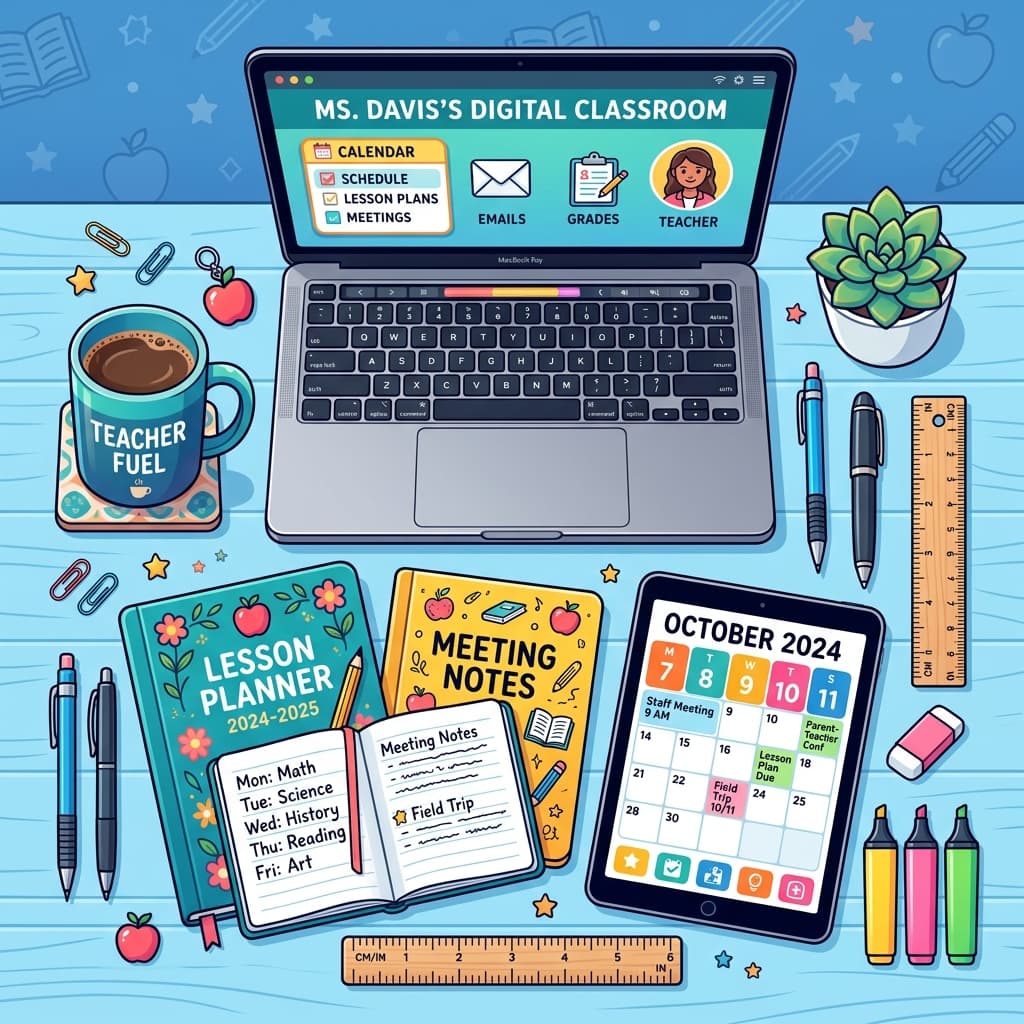
The Reality of the Multi-Speed South African Classroom
In any given South African classroom—from the bustling Foundation Phase rooms in Gauteng to the FET Phase secondary schools in the Western Cape—a teacher is rarely teaching a homogenous group. The reality is a wide spectrum of cognitive abilities, language proficiencies, and socio-economic backgrounds. You may have one learner who grasps the concept of long division in five minutes, while another is still struggling with the basic multiplication tables required to start the sum.
This disparity creates a significant challenge for educators trying to adhere to the Annual Teaching Plans (ATPs) set out by the Department of Basic Education (DBE). If you move too fast, you lose the bottom 30% of your class. If you move too slow, your top achievers become bored, disruptive, and disengaged.
Supporting learners who learn at different speeds is not about creating thirty different lesson plans; it is about differentiation. It is about using the right tools to create a flexible learning environment where every learner can achieve the outcomes stipulated in the CAPS document at a pace that ensures deep understanding rather than superficial memorisation.
Understanding the "Why" Behind Different Learning Speeds
Before we dive into the "how," we must understand why our learners are moving at different paces. In the South African context, several factors play a role:
- Language of Learning and Teaching (LOLT): Many learners are studying in their second or third language. A learner might be brilliant at Mathematics but struggles to process the word problems because they are deciphering the English language alongside the numerical concepts.
- Foundational Gaps: Due to historical systemic issues or the "COVID-gap," many learners in the Intermediate and Senior phases lack the foundational building blocks from previous grades.
- Neurodiversity: Learners with ADHD, dyslexia, or autism process information differently. Some may need more time to filter sensory input, while others may hyper-focus and finish tasks at lightning speed.
- Socio-economic Factors: Access to resources at home, nutritional status, and parental support all influence the "readiness" of a learner on any given day.
Strategy 1: Smart Planning with CAPS Alignment
Effective support starts before the learners even enter the room. If your lesson plan is rigid, your teaching will be rigid.
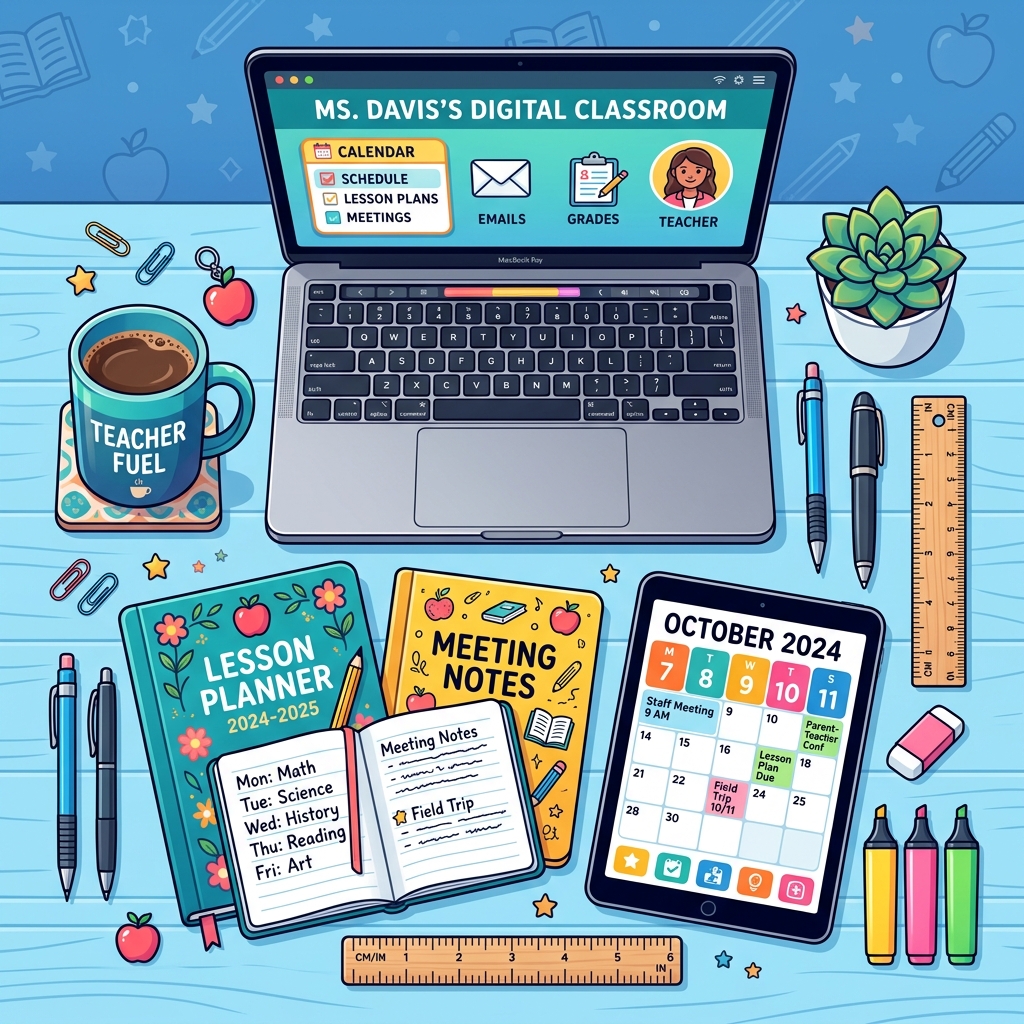
The CAPS-Aligned Lesson Planner available on sateachers.co.za is a game-changer here. Instead of spending hours manually aligning your objectives with the DBE's requirements, the AI-powered planner allows you to input your subject and grade and then generates a framework that includes suggestions for differentiation.
Actionable Tip: The "Must, Should, Could" Model
When using the Lesson Planner, structure your objectives into three tiers:
- Must: The core concept every learner must master to pass the assessment (e.g., identifying nouns).
- Should: What most learners should achieve (e.g., using nouns and adjectives in a sentence).
- Could: Extension work for fast finishers (e.g., using abstract nouns to create a descriptive paragraph).
By planning this way, you aren't scrambling for extra work when a learner finishes early; it’s already built into your lesson structure.
Strategy 2: Managing Fast Finishers (The "Extension" Group)
A common mistake is giving fast finishers more of the same work. If a learner has finished ten algebraic equations correctly, giving them ten more is not teaching—it’s "busy work." This leads to resentment and a decline in motivation.
Instead, we need to provide qualitative extension.
Use the Study Guide Creator for Autonomy
Fast finishers often have high levels of self-regulation. Use the Study Guide Creator on sateachers.co.za to generate advanced summary notes or "challenge packs" for your top-tier learners. You can task these learners with creating a "Mastery Poster" or a summary for the rest of the class. This reinforces their learning through the "Protégé Effect"—teaching others to solidify their own knowledge.
Lateral Thinking Tasks
Give them tasks that require higher-order thinking on Bloom’s Taxonomy. If the class is learning about the Great Trek in History, while others are still identifying key figures, ask your fast finishers to write a fictional diary entry from the perspective of a character, focusing on the emotional and logistical challenges.
Strategy 3: Scaffolding for Learners Who Need More Time
For learners who are struggling to keep up, the goal is not to lower the standard, but to provide more "ladders" to reach the same height.
Tiered Worksheets
Creating different versions of a worksheet used to take hours. Now, the Worksheet & Exam Generator on sateachers.co.za allows you to generate variations of the same topic. You can create a version with more visual cues and sentence starters for your slower learners, and a more abstract version for your faster learners.
For a learner who is struggling, a worksheet might include:
- Worked examples at the top of the page.
- Simplified vocabulary.
- More white space to reduce cognitive load.
- Step-by-step "check-boxes" for complex tasks.
The AI Tutor: A 24/7 Teaching Assistant
One of the greatest challenges for South African teachers is the high learner-to-teacher ratio. You cannot be everywhere at once. This is where the AI Tutor from SA Teachers becomes invaluable.
You can direct learners who are stuck on a specific concept to interact with the AI Tutor. The tool is designed to explain concepts in various ways—it can simplify complex jargon or provide real-world South African examples. This allows the learner to receive immediate feedback and "unstick" themselves while you are busy conducting a small-group intervention at your desk.

Strategy 4: Rethinking Assessment and Feedback
Assessment shouldn't only happen at the end of a term. Formative assessment is the "GPS" of the classroom; it tells you who has taken the wrong turn and who is speeding ahead.
Rubrics That Reflect Growth
If you use a generic rubric, a slow learner who has made massive progress might still only get a 40%. This is demotivating. By using the Essay Grader & Rubric Creator, you can generate rubrics that specifically reward different components of the task.
For example, in a Creative Writing task, you might have a rubric that heavily weights "Structure and Logic" for a learner who usually struggles with coherence, while for a more advanced learner, you might weight "Sophisticated Vocabulary and Imagery" more heavily. The tool allows you to customise these rubrics in seconds, ensuring that your feedback is both fair and constructive.
Automated Grading to Free Up Teacher Time
The more time you spend marking 40+ essays, the less time you have for one-on-one remediation. The Essay Grader provides instant, high-quality feedback based on the criteria you set. This allows you to return work to learners while the memory of the task is still fresh, which is crucial for those who learn at different speeds. Fast learners get the "go-ahead" to move to more complex topics, and slower learners get specific pointers on where they went wrong.
Strategy 5: Classroom Management Techniques
How you physically and chronologically organise your classroom dictates how well you can support different speeds.
Flexible Grouping (The "Station" Approach)
Avoid permanent "ability groups" (e.g., the "A-group" and "C-group"). This creates a fixed mindset. Instead, use flexible grouping based on the specific task.
- Station 1: Teacher-led instruction (for those struggling with the new concept).
- Station 2: Independent practice (for those who have the basics).
- Station 3: Digital exploration (using the AI Tutor or educational games).
- Station 4: Peer-collaboration (mixed-ability groups working on a project).
The "Must-Do" and "May-Do" Board
Clearly display a list on the board:
- Must-Do: Exercise 4.1 (Questions 1-5).
- May-Do: Read the extension article in the Study Guide Creator pack, help a peer, or start the bonus challenge on the Worksheet Generator printout.
Strategy 6: Communication and Reporting
The School Management Team (SMT) and parents need to be kept in the loop regarding a learner's pace. It can be difficult to explain to a parent why their child is "slower" than others without sounding negative.
Professional and Precise Reporting
The Report Comments Generator on sateachers.co.za helps you craft comments that are professional, encouraging, and CAPS-compliant. Instead of saying "John is slow," the tool helps you phrase it as "John is working on developing his processing speed in Mathematics and benefits from additional scaffolding and visual aids to complete tasks."
This shift in language focuses on the support being provided rather than the deficit of the learner. It also shows the SMT that you are actively implementing differentiated strategies in line with inclusive education policies.
The Role of the South African Educator in 2025
We are no longer just "fountains of knowledge" standing at the front of a chalkboard. In the modern South African classroom, our role is that of a facilitator of learning.
With the pressure of the ATPs and the reality of large classes, the only way to effectively support different learning speeds is to leverage technology. Tools like those provided by SA Teachers don't replace the teacher; they amplify the teacher's impact. They take over the "grunt work"—the hours of lesson planning, the manual creation of worksheets, the repetitive marking—and free you up to do what only a human can do: provide emotional support, inspire curiosity, and mentor the next generation of South Africans.
Practical Example: A Grade 7 English Lesson
Let’s look at how this works in practice for a lesson on "Figures of Speech."
- Preparation: You use the CAPS-Aligned Lesson Planner to set your goals.
- Introduction: You explain Similes and Metaphors to the whole class using South African examples (e.g., "As busy as a taxi rank on a Friday afternoon").
- The Divergence:
- Group A (Fast): They use the Worksheet Generator's "Advanced" sheet to identify oxymorons and personification in a poem by Ingrid Jonker.
- Group B (Middle): They complete a standard worksheet identifying similes in a short story.
- Group C (Needs Support): You sit with them. They use the Study Guide Creator's simplified visual cards. You encourage them to use the AI Tutor on their tablets to hear the definitions of "simile" in their home language if needed.
- Feedback: You use the Essay Grader to mark their short paragraph applications.
- Closing: Everyone shares one figure of speech they created.
By the end of the 45-minute period, the learner who struggled has mastered the simile, and the learner who was ahead has explored the nuances of South African poetry. Both have moved forward from their own starting points.
Conclusion
Supporting learners who learn at different speeds is the hallmark of a master teacher. It requires patience, a shift in mindset from "coverage" to "mastery," and the right set of digital tools.
By integrating the AI-powered resources from sateachers.co.za, you can manage the diversity of your classroom with confidence. You ensure that your fast finishers are constantly challenged and your slower learners are consistently supported, all while keeping your own workload manageable and your sanity intact.
Remember, a classroom is not a race; it is a journey. Our job is to ensure every learner reaches the destination, no matter how many stops they need to make along the way.
Ready to transform your classroom? Explore our CAPS-Aligned Lesson Planner and start differentiating your instruction today!
SA
Dedicated to empowering South African teachers through modern AI strategies, research-backed pedagogy, and policy insights.