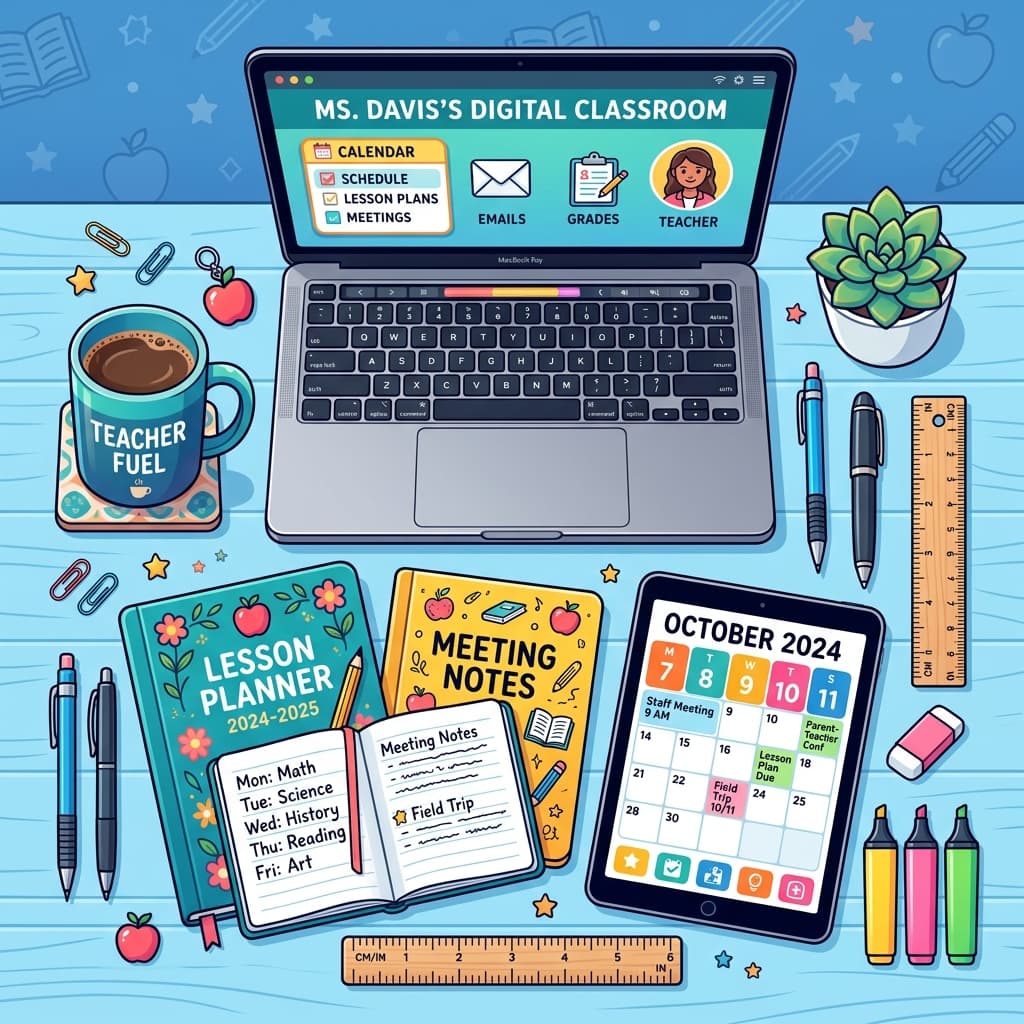
The Engagement Crisis in South African Classrooms
In the modern South African educational landscape, teachers face a unique set of challenges. From the rigorous requirements of the Curriculum and Assessment Policy Statement (CAPS) and the pressure of meeting Annual Teaching Plan (ATP) deadlines to managing large class sizes and diverse learning needs, the "chalk and talk" method is often the default. However, this traditional approach frequently leads to passive learning, where learners are physically present but mentally absent.
True engagement is not just about keeping learners quiet or busy; it is about fostering an environment where they are active participants in their own education. Interactive activities are the bridge between a learner’s curiosity and the academic content they need to master. When learners engage interactively, they aren't just memorising facts; they are processing information, applying concepts, and developing critical thinking skills that are essential for the 21st-century workforce.
At SA Teachers, we understand that the primary barrier to interactive teaching is time. How can you plan a high-energy, interactive session when you have 40 scripts to mark and a syllabus to finish by the end of the term? This is where AI-powered tools become your greatest ally.
Understanding the "Why" Behind Interactive Learning
Before we dive into the "how," we must understand the cognitive benefits of interaction. Research suggests that the average attention span of a learner is roughly their age plus two minutes. In a Grade 10 classroom, that gives you about 17 minutes of focused attention before their minds begin to wander.
Interactive activities break the monotony, reset the attention clock, and provide immediate feedback. In the South African context, where many learners may be learning in their second or third language, interaction allows for peer-to-peer clarification and the practical application of vocabulary.
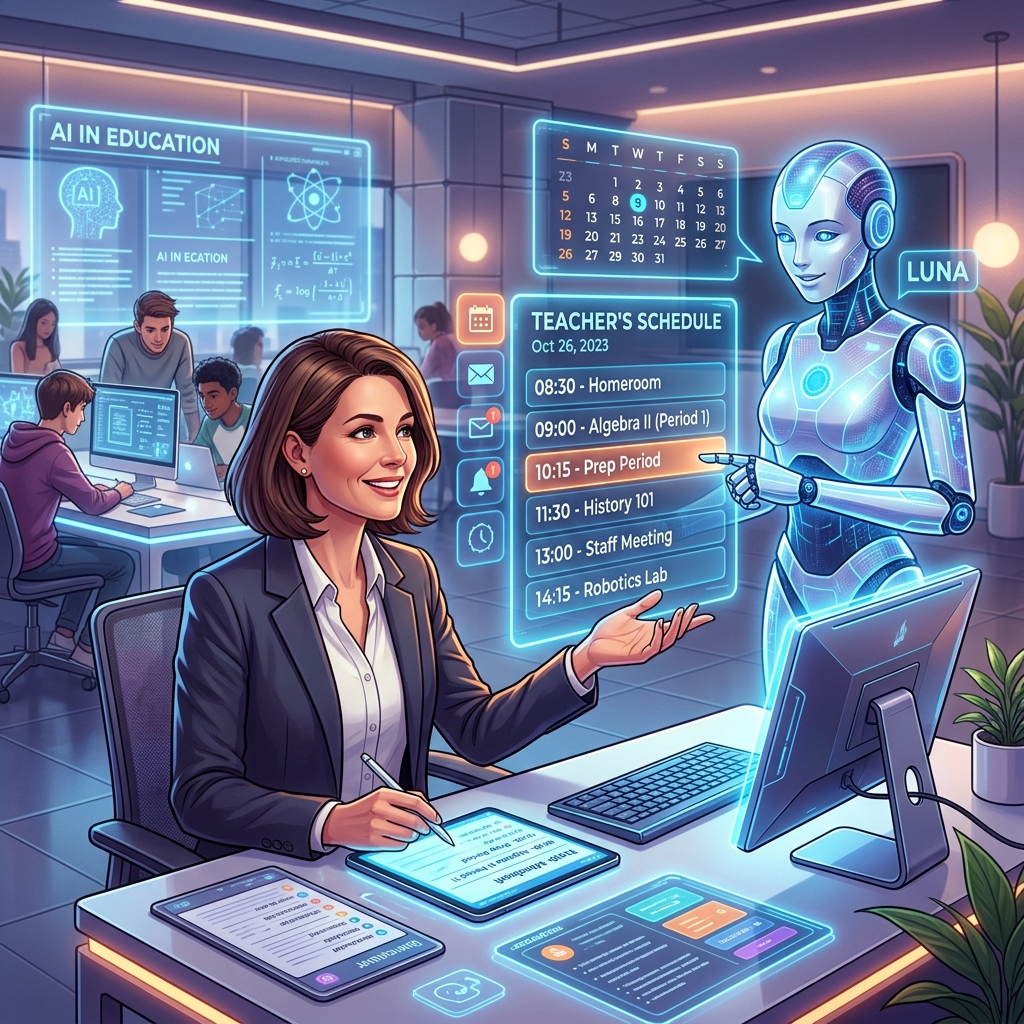
The foundation of an engaged classroom is a well-structured lesson plan that leaves room for interaction. Many teachers find themselves bogged down by the administrative burden of aligning every activity with the DBE’s requirements.
Using the CAPS-Aligned Lesson Planner on sateachers.co.za allows you to reclaim your time. Instead of spending hours cross-referencing ATPs, the AI does the heavy lifting for you. This allows you to focus on the "hook"—that initial five-minute activity that grabs the learners' attention.
Practical Strategy: The Hook and Bridge
Start your lesson with a provocative question or a real-world scenario related to the topic. If you are teaching Grade 11 Geography on Geomorphology, instead of reading from the textbook, use the Lesson Planner to suggest a "What If?" scenario: "What if the Drakensberg mountains were located in the middle of the Karoo?" This sparks immediate discussion and sets the stage for interactive inquiry.
2. Gamifying the Classroom with Custom Worksheets
One of the quickest ways to lose learner interest is through repetitive, black-and-white worksheets that only require "fill-in-the-blanks" answers. Interactive learning requires materials that challenge the brain in different ways.
The Worksheet & Exam Generator allows you to create diverse assessment materials that go beyond standard questioning. You can generate crosswords, word searches, and scenario-based problem-solving tasks in seconds.
Scenario: Grade 4 Mathematics
Instead of a page of 20 long-division sums, use the generator to create a "Mystery Number" challenge. Learners must solve division problems to find clues that lead to a "treasure." By turning a standard assessment into a game, you shift the learner's mindset from "I have to do this work" to "I want to solve this puzzle."
3. Collaborative Learning: Think-Pair-Share and Beyond
Collaboration is a cornerstone of interactive learning. However, without structure, group work can easily descend into chaos.
Think-Pair-Share 2.0:
- Think: Ask a high-level question.
- Pair: Learners discuss with a partner.
- Share: Use the AI Tutor tool to generate a "deep-dive" follow-up question.
For instance, in a Life Orientation class discussing human rights, after the pair discussion, you can use the AI Tutor to provide a counter-argument or a complex ethical dilemma that the pairs must then navigate together. This keeps the interaction rigorous and prevents it from becoming a superficial chat.
4. Personalised Learning Paths with Study Guides
A common reason for disengagement is that the content is either too difficult or too easy for the learner. In a class of 45, it is nearly impossible for one teacher to differentiate manually for every child.
The Study Guide Creator enables you to generate bespoke revision material tailored to different ability levels. When learners feel that the material is accessible and relevant to them, their willingness to engage increases. You can provide a "Foundation" guide for those struggling with basics and an "Enrichment" guide for top performers, ensuring that everyone remains in their "Zone of Proximal Development."

5. Streamlining Feedback with AI Graders
Learners are most engaged when they receive timely and constructive feedback. If a learner submits an essay and only receives a grade three weeks later, the "teachable moment" has passed. They have moved on, and the feedback feels irrelevant.
The Essay Grader & Rubric Creator is a game-changer for South African English and HL/FAL teachers. By uploading a rubric (or creating a new one via the tool), you can provide instant, detailed feedback that highlights exactly where a learner can improve.
Actionable Tip:
Have learners "engage" with their own feedback. After using the Essay Grader, ask learners to choose one specific suggestion provided by the AI and rewrite a single paragraph. This turns the assessment into an interactive cycle of improvement rather than a static final grade.
6. Interactive Assessment: The Power of Choice
Giving learners a choice in how they demonstrate their knowledge is a powerful engagement tool. This is often referred to as "Universal Design for Learning" (UDL).
For a history project on the Truth and Reconciliation Commission (TRC), instead of everyone writing a standard report, offer choices:
- Create a podcast script.
- Design a commemorative monument (visual/tactile).
- Write a series of diary entries from different perspectives.
You can use the Rubric Creator to ensure that despite the different formats, every learner is still being assessed against the same CAPS criteria. This level of autonomy fosters a sense of ownership over the learning process.
7. Improving Communication with Families
Engagement doesn't end when the school bell rings. When parents are involved, learners are more likely to stay motivated. However, writing individual reports or updates is incredibly time-consuming for teachers.
The Report Comments Generator helps you craft meaningful, personalised feedback for every learner. Instead of generic "John worked well this term," the tool helps you highlight specific strengths and areas for growth. When a learner reads a comment that truly reflects their effort in an interactive project, it reinforces their positive behaviour and encourages future participation.
Addressing the Challenges of the South African Context
We cannot ignore the realities of our schools. Many classrooms lack high-speed internet, and some don't have consistent electricity. However, "interactive" does not always mean "high-tech."
Low-Tech Interactive Ideas:
- Gallery Walks: Tape learner work to the walls and have others walk around with sticky notes to provide "One Praise and One Question."
- Four Corners: Label corners of the room as "Strongly Agree," "Agree," "Disagree," and "Strongly Disagree." Read a statement related to your subject and have learners move to the corner that represents their view. They must then justify their position.
- Exit Tickets: Use the Worksheet Generator to create small slips of paper where learners must summarise the lesson's main point in ten words or less before they leave the room.
The Role of School Management Teams (SMTs)
For interactive activities to flourish, there needs to be support from the SMT. It can be daunting for a teacher to have a "noisy" classroom if the principal equates silence with learning. Teachers should advocate for interactive methods by showing the data—improved assessment results and better attendance.
Using the tools on sateachers.co.za allows you to present professionally formatted lesson plans and rubrics to your HOD, proving that your interactive activities are grounded in CAPS requirements and pedagogical best practices.
Practical Scenario: A Week of Interactive Engagement
Let’s look at how a Senior Phase Natural Sciences teacher might use these tools over a week to teach "Circuits":
- Monday: Use the CAPS-Aligned Lesson Planner to structure a lesson around a "Mystery Box" challenge. Learners guess what's inside a circuit box based on how a bulb reacts.
- Tuesday: Use the Worksheet Generator to create a circuit-diagram matching game.
- Wednesday: Use the AI Tutor on a tablet or projector to simulate "what happens if we add a resistor?" allowing the class to vote on the outcome.
- Thursday: Learners work in groups to build a circuit. The teacher uses the Rubric Creator to assess their collaborative skills and technical accuracy.
- Friday: Use the Essay Grader (for a short descriptive paragraph on the flow of electricity) to give instant feedback before the weekend.
By the end of the week, the learners haven't just sat through a lecture; they have touched, debated, solved, and improved.
Conclusion: Empowering the Modern Educator
Improving learner engagement is not about working harder; it is about working smarter. The South African classroom is a place of immense potential, but that potential can only be unlocked when learners are invited into the conversation.
By integrating the AI-powered tools from SA Teachers, you remove the administrative hurdles that stand in the way of creativity. You move from being a "distributor of information" to a "facilitator of learning."
Start small. Choose one tool—perhaps the Worksheet Generator or the Lesson Planner—and see how it transforms your next period. As your learners become more engaged, you will find your own passion for teaching reinvigorated. Together, we can move South African education forward, one interactive lesson at a time.
Are you ready to transform your classroom? Explore our suite of AI tools designed specifically for the South African CAPS curriculum at sateachers.co.za and start engaging your learners like never before.
SA
Dedicated to empowering South African teachers through modern AI strategies, research-backed pedagogy, and policy insights.