The Engagement Crisis in South African Classrooms
Every South African teacher knows the feeling. It is a Tuesday morning in the middle of Term 3. You are standing at the front of a classroom of 40 (or perhaps 50) learners. You are trying to explain the intricacies of the water cycle or the complexities of the Cold War, but you are met with a sea of blank stares. Some learners are doodling in the margins of their workbooks; others are staring longingly out of the window at the netball courts.
The pressure is immense. You have the Annual Teaching Plans (ATPs) breathing down your neck, the School Management Team (SMT) requesting your latest assessment stats, and the Department of Basic Education (DBE) demanding higher pass rates. In this high-pressure environment, "interactivity" often feels like a luxury we simply don't have time for.
However, the reality is that interactivity is not an "add-on"—it is the engine of learning. When learners are actively engaged, they retain information longer, develop critical thinking skills, and—crucially—they enjoy coming to school. But how do we bridge the gap between heavy CAPS requirements and lessons that actually spark joy?
In this guide, we will explore how to leverage modern pedagogy and AI-powered tools from SA Teachers to create lessons that resonate with the 21st-century South African learner.
1. Redefining Interactivity: It’s Not Just About Technology
Before we dive into the "how," we must address a common misconception: interactivity does not require a smartboard in every room or a tablet for every child. While digital tools are transformative, true interactivity is a cognitive state. It is about moving the learner from a passive recipient of information to an active participant in their own education.
In the South African context, where resource disparities are a reality, interactivity can look like:
- Peer-to-peer teaching: Learners explaining a concept to their desk mate.
- Problem-based learning: Solving real-world South African challenges (e.g., calculating the cost of a household grocery basket in Economics).
- Gamified assessment: Turning a routine quiz into a team-based competition.
The challenge, however, is the preparation time. Creating these experiences from scratch is exhausting. This is where the SA Teachers suite becomes your secret weapon.

2. Automating the Mundane with the CAPS-Aligned Lesson Planner
The biggest barrier to interactive teaching is the administrative burden of lesson planning. If you spend three hours on Sunday night manually mapping your lesson to the specific CAPS criteria and ATP week, you have no energy left for the creative "spark."
The SA Teachers CAPS-Aligned Lesson Planner changes the game. By inputting your subject, grade, and specific topic, the AI generates a structured plan that is already aligned with the National Curriculum Statement (NCS).
How it helps interactivity:
By automating the structural elements (Aims, Objectives, Resources, and Assessment), the tool allows you to focus on the "Introduction" and "Body" of the lesson. You can prompt the AI to include "Three interactive ice-breakers for Grade 4 Natural Science" or "A 5-minute debate topic for Grade 11 Life Orientation."
Instead of starting with a blank page, you start with a compliant framework, giving you the mental bandwidth to think about how to make the content come alive.
3. Beyond the Chalkboard: Using the Worksheet & Exam Generator
Let’s be honest: traditional textbooks can sometimes be dry. To make a lesson interactive, you need materials that speak to your learners' specific needs and interests.
The Worksheet & Exam Generator on SA Teachers allows you to move beyond the generic questions found in outdated textbooks.
Scenario: A Grade 7 Social Sciences Lesson
Imagine you are teaching about the "Colonisation of the Cape." Instead of just reading from a page, you use the generator to create:
- A "Choose Your Own Adventure" Worksheet: Learners make decisions as a historical figure and see the consequences.
- Scaffolded Questioning: The tool can generate questions at various Bloom’s Taxonomy levels, ensuring that your high-achievers are challenged while your struggling learners are supported.
By providing varied, fresh, and visually appealing worksheets, you keep the learners’ hands and minds busy. This prevents the "zoning out" that occurs during long periods of teacher talk.
4. Personalised Support with the AI Tutor
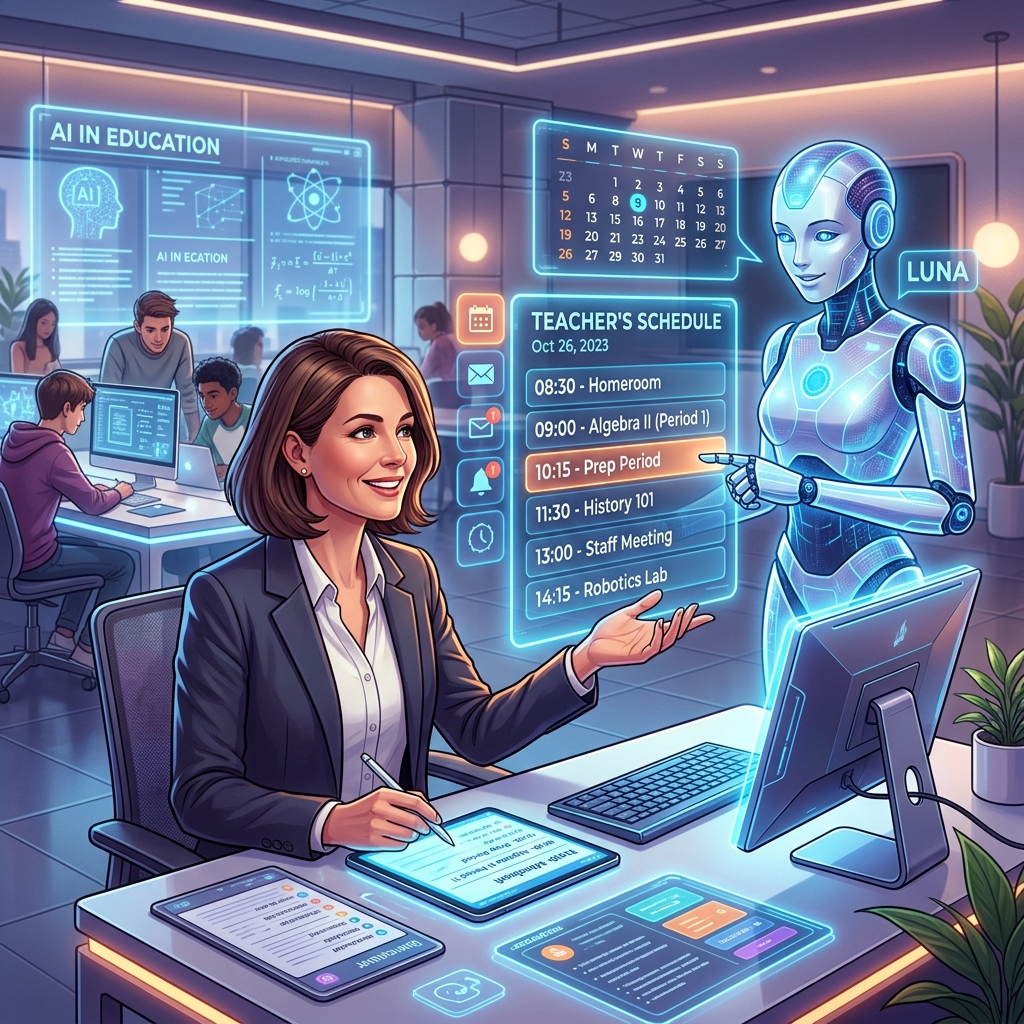
In a large South African classroom, it is impossible for one teacher to provide one-on-one interaction to every learner. This is where the AI Tutor from SA Teachers becomes a force multiplier.
Interactivity thrives when learners feel safe to ask questions. Many learners are too shy to raise their hand in front of 40 peers for fear of sounding "stupid."
Practical Integration:
- The Help Desk: Set up a station (if you have access to a classroom computer or a few tablets) where learners can use the AI Tutor to clarify concepts they didn't understand during the main lecture.
- Extension Tasks: For your fast-finishers, the AI Tutor can provide deeper insights into a topic, keeping them engaged while you focus on learners who need more support.
This creates a "blended learning" environment where interactivity is happening at multiple levels simultaneously.
5. Gamification and Active Learning Strategies
Gamification doesn't have to mean playing video games. It means applying game-design elements to the classroom.
The "Socratic Seminar" for FET Learners
For Grade 10-12 learners, interactivity should be intellectual. Use the Study Guide Creator to generate a comprehensive summary of a literature set-work (like My Children! My Africa!). Distribute this to the class, and then host a "Socratic Seminar" where the learners must debate the themes using the guide as their evidence base.
AI Education Tutor
Personalized AI coaching for your specific teaching needs.
The "Treasure Hunt" for Foundation Phase
For younger learners, use the Worksheet Generator to create small "clue cards." Hide them around the classroom. Each card has a Maths problem or a phonics sound. Learners must solve the clue to find the next station. This movement-based interactivity is essential for Grade R-3 learners who naturally have shorter attention spans.
Nothing kills the "joy" of a lesson faster than a boring, high-stakes test. To maintain engagement, assessment should be seen as a conversation, not a punishment.
The Essay Grader & Rubric Creator tools are vital here.
The Rubric Creator:
Interactivity is enhanced when learners know exactly what is expected of them. You can use this tool to create a rubric for a creative project—perhaps a Grade 9 History podcast or a Grade 8 Technology model. When learners see the rubric beforehand, they become more engaged in the creative process because the "rules of the game" are clear.
The Essay Grader:
One of the most interactive things a teacher can do is provide fast, meaningful feedback. Usually, it takes weeks to mark 150 English Home Language essays. By the time the learners get them back, they have forgotten what they wrote.
The Essay Grader allows you to provide almost instant feedback based on your specific rubric. You can then use the common errors identified by the AI to host a "Feedback Workshop" the very next day. This "just-in-time" teaching is incredibly effective at keeping learners motivated.
7. Catering to Diverse Needs: Inclusive Interactivity
Our South African classrooms are diverse, not just linguistically, but in terms of learning barriers. A lesson is only interactive if every learner can participate.
- For EAL (English Additional Language) Learners: Use the Study Guide Creator to generate simplified versions of complex texts or to create vocabulary lists with definitions that are easier to digest.
- For Visual Learners: Ensure your lesson plans generated on SA Teachers include prompts for visual aids, diagrams, and videos.
When a learner understands the material, they are far more likely to engage with it. Frustration is the enemy of interactivity.
At the end of a term of interactive teaching, you will have a much deeper understanding of your learners than if you had just lectured them. You will know who took the lead in the debate, who excelled at the gamified worksheet, and who used the AI Tutor to overcome a specific hurdle.
However, writing 200 unique report comments is a daunting task that often leads to generic "He must work harder" remarks.
The Report Comments Generator on SA Teachers allows you to translate your observations into professional, constructive, and CAPS-compliant comments. You can input specific traits you noticed during your new interactive sessions, and the AI will help you phrase them perfectly for parents and the SMT.
This saves you hours of work, ensuring you finish the term refreshed and ready to plan even more engaging lessons for the next cycle.
Practical Tips for Getting Started
If you are feeling overwhelmed by the idea of "overhauling" your teaching style, remember that small changes lead to big results. Here is a 3-week plan to transition to more interactive lessons:
Week 1: The Planning Shift
Stop spending your Sunday nights in a state of "prep-panic." Use the CAPS-Aligned Lesson Planner for all your lessons this week. Use the extra two hours you save to find one interesting YouTube video or a local news article related to your topic.
Week 2: The Material Shift
Instead of using the questions from the back of the textbook, use the Worksheet & Exam Generator to create one custom worksheet for your most difficult class. Focus on making it visually engaging and relevant to the South African context.
Week 3: The Feedback Shift
Give a short creative writing or paragraph-based task. Use the Essay Grader to provide feedback within 48 hours. Watch how the learners react to getting feedback while the topic is still fresh in their minds.
Conclusion: Empowered Teachers, Engaged Learners
Creating interactive lessons that learners actually enjoy is not about working harder; it is about working smarter. By using the tools available at sateachers.co.za, you remove the administrative "friction" that causes teacher burnout.
When you aren't bogged down by the minutiae of formatting rubrics or manually mapping ATPs, you can return to the reason you entered this profession in the first place: to inspire, to challenge, and to grow the next generation of South Africans.
Interactivity is the bridge between a syllabus and a child’s imagination. Let’s build that bridge together, one AI-powered lesson at a time.
Are you ready to transform your classroom?
Explore the SA Teachers Toolkit today and start creating the lessons your learners will remember for years to come.
SA
Dedicated to empowering South African teachers through modern AI strategies, research-backed pedagogy, and policy insights.