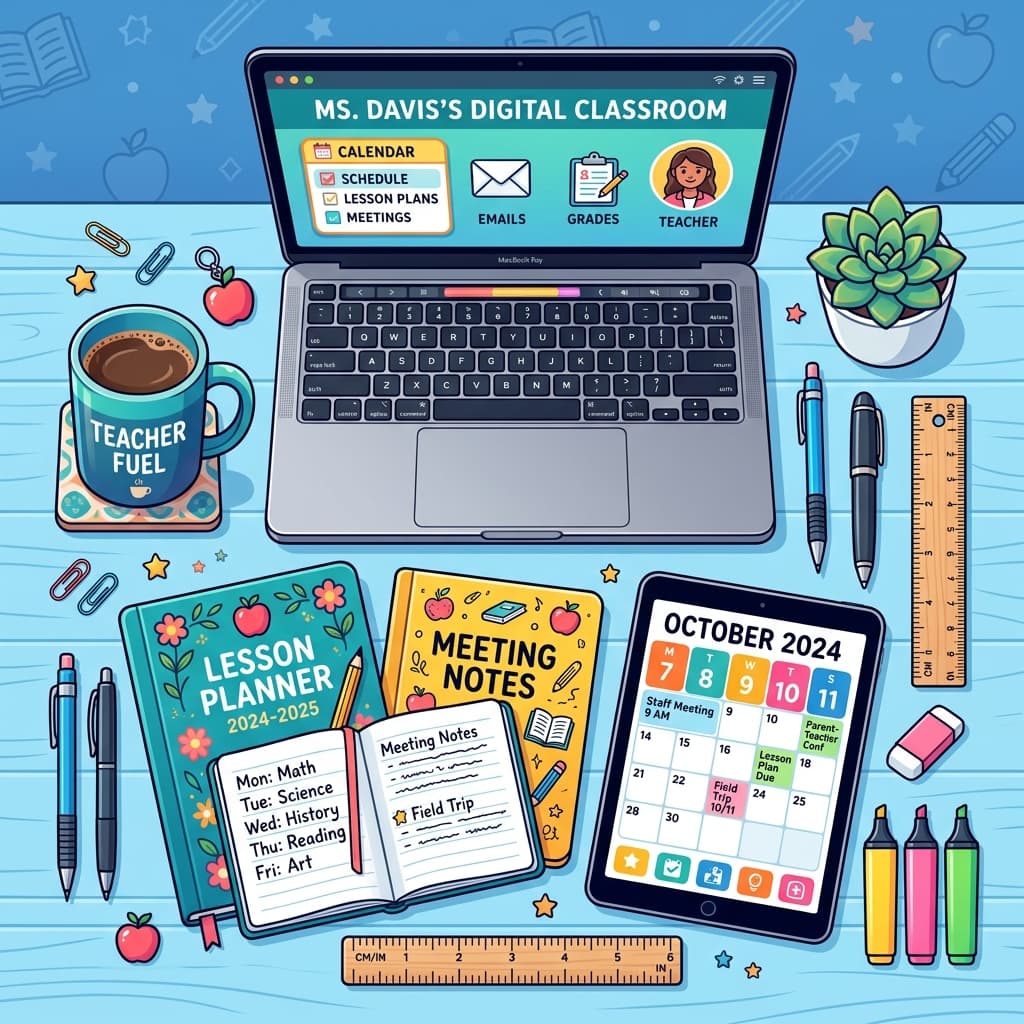
With the ever-increasing pressure of Annual Teaching Plans (ATPs), administrative demands from the Department of Basic Education (DBE), and the diverse socio-emotional needs of our learners, having a "rhythm" is essential. When learners know exactly what to expect from the moment they cross the threshold of your classroom, cognitive load is reduced, anxiety levels drop, and the real work of learning can begin.
In this guide, we will explore how to build these routines from the ground up and, more importantly, how to use the AI tools at SA Teachers to automate the "heavy lifting" of your daily preparation.
1. The Morning Entry: Setting the Tone for Success
The first ten minutes of the school day often dictate the trajectory of the next six hours. If learners enter a classroom where the teacher is still scrambling to find a whiteboard marker or finish a lesson plan, the message sent is one of disorganisation.
The "Bell-Ringer" Routine
A "Bell-Ringer" or "Do Now" activity is a short, independent task that learners begin the moment they sit down. It requires no instruction from the teacher.
- Foundation Phase: A simple tracing exercise or a "find the difference" puzzle.
- Intermediate/Senior Phase: A quick mental maths drill or a "word of the day" sentence construction.
- FET Phase: A retrieval practice question based on the previous day’s content.
How SA Teachers Helps: Using our AI Tutor, you can generate five quick "Hook Questions" or "Daily Brain Teasers" every evening for the following day. Instead of spending 20 minutes thinking of a relevant prompt, the AI Tutor provides CAPS-aligned starters that keep learners engaged while you take the register or check the homework diary.
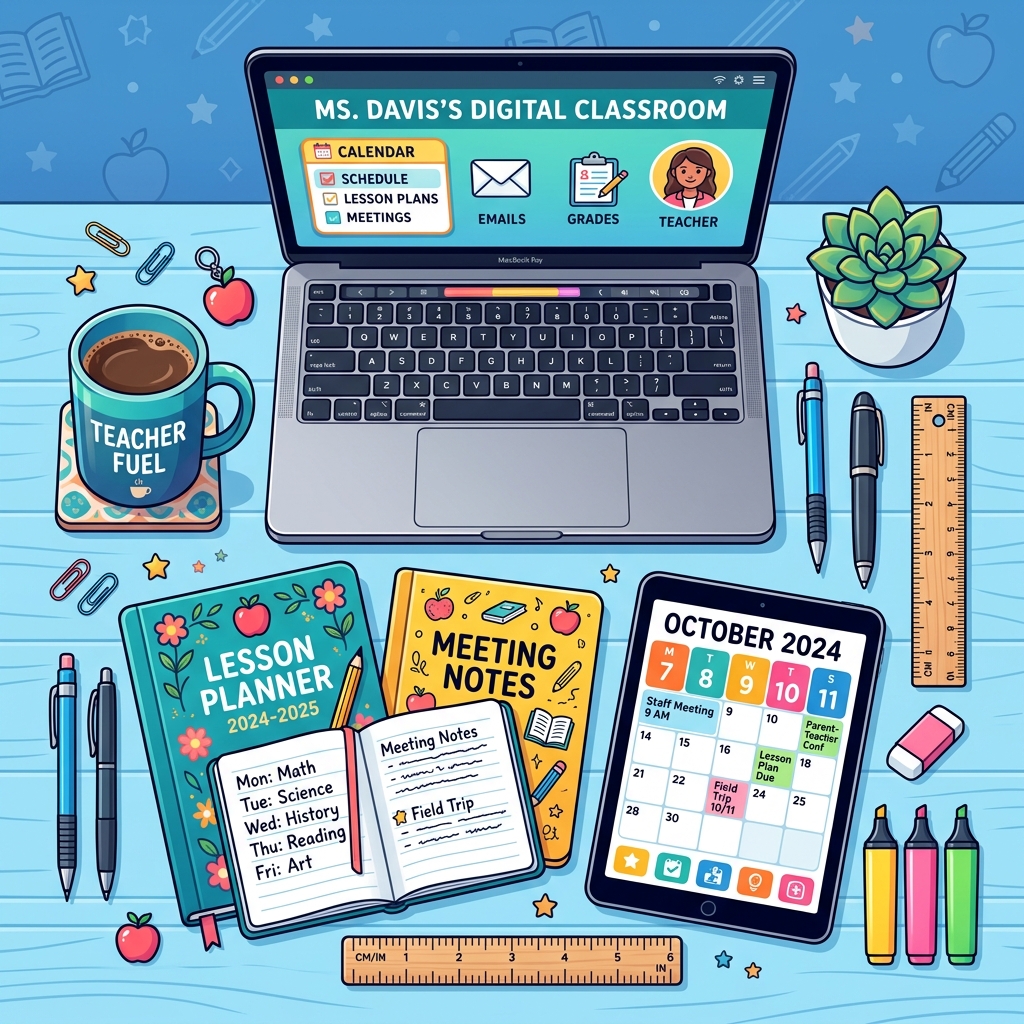
2. Transition Management: Closing the "Dead Time" Gap
Transitions—moving from one subject to another, handing out worksheets, or shifting from whole-class instruction to group work—are where most classroom disruptions occur. In South African classrooms with high learner-to-teacher ratios, these transitions can eat up to 20% of instructional time if not managed.
The Three-Step Transition
To master transitions, use a clear, consistent signal.
- The Signal: Use a chime, a specific clap pattern, or a verbal cue like "Eyes on me in 3, 2, 1."
- The Instruction: Be brief. "In thirty seconds, I need your English books closed and your Mathematics Workbooks open on page 42."
- The Visual Countdown: A physical timer or a countdown on the board creates a sense of urgency and "gamifies" the transition.
Streamlining Resources
Nothing kills a transition faster than a lack of materials. If you are still running to the photostat machine as the bell rings, the routine is already broken.
How SA Teachers Helps: Our Worksheet & Exam Generators allow you to prepare all your supplementary materials for the entire week in one sitting. By generating high-quality, CAPS-aligned worksheets in seconds, you can have them printed and stapled before Monday morning. This ensures that when you say "Take out your worksheet," every learner has one immediately, preventing the "idle hands" that lead to behavioural issues.
3. Instructional Flow and ATP Compliance
The Annual Teaching Plans (ATPs) are the heartbeat of South African education. However, the sheer volume of content can make the daily routine feel rushed. An effective routine must balance the pace of the curriculum with the actual understanding of the learners.
The "Gradual Release" Routine
A structured lesson routine usually follows the "I Do, We Do, You Do" model:
- I Do (Direct Instruction): 10–15 minutes of teacher-led explanation.
- We Do (Guided Practice): 10 minutes of collaborative work or examples on the board.
- You Do (Independent Work): 20 minutes where learners apply the knowledge.
How SA Teachers Helps: The CAPS-Aligned Lesson Planner is designed specifically to help you maintain this flow. By inputting your subject and Grade (e.g., Grade 9 Natural Sciences or Grade 4 Social Sciences), the tool generates a lesson structure that ensures you hit all the required Assessment Standards. It breaks the lesson into manageable chunks, making it easier for you to stick to your daily timing routines.


6. Administrative Routines: Managing the SMT Requirements
Your School Management Team (SMT) and District Officials require meticulous record-keeping. If your administrative routine is "to do it at the end of the term," you will experience immense stress during the "moderation" period.
The "Five-Minute Admin" Daily Habit
Dedicate the last five minutes of your school day—while the learners are tidying their desks—to updating your markbook or reflection notes.
How SA Teachers Helps: At the end of a term, the most daunting task is writing reports for 40 to 200 learners. Our Report Comments Generator turns this multi-day ordeal into a manageable routine. By inputting a few key descriptors about a learner's performance and behaviour, the AI generates professional, personalised, and encouraging comments in South African English. This allows you to finish your admin routines early and enjoy your holidays.
7. The End-of-Day Reflection and Pack-Up
A chaotic exit is just as bad as a chaotic entry. If learners bolt out of the door as soon as the bell rings, leaving paper on the floor and chairs untucked, the "routine" has failed.
The "Clean Desk" Policy
Implement a routine where no one leaves until:
- The floor is clear of litter.
- Chairs are tucked in or put on desks.
- The teacher has given a "Closing Thought" or a "Secret Word" for the next day.
This instills a sense of pride in the classroom environment and makes the following morning’s entry much smoother.
Case Study: From Chaos to Calm in a Grade 6 Classroom
Consider Mrs. Mkhize, a Grade 6 teacher in KwaZulu-Natal. She struggled with a class of 45 learners who were often noisy during transitions. Her ATPs were falling behind because she spent 15 minutes of every hour just trying to get the class to settle.
The Intervention: Mrs. Mkhize implemented three specific routines using SA Teachers tools:
- Morning Logic: She used the AI Tutor to display a "Maths Logic Puzzle" on the board every morning. Learners began competing to see who could solve it first, resulting in an immediate quiet start.
- Guided Prep: She used the CAPS-Aligned Lesson Planner to ensure her timing was realistic. She realised she was spending too much time on "I Do" and not enough on "You Do."
- Visual Rubrics: She used the Rubric Creator for her Natural Science projects. For the first time, her learners understood exactly how they were being graded, leading to fewer disputes and faster marking.
Within one term, Mrs. Mkhize reported a 30% increase in "on-task" time and significantly lower stress levels for herself.

The Role of Consistency
The most important element of any routine is not the routine itself, but your consistency in enforcing it. Learners (and teachers) thrive on predictability. When you use the tools at SA Teachers, you aren't just using "AI"; you are building a system that supports your professional consistency.
By automating the time-consuming tasks like lesson planning, worksheet creation, and grading, you free up your mental energy to be present for your learners. You become the calm at the centre of the classroom storm.
Final Thoughts: A Call to Action for SA Educators
Creating effective daily routines is a journey, not a destination. It requires constant adjustment and a willingness to try new strategies. As we move further into the 21st century, the marriage of traditional classroom management and modern AI technology is the key to sustainable teaching in South Africa.
Siyanda M.
Dedicated to empowering South African teachers through modern AI strategies, research-backed pedagogy, and policy insights.