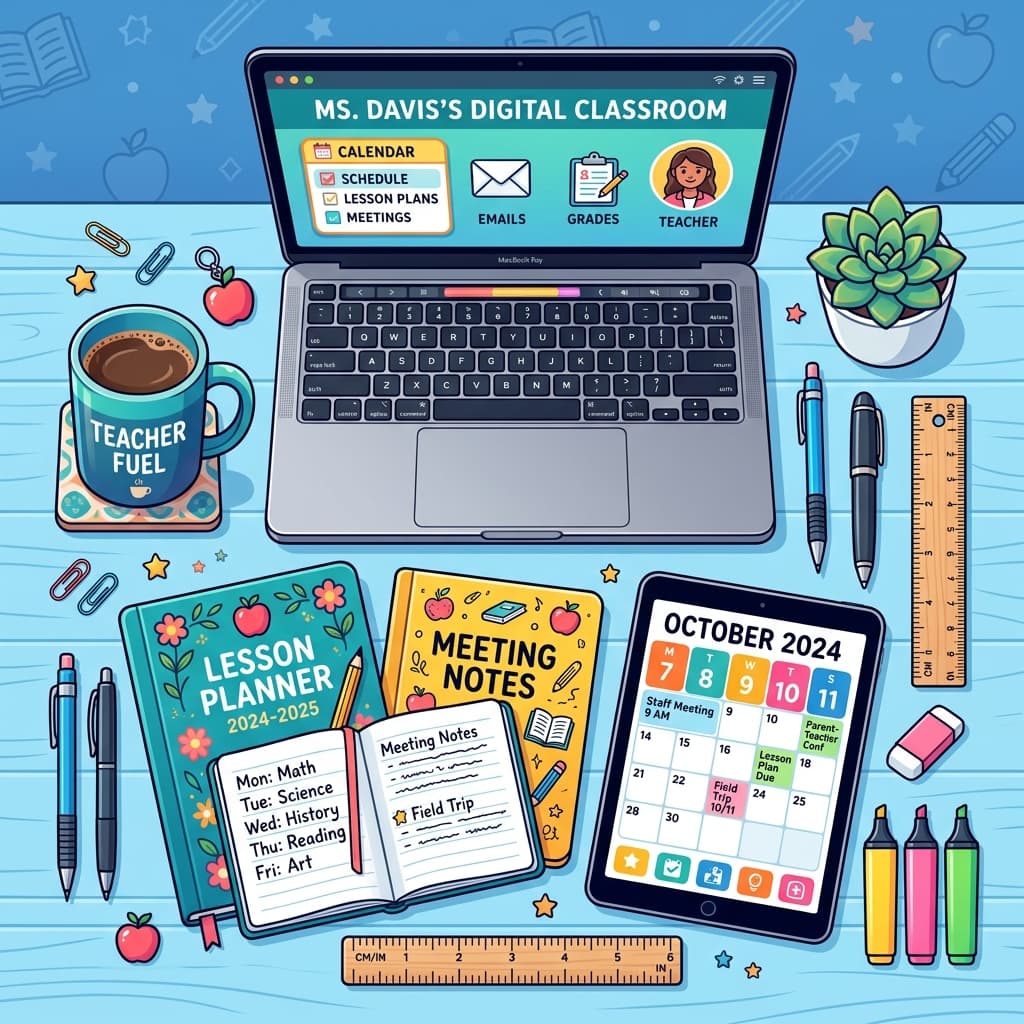
To build respect naturally, we must shift our perspective. Natural respect is a byproduct of three fundamental pillars: Competence, Consistency, and Connection. When learners perceive their teacher as a master of their subject, a fair arbiter of rules, and a human being who genuinely cares about their progress, discipline issues begin to dissipate.
In today's digital age, where the Department of Basic Education (DBE) is increasingly emphasizing ICT integration, building respect also involves showing learners that you are equipped with the modern tools necessary to support their success. This is where the integration of AI-powered tools from SA Teachers becomes a game-changer for your classroom management strategy.
Pillar 1: Competence and the Power of Professionalism
Learners are incredibly perceptive. They can sense within the first five minutes of a period whether a teacher is prepared or "winging it." In the South African context, where the CAPS curriculum is dense and the Annual Teaching Plans (ATPs) are demanding, a lack of preparation leads to dead time. Dead time is the breeding ground for disruption.
When you faff with papers, struggle to find a resource, or provide vague answers to difficult questions, your authority diminishes. Conversely, when you walk into a classroom with high-quality, professional materials, you signal that you value the learners' time and their education.
Using Technology to Project Competence
One of the most effective ways to command respect is to provide learners with structured, high-quality content that makes their lives easier.
- The CAPS-Aligned Lesson Planner: Using the CAPS-Aligned Lesson Planner on sateachers.co.za ensures that every minute of your lesson is accounted for. When learners see a clear structure—an introduction, a body of work, and a consolidation—they feel secure. A teacher who knows exactly where they are in the ATP inspires confidence.
- Worksheet & Exam Generators: Hand-writing a test or using a blurry, 10-year-old photocopy sends a message of stagnation. By using the Worksheet & Exam Generators, you can produce crisp, professionally formatted assessments that mirror the quality of National Senior Certificate (NSC) papers. This professionalism commands a level of "occupational respect" that is hard to gain otherwise.

Pillar 2: Consistency Through Fair Assessment
Injustice is the fastest way to lose the respect of a South African teenager. Learners talk; they compare marks, and they notice when "Learner A" is treated differently than "Learner B." Natural respect is built when learners know exactly what is expected of them and exactly how they will be measured.
Transparency in Grading
A common source of friction in the FET Phase (Grade 10–12) is the grading of subjective tasks like essays or creative projects. If a learner feels a mark was "plucked from the air," they will resent the teacher.
To combat this, the Essay Grader & Rubric Creator tool is invaluable. By generating a clear, CAPS-aligned rubric and sharing it with the class before they start an assignment, you remove the "mystery" of grading. When you return a piece of work with feedback generated by an AI that focuses on specific criteria—such as language structures, conventions, or content relevance—the learner sees you as a fair coach rather than a biased judge.
When your grading is consistent, the "unfairness" argument disappears, and respect for your professional judgment grows.
Pillar 3: Connection and Personalized Support
Building respect naturally requires you to see the learner as more than just a number in a class of 40 or 50. However, South African teachers are notoriously overworked, making it difficult to give individual attention to every child. This is where many teachers struggle: they want to connect, but they are buried under administrative "red tape."
Bridging the Gap with Personalized Tools
How do you show a learner you care about their specific struggles when you have 200 learners to teach? You leverage technology to scale your empathy.
- The AI Tutor as a Support System: Recommend the AI Tutor from SA Teachers to your learners. By providing them with a tool that helps them understand complex concepts at their own pace, you are acting as a facilitator of their success. You aren't just "giving a lesson"; you are providing a roadmap to mastery.
- Study Guide Creator: Imagine the respect you earn when you provide your class with a custom-tailored study guide for the upcoming June exams. By using the Study Guide Creator, you can take complex CAPS topics and break them down into digestible summaries. Learners respect teachers who go the extra mile to ensure they don't fail.

The Role of Communication: Reports and Feedback
The end of a term is often a flashpoint for conflict between teachers, parents, and learners. Vague or overly harsh report comments can damage the relationship you've spent months building. "Natural respect" extends to how you communicate with the learner’s support system at home.
If you are spending six hours every weekend manually creating rubrics or searching for ATP-aligned resources, you are not resting. A tired teacher is rarely a respected teacher.
By using the full suite of tools at sateachers.co.za, you can reclaim your time:
- Save 5+ hours a week on lesson planning and worksheet creation.
- Reduce grading time by 40% using the Rubric Creator and Essay Grader.
- Eliminate the stress of report season with the Comment Generator.
This "reclaimed time" allows you to be the best version of yourself in the classroom—calm, prepared, and ready to lead.
Classroom Management: The "Big Picture"
Respect is also about the environment you create. A classroom that feels like a place of professional learning—decorated with relevant posters, organized with clear zones, and utilizing modern technology—will naturally command more respect than a neglected space.

When you use the Study Guide Creator to produce visuals for your walls or the Worksheet Generator to provide diverse activities, you are creating a "Culture of Learning." In such a culture, respect isn't something you have to ask for; it is the currency of the room.
Dealing with the SMT and Departmental Pressure
Sometimes, the lack of respect in a classroom stems from external pressures. If the School Management Team (SMT) is constantly questioning your results or your curriculum coverage, that stress trickles down to the learners.
Tyler M.
Dedicated to empowering South African teachers through modern AI strategies, research-backed pedagogy, and policy insights.