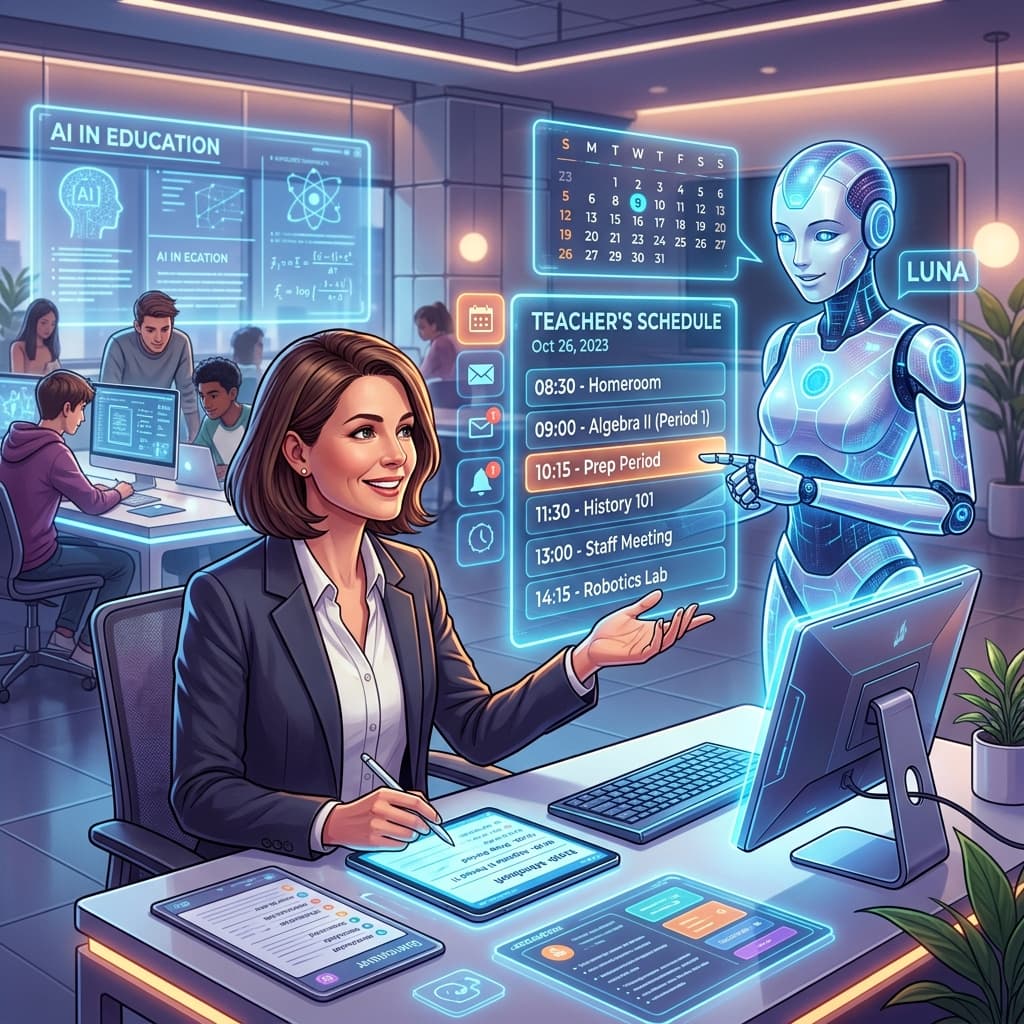
Classroom culture isn't just about colourful posters or a "no bullying" sign on the door. It is the collective set of values, beliefs, and behaviours that your learners share. In the context of the Department of Basic Education (DBE) and the rigorous requirements of the CAPS curriculum, building a positive culture quickly is not a luxury—it is a survival mechanism. When your culture is strong, discipline issues plummet, learner engagement soars, and the relentless pressure of the Annual Teaching Plans (ATPs) becomes manageable.
But how do you build this culture rapidly, especially when faced with large class sizes and heavy administrative loads? The secret lies in a combination of high-touch human connection and high-tech efficiency. By leveraging tools from SA Teachers, you can automate the "drudgery" of teaching and reinvest that saved energy into the hearts and minds of your learners.
1. Radical Consistency: The Foundation of Trust
South African learners often come from diverse and sometimes unpredictable backgrounds. For many, school is the most stable part of their day. Therefore, a positive culture is built first on the bedrock of consistency.
Consistency means that if you say a lesson starts at 08:00, it starts at 08:00. It means that the way you handle a late homework assignment today is the same way you handle it next week. However, maintaining this level of consistency is exhausting when you are bogged down by lesson planning and marking.
How AI Simplifies Consistency
This is where the CAPS-Aligned Lesson Planner on SA Teachers becomes your greatest ally. By using this tool, you ensure that every lesson is structured, timed, and aligned with the relevant ATPs. When you walk into the room with a professionally structured plan generated by AI, your learners sense your preparedness. A prepared teacher is a confident teacher, and confidence is the first step toward commanding respect.
2. The "2x10" Strategy and the Power of Personalisation
One of the fastest ways to build culture is to focus on your "fringe" learners—those who are either disruptive or completely withdrawn. The "2x10" strategy involves spending two minutes a day for ten consecutive days talking to a specific learner about something other than schoolwork.
To find the time for these two-minute interventions, you need to reduce your after-school workload. If you are spending four hours an evening manually drafting worksheets, you won't have the emotional bandwidth for these connections.
Tailoring Content with the Worksheet & Exam Generator
By using the Worksheet & Exam Generator, you can create high-quality, CAPS-compliant materials in seconds. Instead of searching the web for hours for a relevant Grade 9 Social Sciences assessment, you can generate one that perfectly matches your taught content. This allows you to differentiate your teaching. When a learner who usually struggles receives a worksheet that is "just right" for their level—something you can easily create with AI—they feel seen. That feeling of being understood is the fastest shortcut to a positive classroom culture.
3. High Expectations Supported by High-Quality Scaffolding
A positive culture is not a "soft" culture. It is one of high expectations. You must believe your learners can master complex Grade 12 Physics or nuanced Afrikaans Literature. However, high expectations without support lead to frustration and rebellion.
In many South African classrooms, the "missing link" is the lack of individualised study material. Many learners don't know how to study for the specific requirements of the CAPS exams.
Empowering Learners with the Study Guide Creator
You can rapidly improve the academic culture of your room by providing every learner with a customised study guide. Using the Study Guide Creator, you can take a complex unit of work and boil it down into digestible, exam-focused summaries. When learners have the tools to succeed, their anxiety drops. Lower anxiety leads to a more harmonious classroom environment where learners are focused on growth rather than survival.

4. Closing the Feedback Loop: Trust Through Transparency
Nothing kills classroom culture faster than "The Black Hole of Marking." We have all been there: learners hand in an essay, and because of our massive workloads and SMT meetings, they don't get it back for three weeks. By then, the learning moment has passed, and the learner feels that their effort wasn't valued.
A positive culture thrives on immediate, constructive feedback. It shows the learner that you care about their progress in real-time.
Instant Grading with the Essay Grader & Rubric Creator
The Essay Grader & Rubric Creator is a game-changer for South African English, Home Language, and FAL teachers. Instead of spending your entire weekend grading 150 essays, the AI helps you provide detailed, rubric-based feedback almost instantly.
- Transparency: Learners see exactly why they got a specific mark.
- Speed: Feedback is returned while the topic is still fresh.
- Encouragement: You can use the time saved to write personal notes of encouragement on the scripts, reinforcing a culture of "I believe in your potential."
5. Integrating the AI Tutor as a Co-Teacher
In large classes—common in many of our schools—it is impossible for one teacher to be everywhere at once. This often leads to "the middle" being neglected while the teacher focuses on the high achievers or the learners requiring remedial support.
Building a culture of "Independent Inquiry" is possible when you introduce the AI Tutor. Imagine a classroom where, while you are working with a small group on a specific CAPS objective, other learners are using the AI Tutor to ask questions like, "Can you explain the causes of the French Revolution in simpler terms?" or "How do I solve this quadratic equation step-by-step?"
This shifts the culture from one of "Teacher as the only source of knowledge" to "Learner as an active participant." It empowers learners and reduces the "wait time" that often leads to disruptive behaviour.
6. Communication with Parents and the SMT
A classroom is not an island. The culture of your room is influenced by the parents and the School Management Team (SMT). Positive reinforcement shouldn't stop at the classroom door.
Andile M.
Dedicated to empowering South African teachers through modern AI strategies, research-backed pedagogy, and policy insights.