The Digital Divide in South Africa: Bridging the Gap in the 4IR Era
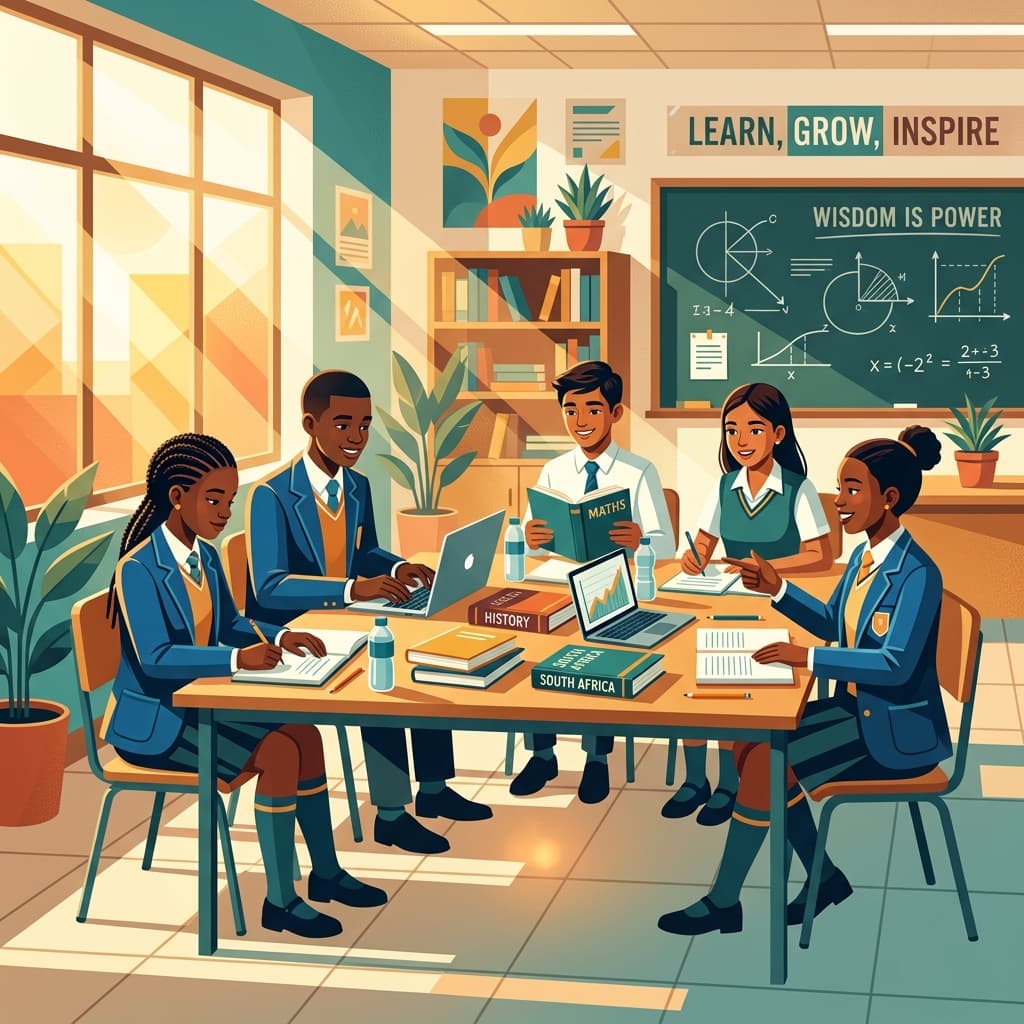
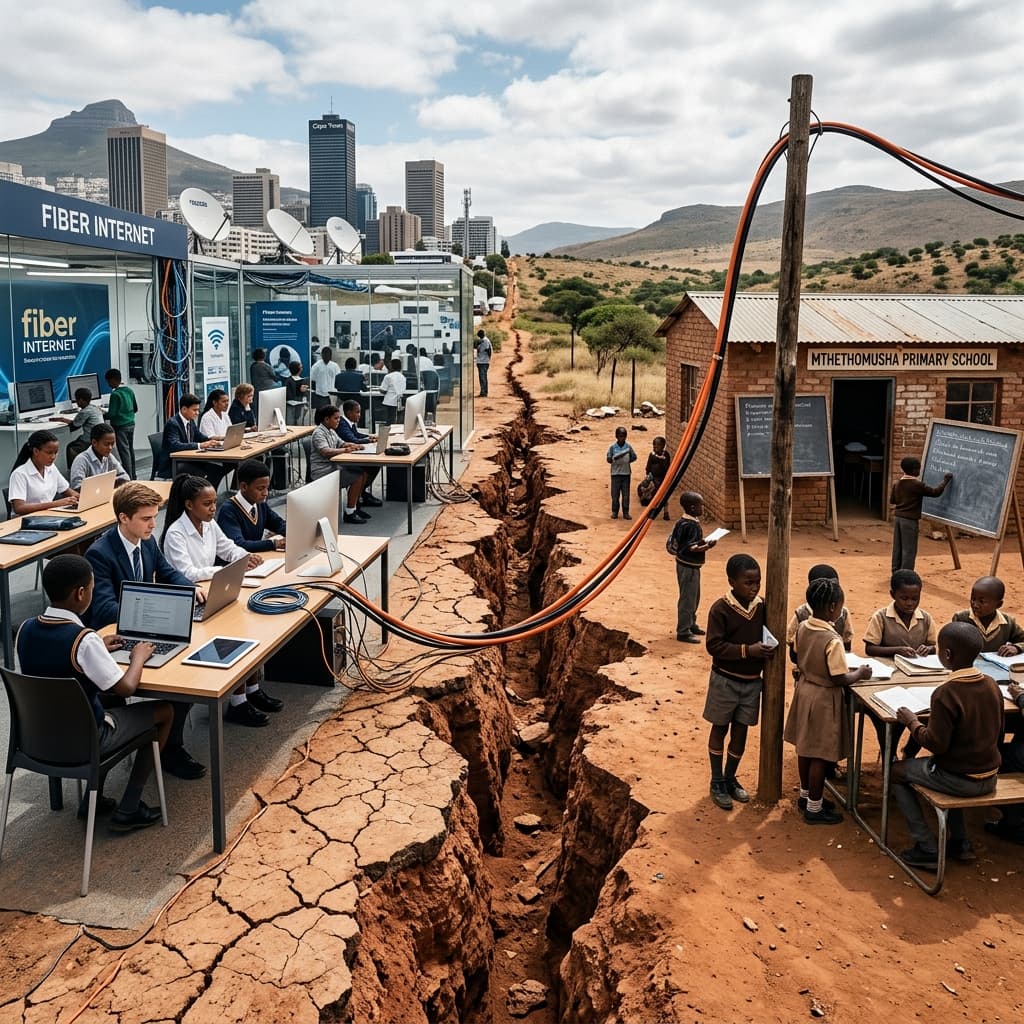
We often speak about the "Fourth Industrial Revolution" (4IR) as a wave that will lift all boats. In South Africa, however, some boats are missing their oars. While a learner in a suburban school in Sandton may be using AI to assist with their history project on a high-speed fiber connection, a learner in a rural village in the Eastern Cape may still be waiting for their first reliable computer lab. This disparity is known as the Digital Divide, and it remains one of the greatest challenges to achieving social and economic equity in our nation.
Defining the Digital Divide in 2026
In the past, the digital divide was simply about "haves" and "have-nots" in terms of hardware—who has a computer and who doesn't. Today, the divide is more nuanced and can be broken down into three critical dimensions:
1. Access to Hardware and Infrastructure
This is the most visible layer. It involves the physical presence of devices (computers, tablets, smartphones) and the infrastructure to power them (electricity and stable internet). In many rural South African communities, the lack of reliable electricity—exacerbated by load shedding—remains a primary barrier to any form of digital learning.
2. The Connectivity Gap (The "Data" Divide)
South Africa has some of the highest mobile data costs relative to average income in the world. For a middle-class family, a 20GB data bundle is a monthly utility; for a family living on a social grant, it is a choice between internet access and basic groceries. This "data divide" means that even when learners have devices, they often cannot afford the connection needed to use them for research or online learning.
3. The Digital Literacy Gap
Possessing a tool is meaningless if you don't know how to use it. Many educators in marginalized schools have not received the necessary training to integrate technology into their teaching. Without "digital pedagogy," computers often sit unused or are used only for basic administrative tasks, failing to realize their potential as instruments of learning.
The Rural vs. Urban Disparity
The geography of the digital divide in South Africa is stark. Our urban centers—Johannesburg, Cape Town, Pretoria, and Durban—are becoming some of the most "connected" cities on the continent. High-speed fiber is becoming standard in suburban homes and business parks.
In contrast, our rural provinces, particularly Limpopo, the Eastern Cape, and parts of the North West, struggle with "digital deserts." In these areas, mobile coverage can be spotty, and fiber-to-the-home is a distant dream. When we talk about "online learning," we must remember that for millions of our fellow citizens, the "online" part is a luxury they cannot reliably access.
The Impact on Education: A Two-Tiered System?
The risk of the digital divide is that it creates a two-tiered education system.
- Tier 1: Learners who go to "Cyber Schools" where they are taught to be creators of technology, data analysts, and critical digital thinkers. They are being prepared for the global economy.
- Tier 2: Learners who are taught only traditional methods, with little to no exposure to modern digital tools. They risk entering a workforce that no longer values the skills they spent twelve years acquiring.
This is not just an educational issue; it is a long-term economic threat. If we do not bridge this gap, we are essentially "pre-determining" the economic failure of a significant portion of our population.
Lesson Planner
Generate comprehensive, CAPS-aligned lesson plans in seconds.
Government and Private Sector Initiatives
Bridging the divide is a massive undertaking that requires collaboration across all sectors of society.
1. The SA Connect Project
The South African government's ambitious broadband policy, "SA Connect," aims to provide high-speed internet access to all schools, health facilities, and government offices. While progress has been slower than hoped, the recent acceleration of rural fiber rollouts is a positive sign.
2. Zero-Rating Educational Content
One of the most effective local strategies has been "zero-rating." This is where mobile network operators (like Vodacom, MTL, and Telkom) allow users to access specific educational websites without consuming any data. This has been a lifeline for learners in low-income households.
3. Private Innovation and "Off-Line" Digital Tools
Companies and NGOs are developing innovative ways to deliver digital content without a constant internet connection. This includes "digital libraries" pre-loaded onto low-cost tablets and servers that can broadcast a local Wi-Fi signal to an entire school without needing an external uplink.
The Role of SA Teachers in Bridging the Gap
At SA Teachers, we are acutely aware of the digital divide. It is a central part of our mission. When we design our tools, we don't just think about the "top 5%" of schools. We focus on:
- Efficiency: Our tools help teachers do more with less time, which is vital in understaffed schools.
- Accessibility: We advocate for data-efficient platforms and are constantly exploring ways to make our resources available to those in low-resource environments.
- Teacher Support: We provide guides and tutorials that help educators build their digital confidence, regardless of their starting point.
What Can We Do?
Bridging the digital divide requires a multi-pronged approach:
- Lowering Data Costs: Continued pressure on network operators and the implementation of more "free Wi-Fi" zones in public spaces.
- Rural Infrastructure Investment: Prioritizing the rollout of fiber and solar power to rural schools.
- Inclusive Policy Making: Ensuring that educational policies aren't designed only for urban contexts.
Conclusion: Equity in the Age of AI
As we move deeper into the era of Artificial Intelligence, the stakes of the digital divide have never been higher. Digital access is no longer a privilege; it is a human right in the modern world. It is the key to employment, the key to healthcare, and the key to democratic participation.
We must refuse to accept a South Africa where a child's postal code determines their digital destiny. By working together to provide hardware, connectivity, and literacy to every corner of our beautiful country, we can turn the "divide" into a "bridge" to a more prosperous and equal future.
Trust Molai is the Founder of SA Teachers. He grew up in a South Africa of deep divides and has dedicated his career to using technology as a force for unity and educational equity.
Trust Molai
Founder of SA Teachers. Passionate about educational technology, programming, and empowering the next generation of South African learners.