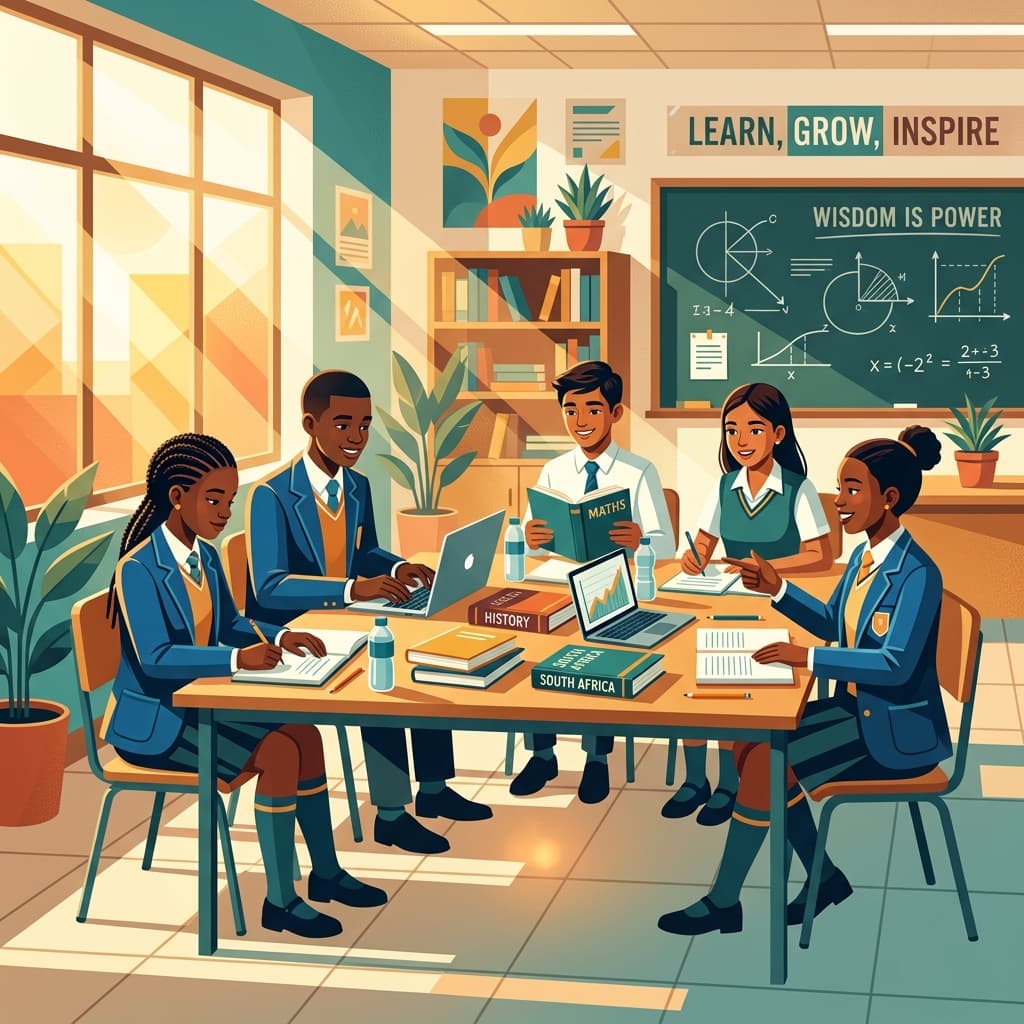
Avoid These 7 Common Lesson Planning Mistakes: A Guide for South African Teachers (CAPS-Aligned)
In the demanding world of South African education, your lesson plan is more than just a document—it's your roadmap. It's the blueprint for effective teaching, the key to unlocking learner potential, and your best defence against the chaos of a busy school day. From the bustling corridors of a Gauteng high school to a multi-grade classroom in the Eastern Cape, a solid lesson plan is the foundation upon which great learning is built.
Yet, we've all been there. Staring at a blank template late on a Sunday night, overwhelmed by the Curriculum and Assessment Policy Statement (CAPS), juggling administrative duties, and feeling the pressure to create engaging, differentiated lessons for a diverse group of learners. It's in these moments that mistakes happen—small oversights that can have a big impact on classroom management, learner engagement, and ultimately, academic success.
As educational specialists deeply rooted in the South African context, we understand these challenges intimately. This comprehensive guide is designed to help you identify and rectify the most common lesson planning mistakes we see teachers make across all phases, from Grade R to Matric. By avoiding these pitfalls, you can transform your planning from a tedious chore into a powerful, strategic tool that boosts your confidence and your learners' outcomes.
Mistake #1: Vague Objectives and a Disconnect from CAPS
This is arguably the most critical error. A lesson plan without clear, measurable, and CAPS-aligned objectives is like a ship without a rudder.
The Problem: Many plans feature vague goals like "Learners will understand photosynthesis" or "Learners will learn about fractions." These statements don't clarify what learners should be able to do by the end of the lesson. How do you measure "understanding"? This vagueness makes it impossible to assess learning effectively and often leads to lessons that drift without a clear purpose. Crucially, it fails to connect directly to the specific Content, Concepts, and Skills outlined in the CAPS document for your subject and grade.
The SA Context: Your Head of Department (HOD) and any Department of Basic Education (DBE) officials conducting evaluations will immediately look for the "golden thread." This thread must clearly link the Annual Teaching Plan (ATP), the specific CAPS topic, your lesson objectives, your activities, and your assessment. If that link is broken at the objectives stage, the entire lesson plan falls apart under scrutiny.
How to Fix It:
- Start with CAPS: Always have the relevant CAPS document open. Identify the specific Topic, Content, and Skills for the week or lesson cycle from your ATP.
- Use Action Verbs: Frame your objectives using Bloom's Taxonomy. Instead of "understand," use measurable verbs. For example:
- Instead of: Learners will understand apartheid laws.
- Try: Learners will be able to list three key apartheid laws, explain the purpose of the Pass Laws, and compare segregation under apartheid to another historical context.
- Follow the SMART Principle: Your objectives should be Specific, Measurable, Achievable, Relevant, and Time-bound (within the lesson period).
- Structure Your Objectives: A good practice is to state what learners should know (content), understand (concepts), and be able to do (skills) by the lesson's end.
Mistake #2: Planning the "What" but Forgetting the "How" and "Why"
A classic mistake is creating a lesson plan that is teacher-centric, focusing only on the content to be delivered rather than the learner's journey.
The Problem: The plan reads like a script for the teacher: "I will explain topic X. I will show a diagram. I will give notes." While this details the teacher's actions, it completely overlooks the most important people in the room: the learners. What will they be doing? How will they engage with the material? How will they construct their own knowledge? This approach often leads to passive, "chalk-and-talk" lessons that fail to engage learners, especially in a generation accustomed to interactive stimuli.
The SA Context: With large class sizes and diverse learning needs, a purely teacher-centric approach is bound to fail. You need active learning strategies to manage the classroom and ensure that learners of varying abilities and language backgrounds are participating. The "why" is also critical—linking the lesson to real-world applications or prior knowledge makes it relevant and memorable for South African youth.
How to Fix It:
- Shift to a Learner-Centric Model: For every teacher action, plan a corresponding learner action.
- Teacher Action: Introduce the concept of calculating area.
- Learner Action: In pairs, learners will measure the area of their textbook covers using rulers and apply the formula L x B.
- Incorporate a Variety of Activities: Plan for individual work, pair work (think-pair-share), group work, and whole-class discussions. This variation caters to different learning styles and keeps energy levels up.
- Answer the "Why": Start your lesson with a hook. A compelling question, a surprising statistic, or a link to a current South African event can immediately establish relevance and pique curiosity.
Mistake #3: A One-Size-Fits-All Approach (Ignoring Differentiation)
Every South African classroom is a microcosm of our nation's diversity. A single lesson plan delivered in the exact same way to every learner is a plan for inequity.
The Problem: The plan assumes all learners are at the same starting point, learn at the same pace, and have the same background knowledge. It lacks provisions for learners who are struggling with the concept or those who grasp it quickly and need extension. This results in frustration for learners at both ends of the spectrum—the advanced learners become bored and disruptive, while the struggling learners fall further behind.
The SA Context: This is non-negotiable in our schools. You may have learners with different home languages, significant gaps in foundational knowledge due to socio-economic factors, and varying access to resources. Your planning must account for this reality. The policy of inclusion also means accommodating learners with special educational needs within the mainstream classroom.
How to Fix It:
- Plan for Differentiation by Content, Process, and Product:
- Content: Provide information in various ways. For a history lesson, this could mean providing a summary text for some, a more detailed primary source for others, and a video for visual learners.
- Process: Design activities at different levels of complexity. While some learners are completing a basic worksheet on identifying adverbs, others could be writing their own sentences using adverbs to create a specific mood.
- Product: Allow learners to demonstrate their understanding in different ways. A learner could write an essay, create a poster, or perform a short role-play to show they have met the lesson objective.
- Use Tiered Activities: Create a core activity that all learners can access, then design a simpler version for support and a more complex version for extension.
- Flexible Grouping: Plan for strategic use of groups. Sometimes you'll use mixed-ability groups where peers can teach each other; other times, you might work with a small, homogenous group of struggling learners to provide targeted support.
Mistake #4: Poor Pacing and Unrealistic Timing
You've planned a brilliant lesson with five engaging activities, a group discussion, and a video clip... for a 45-minute period.
The Problem: Over-planning or under-planning time is a common trap. Over-planning leads to rushing through crucial concepts, cutting off valuable discussions, and leaving learners feeling confused. Under-planning results in dead time at the end of the lesson, which is often an invitation for classroom management issues to arise.
The SA Context: The bell-to-bell reality of a South African school schedule is strict. Unexpected interruptions, assemblies, or administrative tasks can eat into your teaching time. Realistic and flexible timing is essential for survival.
How to Fix It:
- Allocate Time Blocks: Next to each phase of your lesson (Introduction, Development, Consolidation), write an estimated time in minutes. Be realistic.
- Prioritise Your Activities: Identify your "must-do" core activities that directly address the objectives. Then, list "could-do" extension or consolidation activities. If you run short on time, you can skip the "could-do" tasks without sacrificing the core learning.
- Have a "Sponge" Activity Ready: Always have a meaningful, 5-minute activity prepared for those rare occasions when you finish early. This could be a quick quiz, a journal prompt, or a challenge question related to the lesson.
Lesson Planner
Generate comprehensive, CAPS-aligned lesson plans in seconds.
Mistake #5: Assessment as an Afterthought
You've delivered the lesson, the bell is about to ring, and you ask, "Any questions?" Silence. You assume everyone understood.
The Problem: Waiting until a formal test or exam to discover that learners haven't grasped a concept is too late. Effective lesson planning integrates assessment throughout the lesson, not just at the end of a unit. This means planning how you will check for understanding as you teach.
The SA Context: CAPS requires both formal and informal assessment. Your lesson plan is the perfect place to document your informal, formative assessment strategies. This provides evidence of continuous assessment and helps you make informed decisions about whether to re-teach, move on, or provide support.
How to Fix It:
- Plan Your "Checks for Understanding": Build in specific points in the lesson to pause and assess.
- Use a Variety of Formative Techniques:
- Exit Tickets: In the last 3 minutes, ask learners to answer one or two questions on a slip of paper about the lesson. This gives you instant data.
- Think-Pair-Share: Pose a question, give learners a moment to think, have them discuss with a partner, and then share with the class. This allows you to hear from multiple learners.
- Whiteboard Responses: Ask a question and have learners write their answer on a mini-whiteboard and hold it up. You can scan the room in seconds to see who is on track.
- Link Assessment to Objectives: Your assessment questions and activities must directly measure whether learners have achieved the specific, measurable objectives you set at the beginning.
Mistake #6: Forgetting the Resources
You plan a brilliant hands-on science experiment, but on the day, you realise you don't have enough beakers, or the data projector you need is booked by another teacher.
The Problem: A lack of resource planning can derail an entire lesson. It leads to wasted time, frustrated learners, and forces you to revert to a less effective backup plan on the fly.
The SA Context: Resource constraints are a daily reality for many South African teachers. You cannot assume you will have access to a smartboard, uncapped Wi-Fi, or even enough textbooks for every learner. Planning for this is not optional; it's essential.
How to Fix It:
- Create a Resource Checklist: As a dedicated section in your lesson plan, list everything you and your learners will need: stationery, textbooks (with page numbers), worksheets, tech equipment, art supplies, etc.
- Plan for Scarcity: If you know resources are limited, plan accordingly. Design activities that require minimal resources. Can a group of four share one textbook? Can learners create their own mind maps on scrap paper instead of using pre-printed worksheets?
- Prepare in Advance: Print your worksheets, check that the technology works, and gather your materials the day before. Don't leave it for the morning of the lesson.
Mistake #7: Reinventing the Wheel Every Single Time
Spending hours crafting a perfect lesson plan from a blank Word document for every single lesson is inefficient and a leading cause of teacher burnout.
The Problem: While every lesson is unique, the fundamental structure required by the DBE is consistent. Creating plans from scratch is a massive time drain that takes you away from other important tasks like marking, sourcing resources, or providing individual support to learners. It also leads to inconsistencies in formatting and quality.
The SA Context: The administrative burden on South African teachers is immense. You need to work smarter, not harder. Standardising your planning process frees up precious time and mental energy.
How to Fix It:
- Use a Standardised Template: Develop a solid, CAPS-compliant lesson plan template that works for you and use it consistently.
- Collaborate and Share: Work with other teachers in your phase or subject department to share resources and even co-plan lessons.
- Leverage Technology: This is the ultimate solution to working smarter. A dedicated tool designed for the South African curriculum can automate the most tedious parts of lesson planning.
The Smart Solution: Streamline Your Planning with SA Teachers
Acknowledging these common mistakes is the first step. The next is to equip yourself with a tool that makes avoiding them effortless. This is where the SA Teachers Lesson Planner changes the game.
Imagine a world where you no longer have to worry about CAPS alignment, document structure, or spending your entire Sunday planning. The SA Teachers automated Lesson Planner is designed by South African educational experts, for South African teachers. It is the premier solution to eliminate these common mistakes and streamline your entire planning process.
Here’s how it directly solves the problems we’ve discussed:
- Guaranteed CAPS Alignment: The tool is built on the CAPS curriculum. You simply select your grade and subject, and the planner ensures your objectives, content, and assessments are perfectly aligned with DBE requirements. This eliminates Mistake #1 instantly.
- Professional, Standardised Formatting: Forget fussing with Word documents. The Lesson Planner generates a professional, standardised plan that meets the expectations of any HOD or school official.
- Saves You Countless Hours: By automating the structure and curriculum links, it tackles Mistake #7 head-on. It turns hours of work into minutes, giving you back your time to focus on what truly matters: your learners.
- Promotes Best Practices: The structured format guides you to think about all the essential elements—objectives, learner activities, differentiation, assessment, and resources—ensuring you create a well-rounded, effective lesson every time.
Conclusion: Plan with Purpose, Teach with Passion
Effective lesson planning is not about creating a rigid script to be followed verbatim. It is a creative and intellectual exercise that prepares you to be flexible, responsive, and intentional in your teaching. By avoiding these seven common mistakes, you shift from simply surviving in the classroom to thriving as a professional educator.
Your lesson plan is your professional promise to your learners. It shows you have thought deeply about their needs, their journey, and their success. Stop letting the administrative burden of planning steal your passion. Embrace smarter strategies, focus on what truly works in the South African classroom, and empower yourself with the right tools.
Take the first step towards transforming your planning. Explore the SA Teachers Lesson Planner today and discover how quick and easy it can be to create professional, CAPS-aligned lesson plans that set you and your learners up for success.
Tyler M.
Dedicated to empowering South African teachers through modern AI strategies, research-backed pedagogy, and policy insights.